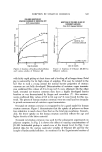
NEW LANOLIN QUATERNARY SALTS 567 Table III ([P,,MtOIOAL lTtViT¾ :. . ORC.•tglSM 'l .! $TEI•R•:oNiu• e. ttLO•il•f .... .. :.. •UaT•'i• •'• ..... eo. oo:', 9•6Z '99.98 effective than Quaternium 7. Stearalkonium Chloride, along with the 2 lanolin quats, achieved a 99.99-t- per cent reduction in plate count in under 2 min, while Quaternium 7 required 15 min to achieve this plate count reduction. IV. Applications Shampoo Study-In developing a shampoo for a study of this type, we wanted a low pH clear simple formula with as few ingredients as possible so as not to interfere with the conditioning properties of the quaternaries during their evaluation. We desired though, a formula which would foam well, clean well, and be acceptable to the consumer (panelist) An amphoteric was used for the bulk of the detergent action. A small amount of TEA lauryl sulfate was added to boost the foaming. An amide level of 5 per cent was used to provide a suitable viscosity and add to foam stability. A total 3-per cent active quat- ernary was used (see Table IV). This formula provided a clear liquid sham- p'•o of moderate viscosity.

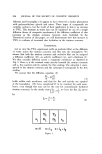
568 JOURNAL OF THE SOCIETY OF COSMETIC CHEMISTS Table IV Low pH Quaternary Shampoo Amphoteric-10 30.00 TEA w Lauryl Sulfate (40%) 8.00 Quaternary (10% active Solution) 30.00 Lauramide DEA 5.00 Propylene Glycol 6.50 Deionized Water 20.20 Perfume 0.30 PROCEDURE: 100.00 Heat and mix the first four ingredients to 70øC until clear and homogeneous. Let cool and adjust the pH to 5.0 with lactic acid. Add perfume--the mass is now cloudy. Add the propylene glycol and mix until clear, Add the rest of the water. Two shampoos were prepared. The first contained the LanES quaternium and the other contained Quaternium 7. Half-head studies involving 6 subjects were employed to evaluate the shampoos. The right side was reserved for the LanES shampoo and the left side for the Quaternium 7 shampoo. The subiects were all females in their mid-teens with shoulder length or longer virgin hair. Experiments were performed in the beauty salon of a well known testing agency. In the procedure used, the hair of the subject was first examined for color, texture, condition, and length. The hair was parted in the middle and combed out. One side was wetted, then washed with a measured amount of one of the shampoos. The other side was also wetted and washed with a measured amount of the other shampoo. At this point, foam quality and quantity were observed. Then the head was rinsed and washed again in the same manner. After the final rinse, the hair was evaluated with a wet comb. The tangles were combed out with the large teeth of a comb and then with the small teeth. Ease of combing, hair conditioning effects, and slip were then evaluated by the subiect, operator, and observer. The hair was set with rollers and the subject was placed under the dryer until the hair was thoroughly dry. After completion of the drying, the rollers were removed and the hair was combed out. The hair was again evaluated by the subject, operator, and observer for conditioning, sheen, manageability, softness, degree of static charge, cud re- tention, and any other properties which appeared to be either exceptional or poor.
Purchased for the exclusive use of nofirst nolast (unknown)
From: SCC Media Library & Resource Center (library.scconline.org)