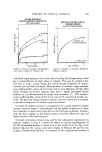
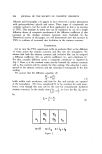
514 JOURNAL OF THE SOCIETY O1•"COSMETIC CHEMISTS Figure I. SEM montage taken from positive skin replica from back of hand of female subiect in mid-20s. Example of "good" skin. Scale bar represents •00 txm. texture was originally coined by D. R. Highley (13) who has four•d that this texture occurs in approximately 5 percent of the population. For studies on skin care products, we generally try to avoid using "cobblestone" subiects, be- cause the effects of cosmetic products are more difficult to discern in the final montages and the quantitative analysis is more difficult. One must be extremely careful when making both the negative as well as the positive replicas, so as not to produce artifacts. Figure 2 was actually made in mid-1972, and was one of our earliest attempts. It also contains the 3 most commonly found artifacts: (1) air bubbles in the negative replica (2) air bubbles in the positive replica and (3) a glazed area of improperly mixed replicating material (in the negative). Even our most experienced replica makers still occasionally produce these artifacts, but the goal is always to minimize their frequency of occurrence. In this way, even though some areas of a replica might be bad, we can generally find at least some areas which have replicated well in all the replicas of a sequence. Type A artifacts can be minimized by using only the freshest resin and catalyst, which are then mixed smoothly without whipping any unnecessarily large amount of air into the

SCANNING ELECTRON MICROSCOPY .. .•. "'" .... '?'¾'"?• L•'•:•'4•:•(. • % ,-: ,•z ..... =.•'....•:' '"'.'?"./' . .... '.:.?'.' ' -- j •'•-'•:? ß -•. : -.•, ,,• "•--": :..:'. -, .-: ..... • ' . .... .... ...... -. . ,....'?,:' "" .:"- ' '•••..- "u•::4•-•.¾%... •.:'• .?:--:,• '.z •'--•--.•..•?.:' •.'- '"-•-•'••',:'.•.½ •:.' "• •'•':: .½:•' ?.•:•'..•,. .•(¾•-?•,-. :' , ,'7 ß .....-.•'-:::•'•':,•&:? p•½•.' "-'½'-•-'• •':• '.• .:::-'t.½:' ',. ' .s::---:,'..'..., .. ..... ...-... -' .'"..•.:'.': •-'•'t• ß ¾ .,,•-%---•* --•-••••-••••..:.. :?:t,•.-..½...•b•.• -.,?•., .--•x•Z ... •f -:.?..•..."•:7'-.'.•'.::t'" • -'• •: '•-...•:••(':..:: .... .. ,•::?':--.,• •:'t/ X•*½...:-,,¾':- • ,:,.•.•. - ' ..... :• ........' .?. • '•-r-y.?...:•?•, :-:-:.....•:•., •'•,•:• .•:..•?j :: •.•j•...-':-.•-.•.:.. :•½:•:•z: .... •t :•:Z?....:.. .•..: • '•••'•:..•..• .... A:.: .. • ½:: ...?:.•..,.: 47.,.• :.: •.,..,.•, •..•:•... • •.:•.-.•-.•.•.•.•-:½•. ,.,•.• - . ...-,.•:•,½.•._.... • ..,•.._•:. ." :%•.:-*:•..•-:: :•'.' ..: ..... .:.,• . ,?..• ß .-':::':.•,,½•.:•-'• .,'.½• ..... •. ½•.••..•.. : .... ß . •... . •.,•.,:•.:'" ,: .. ...:•.. •.:..f•.. • '••••••••• ,... ...... ......... -.•-•--:.. .... - .. ..' .' ß ,.•.-•... •-.,• ..... , . ß ,. ß ,.. ß '-U•., .......... • -•-•..:'. '.' . ß Figure 2. SEM montage o[ "cobblestone" ski•, •ositive replica, male subject about 30 years old. T•ie• artifacts: (A) ab bles in negative (B) air bubbles i• positive a•d (C) glazed o{ improperly mixed replicating material. Scale bar represents 1000 •m. 515 resin. Type B artifacts are caused by either unstable positive replicating ma- terial, the use of too high a temperature when the positives are made, or not sufficient contact pressure of the positive replica material with the negative. Type B artifacts are not as devastating as type A, as the option always exists for trying to make a better positive from the same negative. Type C artifacts are the most frustrating, since they can be so easily confused with real cos- roetic effects. An emollient, for example, which forms a coating can look sur- prisingly similar to type C artifacts. This type of artifact is almost always the result of either improper mixing of the resin with the catalyst, less than active catalyst, or a resin temperature bel-ow room temperature (resin should be stored under refrigeration to minimize autopolymerization of resin). Since many of the micrographs used in this paper were prepared as long as 4 years ago, not all wfil be of the same high quality as Fig. 1, and special mention will not, in general, be made of these artifacts. The ultimate objective of this work, from the very beginning, was to use this replica approach to demonstrate improvement in the condition of the stratum corncure as a result of the application of a cosmetic product. Hence,
Purchased for the exclusive use of nofirst nolast (unknown)
From: SCC Media Library & Resource Center (library.scconline.org)