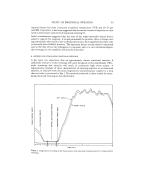
j. Soc. Cosmet. Chem., 28, 125-137 (March 1977) Factors affecting the penetration of light through stratum corneum JAMES L. SOLAN and KARL LADEN* Gillette Research Institute, 1413 Research Boulevard, Rockville, MD 20850. Received February 12, ] 976. Synopsis LIGHT TRANSMISSION values were obtained for isolated GUINEA PIG STRATUM CORNEUM exposed to WATER VAPOR, WATER, and ORGANIC LIQUIDS. Several of the variables involved, such as equilibration time, wavelength of light and REFRACTIVE INDEX of the liquids were examined. Increas- ing the RELATIVE HUMIDITY of the atmosphere surrounding the tissue resulted in a slight increase in light transmission, which was wavelength dependent. Immersion in water or other liquid produced a substantial increase in transmission. This effect increased with the refractive index of the liquid, reached maximum at the refractive index of stratum corneum, and then decreased. INTRODUCTION The skin of man and animals serves as a barrier to prevent the loss of moisture by the body and the entry of noxious chemicals and microorganisms. While there has been considerable interest by cosmetic scientists and dermatological researchers in how ma- terials penetrate the skin and in means of altering the penetrability of the skin to ap- plied chemicals, the penetrability of the skin to light and means of altering this pene- trability is an area which has received less attention. This paper deals with treatments, which can enhance the penetration of light into skin and, thereby, affect the choice of topical treatments and ingredients for cosmetic products. Transmission of ultraviolet (uv) light by epidermis was first studied by Hasselbalch (1) in 1911. Subsequently, studies on whole epidermis and various epidermal layers were reported. However, these studies utilized specimens of skin from living or dead ani- mals and humans and the reported transmission values varied considerably (2-4). It was Lucas (5), who in 1931 recognized that skin is not optically homogeneous and that incident light, in addition to being diffusely reflected at the surface, is irregularly refracted as it passes through the various layers of cells. He clearly demonstrated this *Present address: Carter Products Division, Half Acre Rd, Cranbury, N.J. 08512. 125
Purchased for the exclusive use of nofirst nolast (unknown)
From: SCC Media Library & Resource Center (library.scconline.org)