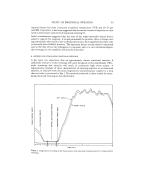
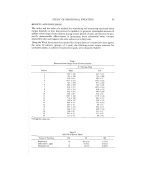
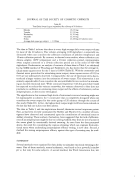
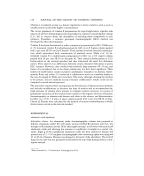
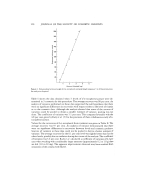
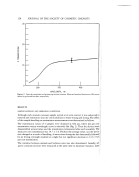
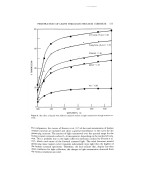
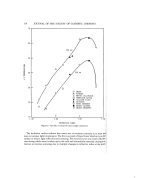
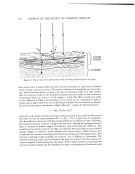
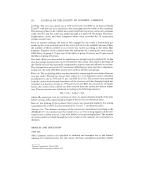
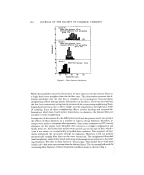
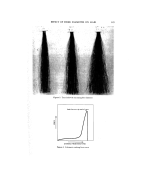
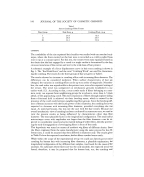
132 40 JOURNAL OF THE SOCIETY OF COSMETIC CHEMISTS RELATIVE HUMIDITY, % 90 4O o I 0 30 6o 425 TIME mi n Figure 7. Effect of reversal of hydration of stratum comeurn on Ugh[ transmission. Light transmission is plotted against time as the relative humidity is changed from 90 per cent at zero time to 40 per cent increase in transmission occurs. The peak at 1.54 is very close to the index of refraction of human stratum comeurn. DISCUSSION Stratum corneum is a heterogeneous material, which causes an incident beam of light to scatter from the plane of the skin. The stratified nature of the comeurn enhances total reflection as a result of abrupt changes in refractive index between the various cell layers. The result is that when a simple spectrophotometer is used to measure transmit- ted light, a portion of the light falls outside the collection slit of the phototube. This condition leads to an underestimate of the total transmission and the resulting value is referred to as directly transmitted light. The total transmission can be obtained by interposing a diffuse reflectance sphere between the sample and the photodetector. Everett, Yeargers et aI. (12) used this device to measure both the light fraction transmitted directly through a stratum comeurn sample (excluding forward scattered light) and the total light transmitted including both direct and scattered (0-90 ø from light path) light. Our data showing the spectral transmission of guinea pig comeurn before and after immersion in ethyl benzoate (ND = 1.5028) are shown in Fig. 10.

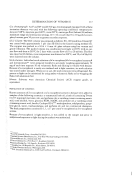
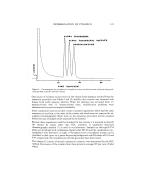
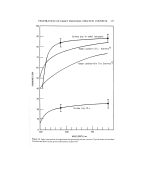
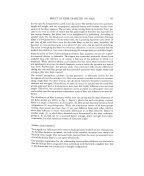
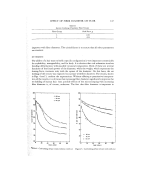
PENETRATION OF LIGHT THROUGH STRATUM CORNEUM 133 80 60 40 20 Silicone fluid 1.46 Propylene glycol 1.43 Ethanol 1.36 Water 1.33 Air 1.00 300 340 380 420 460 500 WAVELENGTH, nm Figure 8. The effect of liquids with different refractive indices on light transmission through stratum cor- neum For comparison, the curves of Everett et al. (12) of the total transmission of human stratum corneum are included and show a general resemblance to the curve for dry guinea pig comeurn. The amount of light transmitted over the spectral range for the human stratum comeurn is about 3-4 times greater, depending on the method of isola- tion. This is probably due to the light collection mechanics utilized by Everett et al. (12), which catch more of the forward scattered light. The ethyl benzoate treated guinea pig tissue (upper curve) transmits substantially more light than the highest of the human corneum specimens. Therefore, the data indicate that, despite less than ideal conditions for light collection, the changes in light transmission observed from the various treatments are valid.
Purchased for the exclusive use of nofirst nolast (unknown)
From: SCC Media Library & Resource Center (library.scconline.org)