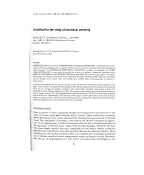
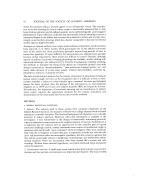
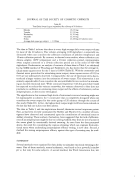
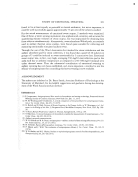
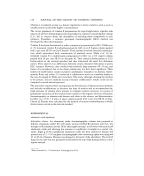
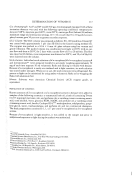
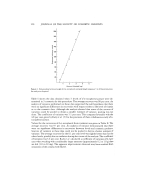
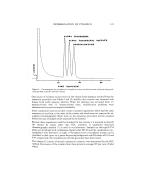
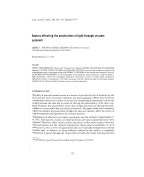
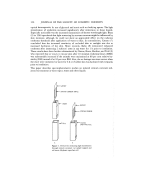
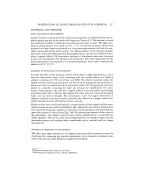
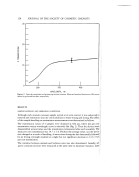
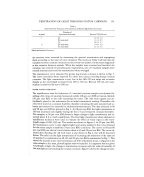
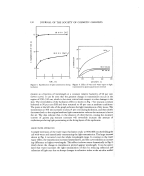
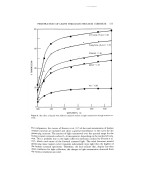
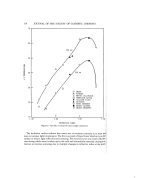
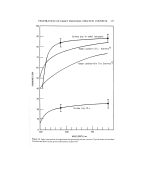
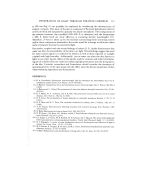
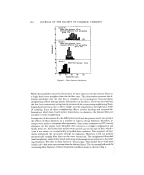
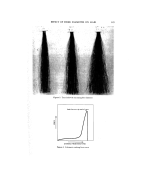
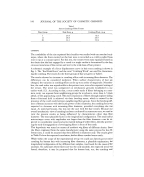
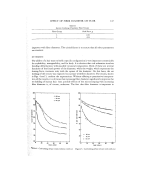
144 JOURNAL OF THE SOCIETY OF COSMETIC CHEMISTS Group III J• Mean fiber diameter 89 um Diameter difference from preceeding 0 • .... '. : 12 Group II Mean {iber diameter 76 um Diameter difference from preceeding group ! 7% 0 Group I Mean fiber diameter 65jum 51 61 83 "•)9 115 DIAMETER (•m) Figure 1. Fiber diameter distribution While this possibility cannot be discounted, we have observed (3) that thinner fibers on a single head were straighter than the thicker ones. This observation presents the al- ternate possibility that the thin hair is straighter as a consequence of postsynthesis straightening effects through plastic deformation of the fibers. These are derived from the low, but continuously acting lateral pressure of the constraining neighboring fibers, longitudinal extension due to fiber weight, and the intermittent, but high force levels '•I of combing. Since all these straightening effects involve bending and torsional de-:' formations, which have fourth power dependence on diameter, the thinner fibers are i: '•. less able to resist straightening. Irrespective of the reasons for the differential curl level, the present study was aimed at the effects of fiber diameter on a number of aspects of hair behavior therefore, at- . tempts were made to normalize fiber geometry. Since water relaxation at 40øC was not adequate, all the tresses were bleached then waved in a straight configuration and•.e.. finally water set. All further hair studies were carried out on this type of hair, which--':,•:: even if not intact--is a cosmetically acceptabte hair condition. This sequence of treat- ments eliminated the curvatures of large arc segments. However, it did not produce.:. geometrically straight fiber lines on the wavy coarse hair. The straightened fibers had small amplitude, small radius bends indicating nonhomogeneous response to the relax- ?:: ing treatment. We refer to these bends as "microcrimp." The thicker hair--with rnore ::i! initial curl--had more microcrimp than the thinner fibers. The increasing bulk with the increasing fiber diameter of these chemically modified tresses is shown in Fig. 2. ß

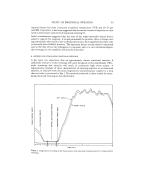
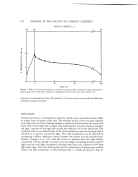
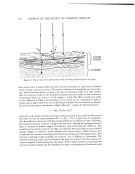
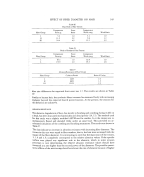
EFFECT OF FIBER DIAMETER ON HAIR 145 Figure 2. Tress bulk with increasing fiber diameter Peak farce at tip end of tress DISTANCE FROM ROOT END Figure 3. Schematic combing force curve
Purchased for the exclusive use of nofirst nolast (unknown)
From: SCC Media Library & Resource Center (library.scconline.org)