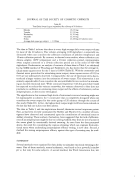
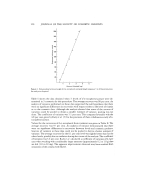
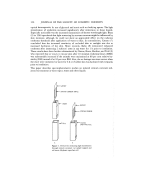
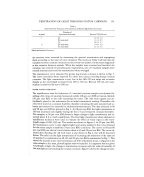
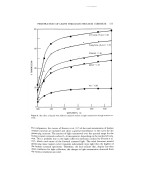
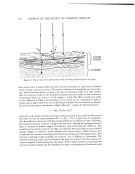
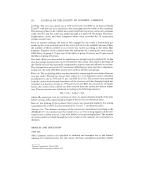
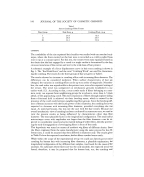
126 JOURNAL OF THE SOCIETY OF COSMETIC CHEMISTS optical heterogeneity by use of glycerol and acetic acid as clarifying agents. The light transmission of epidermis increased significantly after immersion in these liquids. Especially noticeable was the increased transmission of shorter wavelength light. Blum (6) in 1946 speculated that light scattering by stratum corneum might be influenced by skin moisture, although, he could not show an appreciable effect on the radiation erythema threshold after application of water to skin. In contradiction, Cattano (7) concluded that the increased sensitivity of occluded skin to sunlight was due to increased hydration of the skin. More recently, Kahn (8) mentioned enhanced erythema after immersing 2 subjects' arms in tap water for 1 h prior to irradiation. These results have been further substantiated by Owens, Knox, Hudson, and Troll (9) who reported that uv injury to mouse skin after 10 minimal erythemal doses (MED) was substantially increased if the animals were maintained at 80 per cent relative hu- midity (RH) instead of at 10 per cent RH. Also, the uv damage was more severe when the mice were immersed in water for 6 h or if rabbit skin was hydrated with wetpacks prior to irradiation. This paper describes spectrophotometric studies on isolated stratum corneum sub- jected to treatment in water vapor, water and other liquids. SUPPORT ß •-]-• CELL STRATUM CORNEUM SAMPLE INSERT SUPPORT STRATUM CORNEUM PLASTIC OPEN FACE CELL Figure 1. Device for measuring light transmission through stratum corneum: (A) sample support and cell insert (B) plastic open-face cell

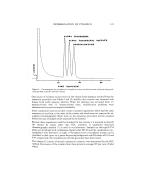
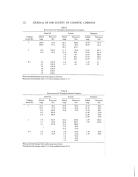
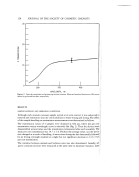
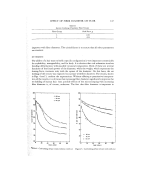
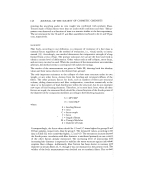
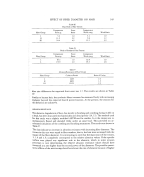
PENETRATION OF LIGHT THROUGH STRATUM CORNEUM 127 MATERIALS AND METHODS LIGHT TRANSMiSSiON MEASUREMENTS Isolated stratum comeurn from the ventral and dorsal skin was obtained from wax de- pilated guinea pig skin by the method of Singer and Vinson (10). The stratum comeurn was examined carefully to eliminate areas with excessive hair or tears. The light trans- mission measurements were made on 0.5 x 2.5 cm sections of tissue, which were mounted on brass frames and placed in a 1-cm spectrophotometer cell with the spe- cially constructed holder shown in Fig. I(A). Measurements of the spectral transmit- tance were made with a Beckman Du spectrophotometer* attached to a Gilford Instru- ment Company Model 220 Absorbance Indicator.-I- Absorbance data were converted to per cent transmittance for plotting and calculations. The cell compartment of the spectrophotometer was attached to a constant temperature water bath to maintain the samples at 25.0 ø +'0. IøC. INFLUENCE OF HYDRATION ON TRANSMISSION To study the effect of the moisture content of the tissue on light transmission, a curve was first determined using a cell containing only the sample holder as a blank at ambient conditions (25.0øC and 40 per cent RH). The relative humidity within the sample cell was raised by placing about one-half ml of an appropriate saturated salt so- lution and a few crystals of the salt at the bottom of the cell. The prepared cells were placed in a chamber containing the same salt solution for equilibration. For trans- mission measurements, the cells were capped, placed in the instrument and readings were taken from 780 to 560 nm. The samples were then removed, rinsed with distilled water, and air dried overnight. The transmission curve was again determined at ambient conditions and then another saturated salt solution at a higher relative hu- midity was placed in the cell with the stratum comeurn. Kinetic studies were conducted similarly, except that the cell was capped and the trans- mission measurements started immediately after adding the salt solution. Dehydration was studied by mounting a sample in a specially constructed plastic cell, which had two open sides instead of optical faces (Fig. I(B)). By permitting exposure of the tissue to the atmosphere, the sample could be more readily equilibrated in a controlled hu- midity chamber. After 24 h, at the desired high humidity, the sample was placed in the spectrophotometer and readings taken immediately and at intervals until no change was observed. INFLUENCE OF IMMERSION ON TRANSMISSION The effect upon light transmission of complete immersion of the stratum corneum was determined by comparing the spectral transmission curve obtained at ambient condi- tions to that obtained after filling the sample cell with liquid. *Beckman Instruments Inc., Fullerton, CA 92634. •'Gilford Instrument Laboratories, Inc., Oberlin, OH 44074.
Purchased for the exclusive use of nofirst nolast (unknown)
From: SCC Media Library & Resource Center (library.scconline.org)