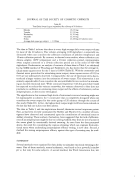
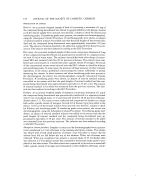
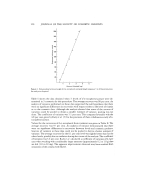
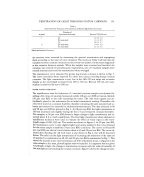
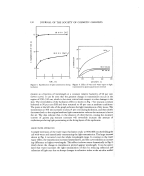
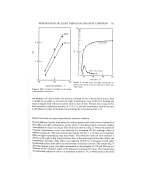
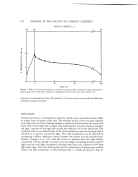
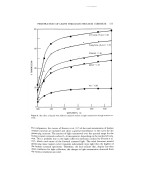
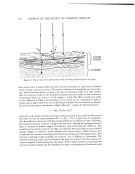
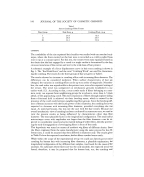
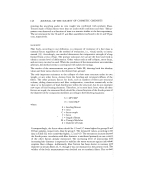
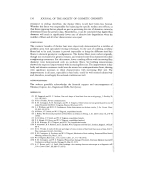
136 JOURNAL OF THE SOCIETY OF COSMETIC CHEMISTS R R STRATUM CORNEUM ß '.5':'-.'",. :..... _ .5 .- .....__ :'."5 .., -. : ...., . .... '.....,.'.' ß, , ,... .,%..j... -...,%.. •.':..• t..,. -.. '" '--. "'. '-- ß '-. ' :,. "--•'.. • .-,'. ,... ".:-'...'.-5•-.,,.•'..'.:.,...- '-.,'-,,.: .... .:'.• .... -•,...,•:-....--.. ., ,.. -' o' ,. ,- .,.' ,....,,.. '. ß .',, . •.' : .''.,•,.,. • .' ... . .-. .. ,t ..•,.... . ß / - .• • ß .-: '.-:..": .,.-..: .,,,.'.'...•]},.: .... .'-'..:.(.'• .' . j•.",'.:,,.., . .': . '.:'-.. ...'-'• ..,.- . .. ,.....- .-.. .. • :... -•...., ß ..-. ... ,, .-,. ,•-, . . ..',-.... ß ß ø. :: -•.,'o'.'•-'.'.' ß .' '-, A" •, •..'• -. :• ,I- ',.. . ., ß - •.. o'... , :-.,., .- •' ß ..' ,' •-. ,, '.'•'•r- -.• , ."_ .•,- ß '" -,'. : ß ' • , - ' ' ß , : .' ',,' ".'.'. '•", .- , ' .• ß - ",.• ß ,'''' ': - ø.-'- ','. .•'" ."''' ' ':.'-' "':".-5':.- '..'".'• -'-'•'':' -'' ß -' '. ß ß ',,' .' '.• ..... ,•: k' ', .' (•'* 'c ". ..... ' ..... Figure 11. Human skin illustrating the reflection (R), scattering (S) and absorption (A) of light EPIDERMIS faces of the cells. A related effect of water involves formation in a gel due to solvation of the stratum corneum proteins. The result is dilution of intracellular and tissue pro- tein, which has been shown to cause a decrease in refractive index (13). The result is that the refractive index of the hydrated corneum becomes closer to that of the sur- rounding medium, e.g., water = 1.333 sebum = 1.464. The effect of refractive index on the reflection of light at the boundary of two media can be computed for light in- cident upon a plane surface by use of the Fresnel formula. For an incident ray perpen- dicular to the boundary, the amount of light reflected, r, is given by the formula (11): (N /N )' r = z-Nt z+Nt where N• is the index of refraction of one medium and Nz is the index of refraction of the other. For the air-tissue interface (N• = 1, Nz = 1.5) r is 4 per cent. It is apparent, that the reflection decreases with decreasing difference in refractive index. However, the surface of stratum comeurn is highly discontinuous, causing an impinging beam of light to interact at shallow angles of incidence, thus increasing the reflection. The stratified nature of the corneum (see Fig. 11) enhances the total reflection as a result of abrupt changes in refractive index between the various layers. Other factors to be considered are internal scattering and forward scattering at the emerging surface. The forward scattering would probably be reduced, but is difficult to determine. The internal scattering could only be altered if the liquid in contact with the stratum cor- neum is capable of penetrating into the tissue. Water vapor is known to penetrate the stratum corneum rapidly and the maximum increase in transmission of hydrated tissue

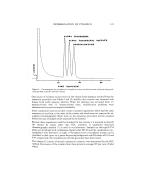
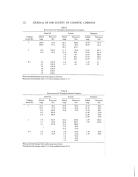
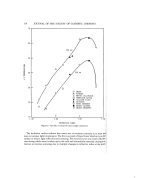
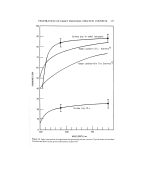
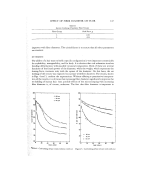
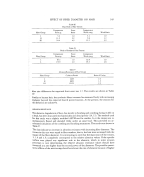
PENETRATION OF LIGHT THROUGH STRATUM CORNEUM 137 at 300 nm (Fig. 6) can probably be explained by considering the ultrastructure of stratum corneum. This layer of the skin is composed of flattened dehydrated cells 0.6 to 0.8/am thick and separated by optically less dense interphases. Two components of the stratum corneum, the tonofibril (200-400 • in diameter) and the desmosome (-200 ]k thick) both are most effective in scattering shorter wavelengths (11). Therefore, if water is taken up by the medium surrounding these scattering centers and/or these components themselves, the result would be a change in refractive index and a consequent increase in transmitted light. Our results, coupled with the recent findings of others (8, 9), clearly demonstrate that water can alter the penetrability of the skin to uv light. These findings suggest the need for extra caution against uv radiation by bathers as well as those exposed to sunlight coupled with high humidity. Additionally, just as water can alter the skin barrier to light, so can other liquids. Many of the liquids used for cosmetic and toiletry formulat- ing are of suitable refractive index for enhancing light penetration into the living layers of the skin. Cosmetic researchers and formulators should consider the alteration of optical properties of the skin along with the effect upon the barrier properties of skin when evaluating ingredients and formulations. REFERENCES (1) K. A. Hasselbalch, Quantitative untersuchungen fiber die absorption der menschlichen haut yon ul- travioletten strahlen, Stand. Arch. Physiol., 25, 55-68 (1911). (2) A. Bachem, Transparency ofhve and dead animal tissue to ultraviolet light, Amer. J. Physiol., 90, 600-6 (1929). (3) A. Bathem and C. I. Reed, The penetration of ultraviolet radiation through human skin, Ibtd., 97, 86- 95(1931). (4) D. I. Macht, W. T. Anderson, and F. K. Bell, The penetration of ultra-violet rays into live animal tissues,J. Amer. Med. Ass., 90, 161-5 (1928). (5) N. S. Lucas, The permeability of human epidermis to ultraviolet irradiation, Biochem. J., 25, 57-70 (1931). (6) H. F. Blum and W. S. Terus, The erythemal threshold for sunburn, Amer. J. PhysioL, 146, 107-17 (1946). (7) A. N. Cattano, Photosensitiv, ty following treatment with occlusive dressings, Arch. Dermatol., 102, 276-9(1970). (8) G. Kahn, Photosensitivity from occlusion, Ibid., 103,340 (1971). (9) D. W. Owens,J. M. Knox, H. J. Hudson, and M. S. Troll, influence of humidity on ultraviolet inlury,J. Invest. Dermatol., 64, 250-2 (1975). (10) E.J. Singer, L. J. Vinson, W. R. Koehler, M.D. Lehman, and T. Masurat, The nature of the epidermal barrier and some factors influencing skin permeability, Toxicol. Appl. PharmacoL Suppl., 7, 7-19 (1965). (11) R. J. Scheuplein, A survey of some fundamental aspects of the absorption and reflection of light by tissue,J. Soc. Cosmet. Chem., 15, 111-22 (1964). (12) M. A. Everett, E. Yeargets, R. M. Sayre, and R. L. Olson, Penetration of epidermis by ultraviolet rays, Photothem. Photobiol., 5,533-42 (1966). (13) R. Barer, Refractometry and interferometry of living cells,J. Opt. Soc. Amer. 47,545-56 (1957).
Purchased for the exclusive use of nofirst nolast (unknown)
From: SCC Media Library & Resource Center (library.scconline.org)