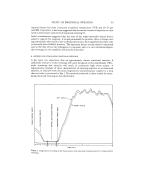
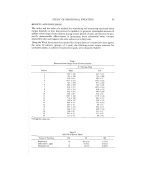
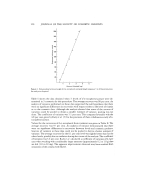
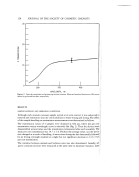
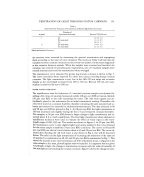
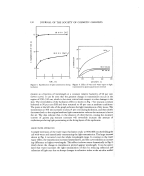
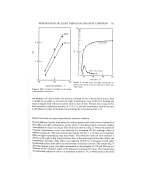
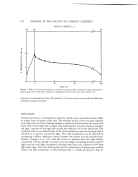
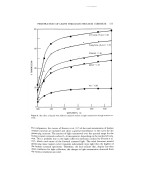
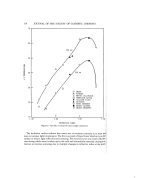
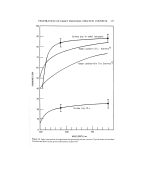
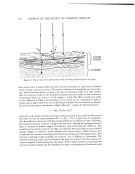
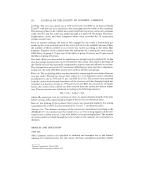
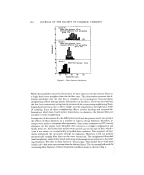
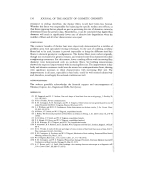
STUDY OF EMOTIONAL SWEATING 93 reported herein has been conducted at ambient temperature (70øF) and 20-25 per cent RH. Conversely, it has been suggested that the mental trauma of exposure to a hot room in itself causes some level of emotional sweating (3). Initial considerations suggested that the time of day might materially detract from a subject's capacity for response. It would presumably be prudent, then, to forego test- ing immediately after lunch or late on Friday afternoons. Such apprehensions have only occasionally been fulfilled, however. The important factors are the subject's emotional state at the time of test, his willingness to cooperate, and, to a very substantial degree, the investigator's own capability and attitude at the time. B. METHODS FOR STIMULATING EMOTIONAL SWEATING It has been our experience that an appropriately chosen emotional stimulus, if sufficiently intense ro evoke sweating, will cause the glands to fire immediately. Effec- tively sustaining that stimulus will result in continuous high sweat output. A representative example of these characteristics of sweating response to an emotional stimulus, as obtained with electronic hygrometry instrumentation coupled to a strip chart recorder, is presented in Fig. 1. The methods evaluated in these studies for stimu- lating emotional sweating are described below. LEFT AXILLA I I I I / RIGHT AXILLA •' I ! t I I f I i I •5 -- i0 .J TIME (min) Figure 1. Hygrometric recording of the characteristics of an emotional sweating course for a representative individual

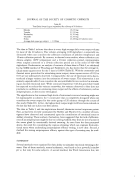
94 JOURNAL OF THE SOCIETY OF COSMETIC CHEMISTS 1. Mental arithmetic.' The requiring of a subject to perform tasks in arithmetic without benefit of pencil, paper, or unlimited time has been successful, in our experience, in stimulating both axillary and palmar emotional sweating in a number of subjects. The mental arithmetic method whose use was first reported by Kosaka (4), has been men- tioned frequently as a means for emotional stimulation, but it has never been described. In our hands, for administering this type of stimulus, the investigator reads to the subject the steps in the mathematics problem in a cadence, which is designed to be just rapid enough for each individual so that the •ubiect is constantly fighting to keep up in order to obtain the correct answer. Recitation of the steps too slowly diminishes stimulus intensity. Alternatively, too rapid a progression through the steps of the problem usually loses the subject altogether, and consequently no stimulus at all is administered. Usually, a given stimulus session will consist of from 4 to 7 problems, 2 or 3 of which are short and read quickly, with the subject being prodded for the answer within 5 to 8 sec. The remainder of the problems are longer, read somewhat more slowly, and re- quire that the subject continually solve correctly each step in order to arrive at the final answer. Examples of each type of problem are presented below. a. Short problems i. Multiply 11 x 3 x 4, Divide by 12, then multiply by 1/2, Now add 3/4--Answer? ii. Add 47, 19 and 136, Now subtract 78--Answer? b. Longproblem i. Take 3 times the number of ounces in a pound, add 2, take its reciprocal, and convert it to a decimal, now multiply it by 10, then square it, add 15.26, then divide it by 5, now multiply it by 100, subtract the square of 12, and sum the digits, then subtract 8, add 5, and cube it, now divide by 10, then subtract 5.6, multiply it by 5/8, now subtract 1-1/4, then add 17 to it, then subtract 3-3/4, now add 39, sum the digits, multiply it by 5/6 and give the answer. A nominal reward for the correct solution to the problem frequently encourages the efforts of the subject. It is generally a good practice to permit everyone to earn a reward from time to time in order to encourage continued participation. On the other hand, when the last several steps of a long problem are read so rapidly that the answers are just beyond a subject's grasp, his frustration at having come a long way for naught adds additional emotional stimulation. Mental arithmetic for stimulating emotional sweating in those individuals, who are both willing and capable of cooperating is a powerful tool. Furthermore, it can be used
Purchased for the exclusive use of nofirst nolast (unknown)
From: SCC Media Library & Resource Center (library.scconline.org)