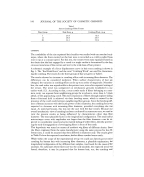
140 JOURNAL OF THE SOCIETY OF COSMETIC CHEMISTS In addition to differences between individuals in mean fiber size, the diameter shows a certain level of polydispersity on single heads, even among neighboring fibers. The polydispersity--when defined by the ratio of thickest to thinnest diameter--ranges from less than 1.4 to above 2.0 on adult Caucasian women (3). The diameter significantly influences the deformability of the fiber, which in turn, is an important factor in determining the mechanical response of the hair mass. The resistance to longitudinal deformation varies only with the square of the diameter that is, with the fiber mass. The bending and torsional stiffness of cylindrical beams, on the other hand, increases with the fourth power of the diameter. By combining the latter correlation with the fact that bending and torsion are the only important deformations of fibers under normal on-head conditions, it was expected that even relatively small differences in diameter--in the range of 10 per cent--would cause observable changes in some aspects of hair mass behavior. The above statement assumes that no other parameters important in specific types of mass behavior change systematically with fiber diameter. Although the cuticle-cortex volume ratio varies with the diameter in human hair (4), the elastic modulus in the dry state was found to be independent in both intact and bleached fibers (5). Some increase in friction with increasing fiber diameter has been reported (6, 7) for keratin fibers. No information is available concerning any systematic dependence of longitudinal and cross-sectional shapes on diameter, beyond the known anthropological influence on both characteristics. In light of the above, we chose to study combing, set holding, body, and abrasion resistance characteristics of human hair, as functions of fiber size, using objective methods. For some measurements, we used synthetic wig fibers to clarify and/or con- firm the human hair data. Known effects of fiber diameter, as, for instance, on tensile strength, were not evaluated. Some obvious attributes, such as fuller look due to larger fiber size, were noted, but not studied. Similarly, the effects of fiber size modification by swelling, with or without internal polymer deposition, or by external coatings were not investigated. EXPERIMENTAL MATERIALS Human hair.' Medium brown hair of European origin was obtained* in the form of homogeneous bundles. :,:,.Tt Synthetic fiber.' Elura©-[ - wig fiber was obtained in 30 and 40 denier sizes, corresponding to 56 and 65/xm in idealized diameter. These were designated as group 1 and group 2 :'i:'i:i synthetic fiber groups, respectively. :• .•.q *De Meo Brothers, New York, N.Y. •-The Monsanto Company, Decatur, AI_.

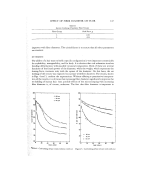
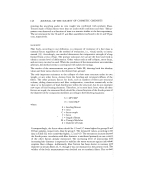
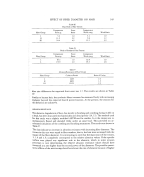
EFFECT OF FIBER DIAMETER ON HAIR 141 Chemicals,' All materials were either laboratory grade chemicals or commercial cos- metic products. PROCESSES Synthetic fiber.' Samples of the Elura were desized by soaking in methanol for 15 h, followed by soaking at 40øC with aqueous Woolite ©* for 30 min, and finally sham- pooing with White Rain shampoo.ñ All determinations were carried out on the desized fibers in the form of 16 cm long, 6500 fiber tresses. Human hair.' (Separation by size) Small, 0.5 to 1.0 g bundles of hair were taken from the large master bundle. The root ends of these small bundles were pushed against a standard number 230 laboratory sieve with 63 •m nominal hole size. Fibers, which penetrated the sieve, were pulled through and designated as group I, representing the lowest mean diameter. When no more fibers could be passed through the fine sieve, the process was repeated with the remaining strands on a standard number 170 sieve of 82 •m nominal hole size. Fibers passing through this sieve constituted group II and were of midrange mean diameter. The residual fibers of the original strands, which did not pass through either of the sieves, were designated group III and represented the highest mean fiber diameter bundle. Hair from each size group was formed into 1000 fiber tresses by gluing the root end of the fibers to a plastic tab. On each tab, the fibers were distributed over a 7mm wide area. Two such tresses of each size group were used for each different laboratory test. Fiber modification.' Visual inspection of the tresses indicated that the size groups dif- fered from each other not only in fiber diameter but in at least one other physical characteristic. The waviness of the tresses increased with increasing fiber diameter. The extent of this inherent fiber configurational difference had to be eliminated or, at least, reduced in order to retain the fiber size as the only significant variable. For this reason, the tresses were first bleached and then straight waved using commercial processes. In the final step, the fibers were water set in a straight configuration at 45øC. Subse- •':•'::,'i:-quently, the tresses were trimmed to 16 cm length. All studies were carried out on these chemically modified fiber tresses. METHODS OF EVALUATION ..::?:•i:Fiber diameter.' A small strand, about 30 fibers, was taken from each hair group. After ß •:.: •! iequilibration at 70øF and 65 per cent RH, a 50 mm long segment, accurate to better • :':i than 1 per cent, was cut from the middle of each fiber, using a specially constructed tool, while the fiber was extended with a 5 g load to ensure straight configuration. Each ':¾ ' segment was weighed in the conditioned form on a microbalance with an accuracy of ij!i' :0.1 per cent. The diameter of each fiber was calculated from its weight and length assuming uniform cylindrical shape for the whole segment and using 1.3 g/cm 3 for •: '•:'•: *Boyle-Midway, Inc., New York, N.Y.
Purchased for the exclusive use of nofirst nolast (unknown)
From: SCC Media Library & Resource Center (library.scconline.org)