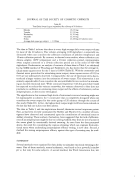
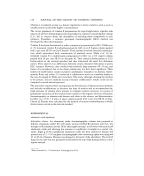
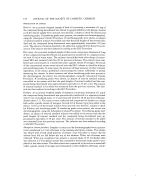
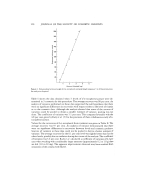
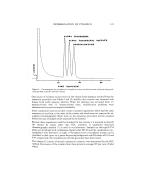
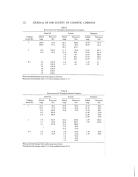
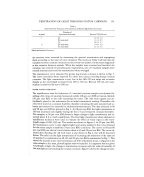
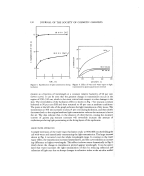
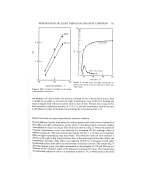
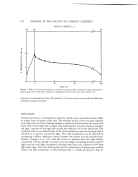
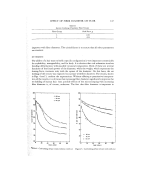
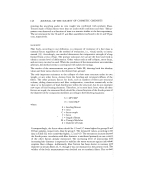
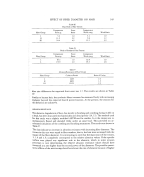
148 JOURNAL OF THE SOCIETY OF COSMETIC CHEMISTS resisting the uncurling under its own weight was confirmed with synthetic fibers. Tresses made of Elura fibers were heat set under mild conditions and their "fallout" pattern was observed as a function of time in a manner similar to the hair experiment. The set retention for the 56 and 65 •m fiber assemblies was found to be41 and 58 per cent, respectively. HAIR BODY Hair body, according to our definition, is a measure of resistance of a hair mass to external forces regardless of the method of evaluation, i.e., visual, tactile, or instru- mental (13). Accordingly, our method determines the compressire strength of a loop .:• formed from a tress of hair. The primary indicators we use are the force and work to obtain a certain level of deformation. Other values such as self-collapse, stress decay, and recovery can also be used. While the conditions of the measurement are somewhat arbitrary, the method seems to correspond with subjective ratings. The results of the measurements are given in Table III, showing both the absolute values and their ratios relative to the thinnest hair, group I. The only important resistance to the collapse of a hair mass structure under its own weight, or any other force, derives from the bending and torsional stiffness of the fibers. The other primary factors for body, such as number of fibers per structural volume, sliding characteristics and fiber configuration, contribute numerically to the value or to the pattern of load distribution within the structure, but do not represent new types of load bearing elements. Therefore, in its most basic form, when all other factors are equal, the measured body should be a linear function of the fourth power of the diameter of the component members according to the following equations: where: S = 4fla/rrMd 4 0 = 32C1/rrMd • S = bending flexure 0 = twist C = force couple f = force I = length of beam M = Young's Modulus d = diameter of beam. Correspondingly, the force values should be 1.9 and 3.5 times higher for groups II and •: III hair samples, respectively, than for group I. The measured values, according to the data in Table III, were somewhat higher, 2.2 and 4.9. The extraneous increase beyond the fourth power correlation with fiber diameter is attributed primarily to one or more of the other factors already mentioned. The increasing level of microcrimp with:' increasing hair diameter is expected to stabilize the stress structure against individual, • stepwise fiber collapse. Additionally, fiber friction has been shown to increase with' diameter in keratin fibers (6, 7), though it was not measured in the present work. The validity of the body measurements was checked out on synthetic fibers. Due to their51':

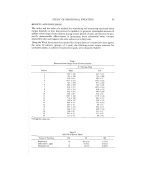
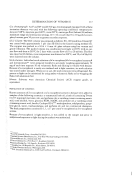
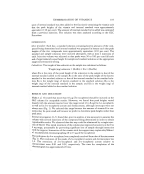
EFFECT OF FIBER DIAMETER ON HAIR 149 Table III Hair Body of Hair Tresses Compressive Force Compresslye Fiber Group Force, g Ratio Work, cm-g Work Ratio I 5.2 1.0 3.1 1.0 II 11.2 2.2 5.8 1.9 III 24.4 4.9 12.2 3.9 Table IV Body of Synthetic Fiber Tresses Compressive Force Compressive Fiber Group Force, g Ratio Work, crn-g Work Ratio 1. 85.5 1.0 32.8 1.0 '":7 2. 173.9 2.0 93.3 2.8 ,,, ß Table V Abrasion Resistance of Hair Tresses Fiber Group Cycles to Break Ratio of Cycles I 6695 1.0 II 8891 1.3 III 12523 1.9 fiber size difference the expected force ratio was 1.7. The results are shown in Table IV. Similar to human hair, the synthetic fibers increased in measured body with increasing diameter beyond the expected fourth power function. At the present, the reasons for this behavior are unknown. ABRASION RESISTANCE The abrasive degradation of hair, due mostly to brushing and combing during its life on a head, has been discussed mechanistically and descriptively (14, 15). The method used for this study was a slightly modified ASTM test for textiles. In it the tresses are si- multaneously flexed and abraded while under an axial load. This provided an ac- celerated simulation of the combing and brushing treatments. The results are shown in Table V. The data indicate an increase in abrasion resistance with increasing fiber diameter. The tresses in this test were equal in fiber number, that is, the hair mass increased with the square of the fiber diameter. It is interesting to note that the mass ratios of the tresses, 1, 1.4 and 1.9, completely correspond to the relative abrasion values. If the specific surface area played any significant role in the abrasion, which in some erosion processes is rate determining, the relative abrasion resistance values should have increased at a rate higher than the second power of the diameter. The possible quanti- tative effects of the microcrimp should accelerate the rate of abrasion because of higher
Purchased for the exclusive use of nofirst nolast (unknown)
From: SCC Media Library & Resource Center (library.scconline.org)