STUDY OF EMOTIONAL SWEATING 97 In sessions where successive days of stress inducement are required, and all panelists have come to know each other well, the placing of the individuals in different subgroups each day is helpful. In so doing, the individual does not have the op- portunity to become relaxed in the presence of familiar coparticipants and an at- mosphere of novelty is maintained. A given group of 5 subjects on a given day will usually and quite rapidly develop its own "personality." The investigator must be at- tuned to this and must attempt to create and foster a "group electricity" drawing the more shy and reticent personalities into participation while permitting the more bois- terous types to mentally "run loose." It is imperative that each individual is forced to interact with and relate to his coparticipants. Initially, our approach had been to main- tain rigid control over decorum in the sessions, and to discourage idle chatter among the subjects. However, as gauged by the single most important endpoint, the amount of sweat produced, such control has appeared unimportant and, in fact, it may be detri- mental to the goal's attainment. The successful investigator might more aptly be described as an instigator, a panel moderator, an aggravator, and a catalyst. He must be alert and adaptable during every moment of these sessions, questioning, ridiculing, badgering, feigning shock, or embarrassment at responses and using one subject in the group against the other as the situation momentarily arises. Some variations of the Word Association List have been employed, particularly against groups of subjects, to stimulate or maintain mental anxiety. For the most part, these have been in the form of questions wherein one individual's response is governed by his predecessor's response. For example, individuals might be required, in turn, to name a flower with the provision that whatever flower he names begins with a letter of the alphabet which is subsequent to, but not necessarily immediately following, that which his predecessor named. The alphabet is considered nonending, with a-b-c following x-y-z. "Skips" of more than 5-8 letters (e.g., daffodil-rose) should not be permitted because individuals can thereby take the pressure off themselves. This method's effectiveness resides in spontaneously and unexpectedly removing a given subject's planned response. For example, if subject 1 says "lily," subject 3 may plan on saying "orchid," but when subject 2 says "petunia," subject 3's response is disallowed and he must instantly search for another. By the panel moderator's usual goading, insistence on rapid response and staccato tempo, anxiety is produced. With this method, any number of alternatives for "flower," such as men's given names, edible animals which live in water, vegetables, states of the United States, Shake- spearean plays, etc., may be used. The limitations of the topics and the various ways in which they can be effectively used are set only by the investigator's imagination. Of the several methods described above, the Word Association List has been the most useful. It is easy and rapid to administer to any subject and it provides a powerful stimulus for emotional sweating for the greatest number and variety of subjects. Equally important is the aspect that it can be applied to a number of subjects si- multaneously. C. METHODS FOR MEASURING EMOTIONAL SWEAT OUTPUT Two methods for measuring the sweating response to emotional stress have been examined.

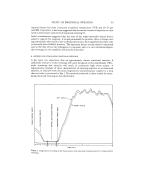
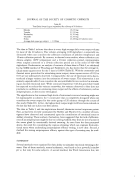
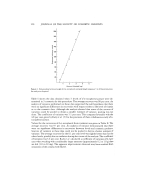
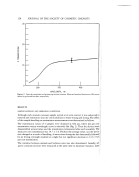
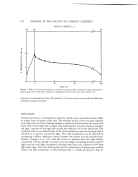
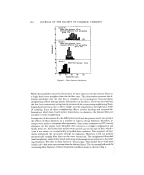
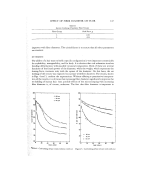
98 JOURNAL OF THE SOCIETY OF COSMETIC CHEMISTS 1. Electronic hygrometry instrumentation.' A number of ways for measuring sweating us- ing instrumentation which is sensitive to the presence of water have been explored through the years. These various means have been reviewed by Bakiewicz (5). One of the more recently devised instruments, which has been used in these studies, was developed by Dobson and Siegers (6). The instrument was found to be a highly sensi- tive and useful research tool, particularly for the study and characterization of indi- vidual emotional sweating patterns. Through it, several important parameters of the course of emotional sweating were revealed early in these studies. First, despite the absence of a deliberate emotional stimulus, an individual generally exhibits some level of sweating at the beginning of the test period which is higher than his subsequently determined ambient unstimulated level. Second, in order to begin a controlled emo- tional stimulus period at the point where the subject is as mentally unstimulated as possible, an initial 20-min calm-down period is necessary. During this calm-down pe- riod, subjects will exhibit, on average, an ambient sweat rate of about 0.2-0.3 /xl/min/0.75 in. Third, upon administration of an effective emotional stress stimulus, sweating greatly increases immediately. Fourth, even in the most responsive indi- viduals, it is difficult for the investigator to maintain an effective emotional stimulus for much longer than 10 min. These characteristics are illustrated in Fig. 1. Although the water-sensing instrument provided valuable information about events occurring during an individual subject's emotional sweating course, it has been found wanting for routine sweat output measurements. These shortcomings are founded partly in its need for time for regular instrument calibration, but principally because one can simultaneously obtain data from only as many subjects as instrumental set-ups are available. 2. Sweat-absorbent axillary pads.' The use of tared absorbent Webril©*pads, which are held in place in the axillae by the subject during the emotional stress period, has been adopted directly from thermal stress studies (7, 8). In those studies, it is customary to use 4 x 7 in. pads throughout the several (usually 4) 20-rain collection periods. (Generally, sweat pads from the first two 20-minute periods are discarded because of erratic sweating rates (9).) In these studies, the subjects first wash and blot dry their axillae. Then, as found necessary in the water-sensing instrumentation studies described above, a 20-min calm-down period follows. During this time, the subjects sit quietly with the 4 x 7 in. pads held in their axillae. These pads are discarded. For the immediately subsequent emotional stress period, which lasts for 10 rain, a substantially smaller pad measuring 2 x 4 in.is placed directly in the center of the axillary vault. This pad size, chosen initially so as to minimize tare weight in the event that small volumes of sweat were obtained, is quite adequate for the valid and reflective collection and measurement of emotional sweat excretion. To determine sweat output, the pads are retrieved from the axillae, placed in sealable plastic bagst and subsequently reweighed. As is known from thermal studies, this method is rapid and reliable and, most im- portant, it permits obtaining data from a number of sub j ects simultaneously. *Kendall Co., Fiber Prod. Div., Walpole, MA. •-Zip[oc © Bags, The Dow Chemical Co., Indianapotis, IN.
Purchased for the exclusive use of nofirst nolast (unknown)
From: SCC Media Library & Resource Center (library.scconline.org)