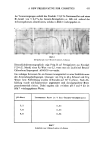
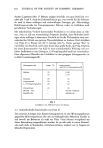
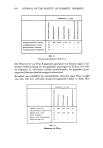
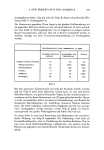
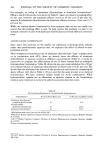
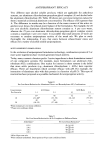
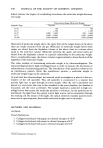
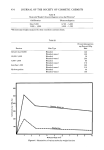
454 JOURNAL OF THE SOCIETY OF COSMETIC CHEMISTS Table II Molecular Weight Ultracentrifugation versus Gel Filtration a Gel Filtration Ultracentrifugation Over 5,000 8,700 - 3,600 5,000 - 1,000 3,000 - 1,500 aThe molecular weights measured by these 2 methods correlate closely. Table III Fraction Hair Type Protein Substantivity mg Protein/100 g Hair Greater than 30,000 Bleached 140 Bleached-waved 300 30,000-5,000 Bleached 50 Bleached-waved 290 5,000-1,000 Bleached 80 Bleached-waved 370 Less than 1,000 Bleached 200 Bleached-waved 510 Hydroxyproline Bleached 40 Bleached-waved 100 600. 500. ,,.. o•400' E ._ '2 300 200- 100- mmmmmmmmm_ Dieached. W= .... .mmmmmmmmmmmmmmmmmmmmm-- mmmmmmmmmmmm •mmmmmmmmmmm.mm Bleached Hair mmmmmmmmmmmmm•mmmmmmmmmmmmmmm Molecular Weight XlO 3 Figure 4. Substantivity of various molecular weight fractions

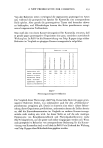
COSMETIC PROTEIN HYDROLYSATES 455 PROTEIN SUBSTANTIVITY The relationship of molecular weight to protein substantivity is shown in Table III. The data in Table III show that peptides of molecular weight of about 1,000, but greater than the molecular weight of amino acids, gives the highest substantivity. Figure 4 shows the results in Table III graphically. CONCLUSION A study of the molecular weight distributions of 3 protein hydrolysates used in cosme- tics was conducted. The effect of molecular weight on protein substantivity to damaged hair was also investigated in an attempt to find a relatively narrow weight range that gives optimum substantivity. Two conclusions can be drawn. (1) papain hydrolysis results in a narrow distribution of molecular weights. About 75 per cent of the molecules have weights between 5 00 and 10,000. As opposed to enzymatic hydrolysis, the acid and steam hydrolysates have much broader distributions. Seventy-five per cent of the molecules range in weights between 500 and 30,000. (2) The data have shown that polypeptides of molecular weight of about 1,000 but greater than the molecular weight of amino acids give the highest substantivity to damaged hair. These conclusions are based on a preliminary study and a number of points still remain unresolved. Answering these questions will involve a more detailed separation of the molecules below molecular weight 1,000 and an in-depth study of their effect on substantivity. Separating polypeptides of molecular weight 0 to 1,000 is difficult. Gel filtration chromatography can be used, however, calibrating the column can pose a problem. Until these lower molecular weights are investigated, the conclusions that have been stated are rather broad. It will be the purpose of subsequent studies to nar- row down the molecular weight range necessary for optimum substantivity. Molecular weight has been thought to be an important feature of cosmetic protein hydrolysates. It was generally assumed that lower molecular weight polypeptides were more substantive to damaged hair. The study reported here has shown that peptides in the range of molecular weight 1,000 are more substantive than the very high molecular weight polypeptides. REFERENCES (1) C. H. Chervenda, A Manual of Methods for the Analytical Ultracentrifuge, Spinco Division of Beckman Instrument, Pa!o Alto, CA. 1970. (2) P. Andrews, The gel-filtration behavior of proteins related to their molecular weights over a wide range, J. Biochem., 96, 595-605 (1974). (3) N. Catsimpoolas, Apparent molecular weight distribution of peptides produced by proteolysis, AnalyticalBiochem., 61, 101-11 (I974). (4) Sephadex, GelFiltration in Theory and Practice, Pharmacia Fine Chemicals, Piscataway, N.J., 1973. (5) S. A. Karjala, J. E. Williamson, and A. Karler, Studies on the substantivity of collagen-derived r•olypeptides to human hair, J. Soc. Cosmet. Chemist, 17, 513-24 (1966). (6) S. A. Karjala, F. J. Bouthilet, andJ. E. Williamson, Some factors effecting the substantivity of proteins to hair, Proc. Sci. Sec. Toilet Goods Ass., 45, 6-7 (1966).
Purchased for the exclusive use of nofirst nolast (unknown)
From: SCC Media Library & Resource Center (library.scconline.org)