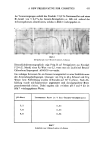
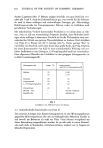
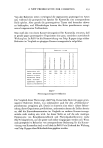
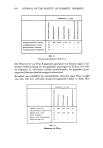
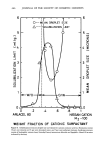
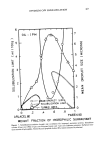
458 JOURNAL OF THE SOCIETY OF COSMETIC CHEMISTS available data on required HLB values are quite limited and the published values are often conflicting. This is partly due to the fact that there is still a lack of a reliable and accurate method to determine the required HLB value of an oil (3). Second, even for the oils for which required HLB values are available, the HLB method provides only a very rough guide in finding a right emulsifier combination. Even if a formulator knows that he requires a certain HLB to emulsify a given oil, he still needs to carry out many trial-and-error emulsifications, using combinations of surfactants with different chemical types before finding a suitable combination for his practical purpose. The HLB method provides no further guidance in this respect. Third, the HLB method assumes that like HLB values of the surfactants,.required HLB values of oils are also linearly additive. This linear relationship has been found to be questionable in many oil mixtures (4). Furthermore, Griffin's HLB method assumes that both the HLB value of a surfactant and the required HLB value of an oil are constants independent of other parameters. This assumption makes the HLB method quite simple to use however, it also makes the method less precise and sometimes unreliable, since many other factors such as aqueous phase additives, surfactant concentration, phase volume of the oil, emulsification temperature, or even the preparative method can influence the hydrophilic/lipophilic characteristics of emul- sions (5,6,7). Furthermore, the HLB method works fairly well if one uses only ethoxylated nonionic surfactants to emulsify hydrocarbons. It often fails to work satisfactorily, however, in many practical cosmetic emulsions containing a complex mixture of oils, fatty ma- terials, polar substances, and various surfactants. Clearly, there is a need for a better system to aid emulsion formulators to select the most efficient emulsifier combination from the great number of commercial surfactants available today. During the course of investigating the effects of surfactant location and migration on emulsion properties, it was discovered that there appeared to be a correlation between the maximum amount of the aqueous phase which could be solubilized in the oil phase containing the emulsifiers, and the average droplet size of the emulsion subsequently formed. For a given pair of surfactants, one relatively hydrophilic and the other rela- tively lipophilic, the most efficient emulsifier combination was generally found at the point where there was the greatest amount of solubilization. After testing over 100 systems with varying oils, surfactants, and other additives, it is believed that this cor- relation can be very useful in aiding emulsion formulation and to minimize the need for a trial-and-error procedure. EXPERIMENTAL For low-speed emulsification, emulsions were prepared by first dispersing the suffactants in the oil phase using a mixer. Sixty-five g of aqueous phase was first placed in a 200 ml beaker, and 35 g surfactant-oil mixture was carefully placed on the top. A 2 x 6 cm flat blade paddle mixer, set 5 mm above the bottom of the beaker, was turned on immediately to start emulsification. In most experiments, the emulsification was done at room temperature (21 ø +• IøC), and the emulsions were mixed for 3 min at exactly 150 rpm before droplet size measurements. For high-speed emulsification, a rotary homomixer was used. All emulsification operations were carefully done to assure good reproducibility.

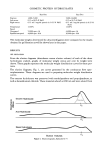
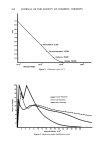
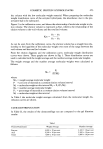
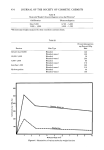
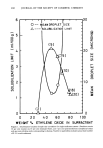
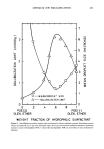
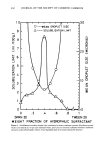
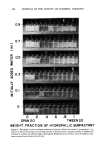
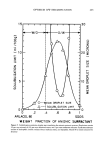
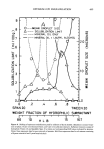
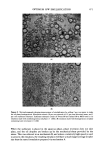
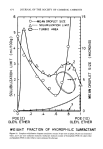
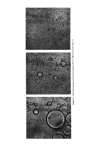
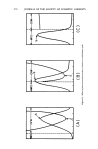
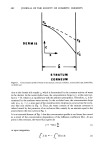
OPTIMUM O/W EMULSIFICATION 459 Emulsion droplet size distribution was determined from the Polaroid* pictures taken through an optical microscope. The amount of aqueous solubilization was determined by adding the aqueous phase, drop by drop, into the oil phase containing the surfactant while constantly mixing with a magnetic stirrer. The first sign of permanent turbidity was taken as the end point and the total amount of the aqueous phase added was recorded. In cases where a complete solubilization phase diagram was desired, the oil phase was placed in a large number of capped vials and shaken with varying amounts of water. After equilibration, the vials were observed for any sign of separation or turbidity and a phase diagram was constructed. RESULTS AND DISCUSSION CORRELATION OF EMULSIFICATION EFFICIENCY WITH SOLUBILtZATION There were 2 main purposes in this investigation. The first was to determine the validity and scope of the correlation between the efficiency of emtfisification and the maximum amount of aqueous solubilization by the oil phase containing the surfactants. The second aim was to investigate the fundamental role of the solubilization process and its relationship with emulsification. In this work, emulsification efficiency refers to the efficiency with which a surfactant or a mixture of surfactants emulsify the oil phase to form an emulsion without the use of high-shear equipment. A more efficient surfactant is defined as one which produces an emulsion with a finer average droplet size than a less efficient one under the same degree of mechanical agitation. Generally speaking, an emulsion with a smaller average droplet size is more stable than one with a larger droplet size. However, for this inves- tigation, the emulsification efficiency was directly expressed in terms of droplet size distribution immediately after emulsification rather than the emulsion stability. This choice was made in order to avoid possible confusion in interpreting the data, since emulsion stability is not only a function of droplet size, but also of many other parameters such as the viscosity of the external phase which is often influenced by the presence of the surfactants. In preparing most emulsions, a moderate mixing speed (150 rpm) was used. The use of an excessively high mixing speed wotfid promote the break-up of droplets caused by mechanical shear and obscure the real effects of the emulsifiers. The correlation appears to hold both for O/W emulsions prepared with single surfactants and also the emulsions made with combinations of two surfactants, one rela- tively hydrophilic, and the other relatively lipophilic. Figure 1 is an example of the data obtained with a series of ethoxylated nonylphenols with ethylene oxide ranging from 2 to 20 moles. Strictly speaking, these are not single surfactants, since they are commercial materials which are expected to have a wide ethylene oxide distribution range. Solubilization limit was defined as the maximum amount of water in milliliters which could be solubilized into a total of 100 g of oil- surfactant mixture. The abscissa represents the average weight percentage of the *Polaroid Corp., Cambridge, MA.
Purchased for the exclusive use of nofirst nolast (unknown)
From: SCC Media Library & Resource Center (library.scconline.org)