476 JOURNAL OF THE SOCIETY OF COSMETIC CHEMISTS

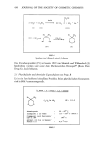
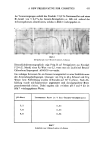
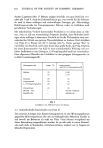
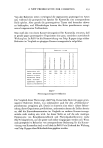
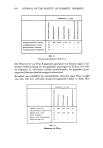
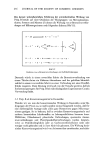
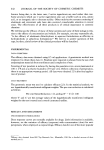
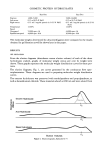
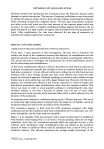
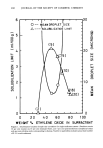
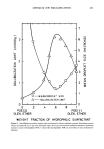
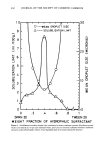
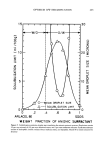
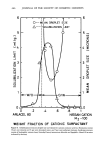
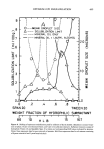
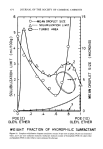
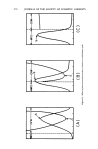
OPTIMUM O/W EMULSIFICATION 477 the equivalent solubilized state of Z with the method of emulsification employed. With more added water, the hydrophilic surfactant soon migrates to the aqueous phase mak- ing it impossible for mechanism A to function. The third requirement of mechanism A concerns phase inversion. In some systems, poor matching of the solubilization peak and the point of optimum emulsification were believed to be due to the phase inversion effect. As illustrated in Fig. 13 (A), phase inversion has no effect on the correlation when its boundary, indicated by the dashed line, is located on the left-hand side of the solubilization peak S. The optimum emulsification point E generally coincides with the peak in such a case. If the phase inversion boundary should fall on the peak as illustrated by Fig. 13 (B), the optimum emulsification point E generally shifts slightly to the right since an inverted W/O emul- sion or mixed emulsion is formed at S. If the peak S occurs within the W/O region and the amount Of solubilization is very small in the O/W region as illustrated by Fig. 13 (C), no optimum emulsification point exists as all O/W emulsions made have large droplet sizes. It should be noted that phase inversion of an emulsion is dependent not only on the hy- drophilic/lipophilic nature of the surfactants but also strongly on other variables such as internal phase volume, surfactant location, and the method of emulsion preparation (7, 10). Hence, the phase-inversion boundary can shift depending not only on the formulation, but also on the process variables such as the rate of addition of one phase to the other phase, degree of agitation, emulsification temperature, etc. In 1964, the PIT (phase inversion temperature) method of selecting emulsifiers was suggested (11, 12) as an alternative to the HLB method. The PIT of an emulsion is de- pendent not only on the type of surfactants and oils, but also on other parameters such as phase volume, surfactant concentration, or the presence of salts. With regard to this, the PITs are said to provide more accurate information than the HLB, required HLB values which do not account for these effects. However, in practice, the PIT system, like HLB, also has shortcomings. First, systems containing anionic or cationic surfactants do not exhibit PIT and, therefore, the method would not apply. Second, since PIT is dependent on so many parameters, it is more complicated to apply it in a practical system than the HLB method. Finally, the PIT system is also only good as a rough guide, since it merely tells the formulator that he should not use combinations having PITs too close to the temperature at which the product is to be used or stored. CONCLUSIONS The obvious value of the solubilization-emulsification correlation here is its application in selecting emulsifiers for product development work. Since a solubilization measure- ment is relatively simple and the results are reproducible, it provides a quick way to de- termine the point of optimum emulsification. It can be also used to determine the ef- fects of oil additives on emulsification, since the correlation holds not only for nonpolar oils, but also for many polar oils and their mixtures. The solubilization and phase inversion data can also be very useful in process develop- ment work for emulsion products. They can be helpful in finding the best manufactur- ing method and also in avoiding manufacturing troubles.
Purchased for the exclusive use of nofirst nolast (unknown)
From: SCC Media Library & Resource Center (library.scconline.org)