J. Soc. Cosmet. Chem. 29 607-615 (1978) A new method for the quantitative determination of micro-organisms on human skin E. M. STAAL and A. C. NOORDZIJ IntradalResearch Laboratory, Brabantsestraat 17, Amersfoort, The Netherlands Received 26 January 1978 Synopsis A new method is presented to quantify micro-organisms on the surface of human skin. With this method harvesting of micro-organisms from the skin is carried out with a Water-Pik © spray device, an instrument constructed for removal of food debris from the teeth. It will be shown that this method is operated very simply and gives reproducible figures about the microbial population of the human skin. INTRODUCTION On the surface of our skin in most areas a lot of micro-organisms do exist. Generally, these micro-organisms are completely harmless and will not interfere with the function of the skin. The number of micro-organisms varies very greatly, as their existence is directly related to the quantity of nutritional substances and external factors such as humidity, heat and smoothness. Therefore big differences are found from place to place and from individual to individual. In the survey of Williamson (1) about this subject differences of a thousand-fold are not rare. Kligman (2) gives a very detailed survey of the types of micro-organisms found on our skin. The factors hereby playing a part are further elucidated by Woodroffe (3). Extensive information about the skin population is also found in the book of Skinner and Carr (4), in which Marples extensively discusses these phenomena. For the formulation of cosmetic products the study of the human skin population is very important. Several product groups are formulated to eliminate the harmless but inconvenient side effects of the micro-organisms on our skin. For example a deodorant product can be mentioned, which eliminates human malodour by killing skin micro- organisms with the help of a bactericidal agent. As already mentioned before, micro-organisms will exist preferably on the most inaccessible areas of the skin. In these areas, for example the axillae, the conditions for bacterial growth are almost optimal and generally a huge number of micro-organisms is found in these places. Here especially, cosmetic products are used to combat the microbial side effects. For the determination of the efficacy of a cosinetic product in practice a inethod to quantify micro-organisms on the skin is necessary. ©Trade mark of Teledyne Aquatic, Fort Collins, Colorado, U.S.A. 0037-9832/78/1000-0607 $02.00 ¸ 1978 Society of Cosinetic Chemists of Great Britain 607

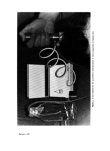
608 E. M. Staal and A. C. Noordzij Until now, all methods described are applied and are only suitable on a smooth skin surface, e.g. the skin of the underarm or forehead. Together with the abovementioned, the problem is raised that the known methods are not easily applicable for those areas of our body which are important for cosmetic treatment. Our experience was that in these areas, like the axilla, scalp and feet all methods failed for the quantification of the micro-organisms. The known methods can roughly be divided into two basic techniques (5). 1 Excision technique With the excision method (6) the upper layer of the epidermis is removed with a sharp knife. After that the micro-organisms are carefully separated from this part of the skin, collected and counted. The method is of course very accurate, but is not suitable to human subjects. 2 Direct sampling techniques With these methods the micro-organisms are more or less effectively removed from the intact skin of the subjects. This can be done in the following ways. (a) Dry sampling with a contact plate, tape stripping or velvet pad (7, 8, 3, 9, 10). Generally the yield of micro-organisms with this type of method is rather low, so the method is less suitable for a good quantitative investigation. (b) Wet sampling with mechanical scrub or swab. With this method micro-organisms are separated from the skin by applying a detergent solution and rubbing on a restricted area of the skin. The yield is relatively high, but demands an accurate standardisation of liquid volume and applied rubbing force (11, 12, 13, 14, 15, 16, 17, 18). (c) Wet ultrasonic sampling. This method was recently described by Stringer and Marples (15) and uses ultrasonic waves in a liquid phase to harvest micro-organisms from the skin. In fact, this method is a modified wet sampling technique with a well standardised quantity of applied energy. The advantage of this method is, therefore, its high accuracy, but the disadvantage is that the ultrasonic waves give a lot of discomfort to the subjects. Until now, the most frequently. used sampling method is the scrub method with a 'cup template' (13, 19, 20). Generally the washing liquid used with this method is a solution of the detergent Triton X 100. This solution is selected among sixteen other solutions of nonionic detergents after an extensive investigation by Williamson and Kligman (21). Considering the advantages and disadvantages of the described methods an optimal sampling technique has to meet the following demands: (1) sampling must be easy to standardise (2) the yield has to be reproducible (3) the sampling may not produce discomfort to the subjects (4) the method has to be suitable for hairy areas of the body and (5) the method has to be suitable for vertical or upside down areas of the body. Obviously none of the mentioned methods meets the demands of the ideal test method. This article describes a new method in which almost all mentioned advantages are collected. For this we used a 'Water-Pik ©' spray device. This instrument is a consumer product and is constructed to remove micro-organisms and food debris from the teeth with a fast pulsating, powerful water jet. Through these characteristics this instrument is, in fact, ideal for the separation and quantification of micro-organisms from the skin.
Purchased for the exclusive use of nofirst nolast (unknown)
From: SCC Media Library & Resource Center (library.scconline.org)