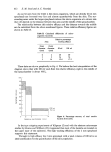
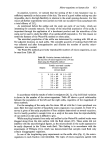
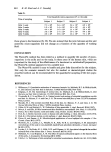
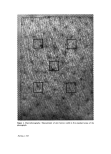
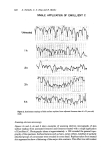
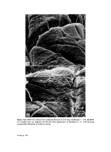
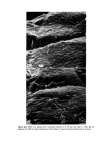
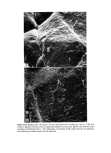
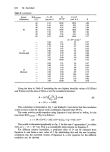
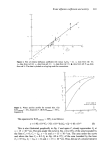
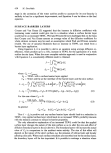
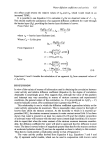
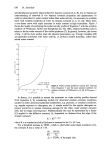
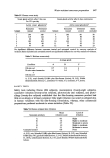
Water-resistant sunscreen preparation 647 Table IV. Human sweat study Sweat gland activity after 7-day use for 12 h per day Active sweat glands/cm • Sweat gland activity after 4 days continuous use Active sweat glands/cm • Sunscreen Untreated Sunscreen Untreated Saran Subject treated control Subject treated control occluded 1 144 149 7 106 98 78 2 119 122 8 81 80 50 3 99 96 9 85 81 30 4 103 103 10 105 91 17 5 86 80 11 77 82 23 6 47 56 12 89 96 23 No significant difference between sunscreen treated and untreated control by one-way analysis of variance. Saran occluded and untreated control are significantly different by one-way analysis of variance. Table V. Hairless mouse study Average grade Condition A B C 150 rain uvl 0'7 2-3 6 30 rain water immersion 1.6 5.6 7 + 150 rain uvl A, 3'3•o octyl dimethyl PABA plus film-former (lotion) B, 5'0•o PABA (hydroalcoholic lotion) C, untreated: 0-3 mild 3-5, moderate 6-7, severe. SAFETY TESTS Safety tests including Draize (204 subjects), maximization (twenty-eight subjects), cumulative irritation (twenty-seven subjects), phototoxicity (ten subjects), and photo- allergy (twenty-five subjects) established that the film-forming sunscreen product had little or no allergy or irritancy potential. Only slight irritation was noted on stripped skin in human volunteers with the film-forming formulation, whereas, other commercial preparations produced moderate to severe irritation (Table VI). Table VI. Human stripped skin irritation Mean Level of Sunscreen products irritation score irritation A 0.3 Slight B 1'4 Slight to moderate C 2.7 Moderate to severe D 1.2 Slight to moderate E 3-1 Moderate to severe Untreated control 0'0 None A, 3.3• octyl dimethyl PABA plus film-former (lotion) B, 3'0}/o amyl dimethyl PABA plus 3.0•o glyceryl PABA (lotion) C, 5.0• PABA (hydroalcoholic lotion) D, 10'0•o sulisobenzone (lotion) E, 2'5•o amyl dimethyl PABA (hydroalcoholic lotion).

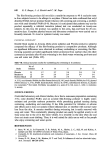
648 R. S. Berger, Z A. Mezick and C. M. Papa The film-forming product did not elicit a sensitivity response to 48 h occlusive tests in four subjects known to be allergic to acrylates. Clinical use tests confirmed that octyl dimethyl PABA did not produce facial irritation with sweating and swimming, a problem seen with amyl dimethyl PABA (6-8). Because it is anticipated that patients may use the product repeatedly, a subtotal inunction (abuse) test was conducted on twenty-one subjects. In this test, the product was applied to the arms, legs and back for 28 con- secutive days. Complete physical exams and laboratory evaluations were carried out at biweekly intervals. No local or systemic toxicity was noted. CLINICAL EFFICACY Double blind studies in Arizona (forty-seven subjects) and Florida (sixty-two subjects) compared the efficacy of the film-forming product to competitive products. Although no significant differences were observed in ordinary sunbathing or exercising, the film- forming sunscreen provided significantly better protection from sunburn than the other commercial products after 60 min swimming in two fresh water swimming pool tests and one salt water test (Table VII). Table VII. Clinical sunscreen studies for sunbathing plus swimming (1 h) erythema No of Study Subjects A B C D E Phoenix 23 1.7 2.7 2.8 2-9 2.9 Bradenton 12 1.4 2.6 2.9 3.0 3.0 Holmes Beach 25 1.9 2.5 2.8 * 3.0 A, 3.35/oo octyl dimethyl PABA plus film-former (lotion) B, 3.0• amyl dimethyl PABA plus 3.0• glyceryl PABA (lotion) C, 5'0• PABA (hydroalcoholic lotion) D, 10.05/oo sulisobenzone (lotion) E, placebo (no sunscreen). * Not tested. Erythema was graded on a scale of 0-3 (0, none 1, mild 2, moderate 3, severe). CONCLUSIONS Controlled laboratory and clinical studies, show that a sunscreen preparation containing 3'3•o octyl dimethyl PABA and an acrylate film-forming polymer is highly water- resistant and provides sunburn protection while permitting gradual tanning during swimming, sunbathing and exercising. It has little potential for irritation or adverse side effects and it does not unduly irritate inflamed skin or interfere with normal water loss from the skin. It remains steadfast during swimming but is easily removed with soap and water. This cosmetically pleasing product can easily be applied evenly to all body areas due to the oil in the water vehicle. It is invisible on the skin when dry and does not strain most clothing. Thus, it is well suited for daily use as well as for people who enjoy swimming and water sports. REFERENCES 1 Sams, W. M., Jr. In Fitzpatrick, T. B., Pathak, M. A., Harber, L. C., Seiji, M. and Kukita, A. Sunlight and Man 143 (1974) University of Tokyo Press, Japan. 2 Cumpelik, B. M. Analytical procedures and evaluation of sunscreens. J. Soc. Cosmet. Chern. 23 333 (1972). 3 Owens, D. W., Knox, J. M., Hudson, H. T. and Troll, D. Influence of wind on ultraviolet injury. Arch. Derrnatol. 109 200 (1974).
Purchased for the exclusive use of nofirst nolast (unknown)
From: SCC Media Library & Resource Center (library.scconline.org)