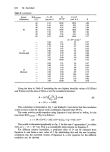
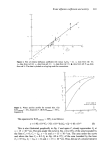
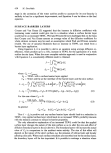
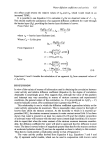
642 R. $. Berger, J. A. Mezick and C. M. Papa Ideally, a sunscreen should have a proper uvl absorption and be non-sensitizing and non-stinging, so that it could be used on irritated or inflamed skin. The product should not stain clothing or skin and be cosmetically acceptable so that it can be used routinely on the face. Cosmetic acceptability includes being able to apply the product evenly to provide uniform protection. Our approach was to combine a water-insoluble sunscreen agent with a water- resistant, skin adherent, film-forming polymer to prevent wash-off or rub-off of the sunscreen agent. Although the polymer had to remain on the skin during swimming and sweating, it had to be easily removed by soap and water, when desired. It was also important that this sunscreen preparation would not interfere with normal cutaneous functions, i.e. sweating. METHODS PHYSICAL CHEMICAL STUDIES The water solubility of sunscreen agents (p-aminobenzoic acid (PABA), N,N-dimethyl PABA esters and benzophenones) was determined spectrophotometrically. Saturated solutions of each sunscreen agent were prepared by mixing and equilibrating the agent in water at 37øC for 24 h. Solutions were centrifuged .and filtered through a 0.22 I• millipore filter. The concentration of each sunscreen remaining in solution was deter- mined by absorbance using a Beckman © model 25 spectrophotometer. Erythemal transmittance values of pure sunscreen agents were determined spectro- photometrically according to the method of Cumpelik (2). POLYMER AND VEHICLE An acrylate film-forming polymer was selected as the primary film-former for the sunscreen preparation. This polymer is skin-adherent and water-resistant. When dried on the skin, however, the film is easily removed with soap and water. An oil-in-water emulsion containing the acrylate polymer and octyl dimethyl PABA was prepared. Ammonium isostearate served as the primary emulsifier. ANIMAL STUDIES The hairless mouse model system (3-4)was used to evaluate the photoprotective effectiveness of the film-forming sunscreen preparation. For comparison, a commercial preparation containing 5% PABA in a hydroalcoholic lotion was included in the study. Test materials (5 rag/era •) were applied to the backs of the mice and allowed to dry for 1 h. One group of mice was exposed only to ultraviolet radiation and the second group was immersed in water for 30 min prior to uv exposure. The mice were irradiated for 150 rain at a distance of 30 cm with a Westinghouse FS 40 sunlamp. Grading was done 120 h after irradiation. SKIN SAFETY To test for irritation potential of the film-forming sunscreen preparation on damaged skin, adhesive tape stripped wounds (1.27 x 2.54 era) were made on the backs of human volunteer subjects. Commercial sunscreen preparations containing 5% PABA (lotion) 3•o glyceryl PABA plus 3•o amyl dimethyl PABA (lotion) 2'5•o amyl dimethyl PABA

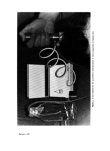
Water-resistant sunscreen preparation 643 (alcoholic vehicle) and 10•o sulisobenzone (lotion) were included in the study. Each test material was applied to gauze (0-5 ml), placed on the wound, occluded for 18 h and evaluated on a 0-4 scale 2 h after removal of the gauze. Standardized predictive tests, i.e. Draize, maximisation, cumulative irritation, phototoxicity, photoallergy and subtotal inunction tests were conducted on the film-forming sunscreen preparation. Also, known acrylate sensitive volunteers were tested for allergic sensitivity by a 48 h occlusive patch test. TRANSEPIDERMAL WATER LOSS A 5.08 x 5.08 cm area was outlined on the backs of six volunteer subjects. Trans- epidermal water loss readings were measured with an air flow hygrometer on these normal skin sites. The polymeric film-forming sunscreen product was applied (0.2 ml) to the outlined site and allowed to dry for 30 min before measuring transepidermal water loss. ECCRINE SWEAT STUDY To determine whether the acrylate film would interfere with sweating and/or produce sweat retention problems, the polymeric film-forming sunscreen preparation was applied daily (2.5 mg/cm •) to 10.16 x 10.16 cm sites on human volunteers under chronic use conditions (12 h per day for 7 days) and misuse conditions (continuous use for 4 days). At the end of both experiments, the films were removed with soap and water and the areas allowed to dry at least 2 h before sweat prints were made. Sweat prints were obtained with the silastic impression technique of Harris (5). A Saran© wrap occluded site served as a positive control. CLINICAL STUDIES Double blind clinical investigations included the following. 1. Two fresh water swimming pool studies. Weather conditions varied from a hot, dry climate in Phoenix, Arizona (100øF, 5•o relative humidity) to hot, humid conditions in Bradenton, Florida (90øF, high humidity). 2. One salt water ocean study conducted in Holmes Beach, Florida, with hot and humid weather conditions, (85øF, 68•o relative humidity) in winds of 20 mph and rough seas. The film-forming sunscreen preparation containing 3'3•o octyl dimethyl PABA and commercial products containing the following sunscreen agents were evaluated in these studies: 5.0• PABA (lotion) 3.0• amyl dimethyl PABA plus 3-0• octyl dimethyl PABA (lotion) and 10• sulisobenzone (lotion). A single application of product was applied to the backs of each subject (2.5 mg/cm 2) at Phoenix and Holmes Beach and (5.0 rag/era 2) at Bradenton. Product sites were random- ised on each subject. Sun exposure was between 10:00 a.m. and 2:00 p.m. with 60 min swimming before 12:00 noon. Erythema was graded on a scale of 0-3 (0, none 1, mild 2, moderate 3, severe), 6 h after the study. FABRIC STAIN STUDY A multifibre fabric obtained from Testfabrics, Incorporated, and approved by the
Purchased for the exclusive use of nofirst nolast (unknown)
From: SCC Media Library & Resource Center (library.scconline.org)