j. $oc. Cosmet. Chem., 29, 745-756 (December 1978) Low-energy emulsification I1: evaluation of emulsion quality T.J. LIN 628 Enchanted IVay, Pacific Palisades, CA 90272' Toshiyuki Akabori, Shoji Tanaka and Katsuyuki Shimura, Arimino Chemical Co., Ltd., Tokyo, Japan. Received December 26, 1977. Presented at Annual Scientific Meeting, Society of Cosmetic Chemists, December 1977, New York, New York. Synopsis LOW-ENERGY EMULSIFICATION (LEE), an emulsification technique proposed by Lin (1, 2) to conserve mechanical and thermal energies in the processing of emulsions, was EXAMINED in terms of EMULSION QUALITY and compared with similar emulsions made with a conventional hot process. Experimental data obtained from prototype cosmetic formulations consisting of W/O and O/W emulsions stabilized with various cationic, anionic and nonionic surfactants and their mixtures indicate that the technique is extremely flexible and is capable of producing emulsions with varying droplet sizes. The key to success in applying the technique lies in understanding and controlling the physical variables responsible for causing a droplet size variation. The key variables found were: first stage emulsification temperature, mixing intensity, ratio of external phase added during the first stage of emulsification to that of the second stage dilution, rate and the mode of phase combination. By effectively controlling these variables, it has been demonstrated that it is possible to produce emulsions with smaller and more uniform droplet size distribution using the low-energy technique than similar emulsions obtained with the conventional hot emulsification. In many instances, withholding of a large amount of external phase for later addition resulted in a sharp reduction of the droplet size. This effect is apparently related to the solubilization effect observed by Lin, Kurihara and Ohta (3, 4) and a proper control of this effect allows processing of finer emulsions with a substantial reduction of not only thermal and mechanical energies but also processing time. INTRODUCTION The basic principles and the economical advantages of low-energy emulsification (LEE) have been thoroughly discussed by Lin in his earlier publications (1, 2). Basically the technique involves withholding a portion of the emulsion's external phase and first making an emulsion concentrate at an elevated temperature. The withheld external phase is kept at a lower temperature and added to the concentrate with mixing during the second stage (diluting) operation. Since a portion of the external phase is added at a lower temperature (usually room 745

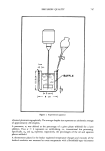
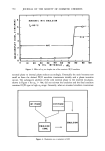
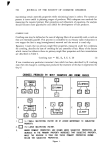
746 JOURNAL OF THE SOCIETY OF COSMETIC CHEMISTS temperature), a significant amount of thermal energy can be conserved particularly if the amount of withheld external phase is substantial relative to the amount of emulsion concentrate processed in the first stage. In addition to conserving thermal energy, the technique also allows a considerable reduction in processing time by effectively reducing the time required for batch cooling. Mechanical energy expended during the cooling period is, as a result, also reduced. It should be emphasized that LEE differs substantially from ordinary, low-temperature emulsification in that the entire process is not carried out at a constant, low temperature. First-stage emulsification can be carried out at almost any desired temperature to obtain the necessary sterilization, dispersion, blending or promotion of a chemical reaction in the low-energy method. The diluting liquid to be added to the batch at the second stage is usually kept at ambient temperature but may be adjusted to any desired temperature, if necessary. LEE is, therefore, much more versatile compared to the conventional, low-temperature method as it allows processing of a wide variety of cosmetic emulsions even when they contain waxy substances such as cetyl alcohol, stearic acid and beeswax. By applying thermal energy only when and where needed, LEE offers a great flexibility with a definite economical advantage. Whereas the economy of LEE cannot be disputed for the mass production of emulsions when applicable, the quality of emulsions so produced has not been critically examined. The main purpose of this investigation is to systematically evaluate the qualities of typical O/W and W/O cosmetic emulsions prepared by LEE against similar emulsions prepared by a conventional hot process. The quality of a cosmetic emulsion is an ambiguous term and is obviously dependent on its end purpose and one's definition. For the purpose of this presentation, nevertheless, the quality of an emulsion is defined such that the finer the droplet size, the better the quality. This definition is consistent with most applications of cosmetic emulsions as a finer droplet size is usually associated with a finer texture, higher gloss and, generally, but not absolutely, with a better stability. The definition is an arbitrary one, however, as a finer droplet size does not always guarantee a better stability or better performance. Emulsion stability is dependent not only on the droplet size distribution of the internal phase but also on many other factors such as rheological and electrical properties. Moreover, in some cosmetic applications, an excessive stability may not even be desirable from the product performance viewpoint. EXPERIMENTAL All emulsions were prepared in a 500-ml glass beaker equipped with four baffles as shown in Figure 1. A six-blade, stainless steel turbine with 50 mm diameter and 20 mm height, set 15 mm above the bottom of the beaker, was used for mixing. The mixer, driven by a powerful motor, rotates at exactly preset speeds virtually unaffected by viscosity variations during the mixing operation. In most instances, the internal phase of the emulsion was first heated to a desired temperature in the 500-ml beaker. A predetermined amount of the external phase, heated to the same temperature as the internal phase, was then added to start first-stage emulsification at a preset speed. The portion of the external phase withheld for second-stage addition was kept at approximately 20øC and later added to the emulsion concentrate at an approximately constant rate of 150 ml/min through a funnel. The finished emulsion was then mixed to uniformity and the droplet size distribution was
Purchased for the exclusive use of nofirst nolast (unknown)
From: SCC Media Library & Resource Center (library.scconline.org)