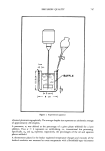
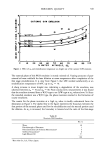
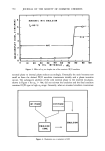
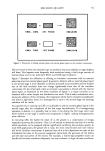
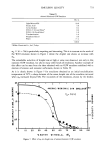
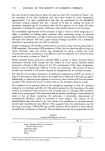
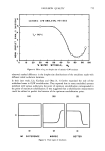
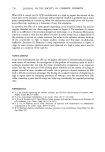
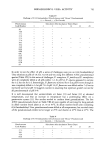
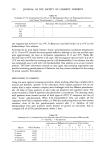
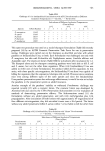
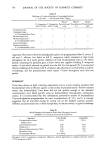
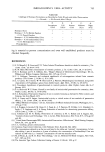
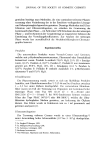
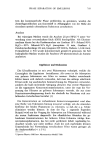
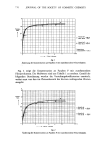
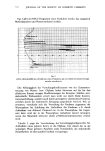
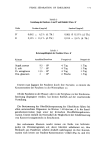
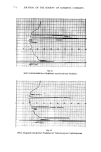
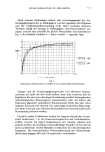
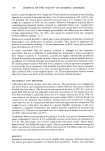
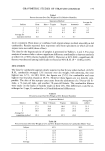
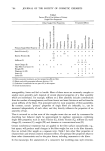
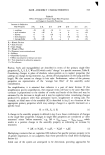
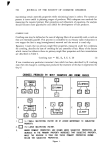
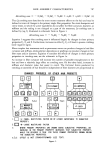
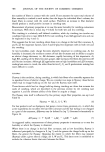
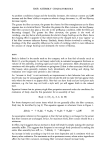
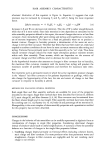
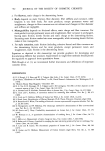
EMULSION QUALITY 749 • • I 1 CATIONIC O/W EMULSION 55- ß o ,.• z )øC 0 I0 20 :50 40 50 60 70 80 90 I00 % WATER WITHHELD, •1• Figure 2. Effect of o/H and emulsification temperature on droplet size of the cationic O/W emulsion The external phase of this W/O emulsion is mostly mineral oil. Varying amounts of pure mineral oil were withheld for later dilution at room temperature after completion of the first stage emulsification. It is clear from Figure 3 that LEE worked satisfactorily at an emulsification temperature of 80øC up to c• o = 70. A sharp increase in mean droplet size, indicating a degradation of the emulsion, was observed between c• o = 70 and c• o = 80. From conductivity measurements it was found that the emulsion inverted from a W/O type to an O/W type at c• o values above 70. Since the intended emulsion was a W/O type, the phase inversion resulted in the formation of coarse emulsions. The reason for the phase inversion at a high cr o value is r•adily understood from the illustration in Figure 4. The dashed line in the figure represents the boundary between the first portion of the external phase used for the emulsification and the second portion used for dilution. As cr o is increased, the boundary is lowered and the ratio of the first-stage Table II Nonionic W/O Emulsion Wt. % Water 30 Diethyleneglycol Distearate 1 Polyoxyethylene (20) Sorbitan Monostearate a 4 Sorbitan Sesquioleate a 8 Light Mineral Oil 57 100 a Kao-Atlas Co., Ltd., Tokyo, Japan.

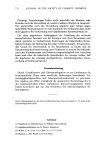
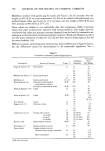
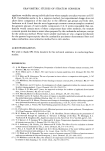
750 JOURNAL OF THE SOCIETY OF COSMETIC CHEMISTS • 6 i I I i I i i I i - NONIONIC W/O EMULSION - _ T. '80øc • - F O/W'-- 0 I0 20 $0 40 50 60 70 80 90 O0 % OIL WITH HELD , O( e Figure 3. Effect of •o on droplet size of the nonionic W/O emulsion external phase to internal phase reduces accordingly. Eventually the ratio becomes too small to form the desired W/O emulsion concentrate initially and a phase inversion occurs. The subsequent addition of the cold external phase to the inverted emulsions, shown in Figure 3 for oz o 70%, did not reinvert the emulsion and the final emulsion remained O/W type in high oz o range. Generally, when an inverted emulsion concentrate INT PHASE I EX'[ PHASE EMULSI ON CONC. EMULSION ! Figure 4. Illustration on • variation in LEE
Purchased for the exclusive use of nofirst nolast (unknown)
From: SCC Media Library & Resource Center (library.scconline.org)