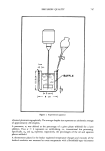
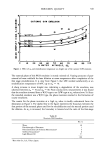
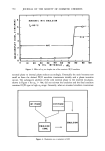
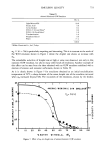
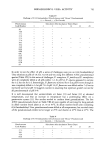
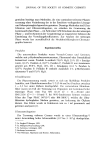
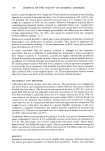
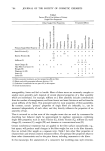
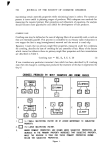
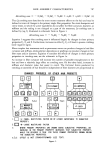
786 JOURNAL OF THE SOCIETY OF COSMETIC CHEMISTS maximizing certain assembly properties while minimizing losses in others. The system at present is more useful in planning stages of products. With adequate test methods for measuring the required primary fiber properties and refinement of equations, the analysis should become more quantitative and useful for development of hair products. COMBING EASE Combing ease may be defined as the ease of aligning fibers of an assembly with a comb so they are essentially parallel. This process is considered in our beauty salon evaluations in two stages: the first is snag (entanglement) removal and the second is comb slip. Equation 3 states that six primary single fiber properties, measured under the conditions for combing, describe the ease of combing for any assembly of hair. Many of the factors which control or influence these six primary single fiber properties and their interrelations are described in Table I. Combing ease = f(F,, Fk, S, E, C, D) (3) If one considers any particular consumer's hair which has been described by K combing ease, then the change in combing ease produced by treatment of this hair is represented by (eq 4.) CHANGES PRODUCED BY MOST SHAMPOOS AND CREME RINSES Q. Ii• MANAGE'I BILIT•_• I/\LIMPNESI I. f'• =n = SMALL MULTIPLYING FACTOR OR OF LESSER IMPORTANCE TO SUBJECTIV PROPERTY. 2. • =N = LARGE MULTIPLYING FACTOR. 3. WHERE PRIMARY PROPERTIES ARE DRAWN ABOVE SUBJECTIVE PROPERTIES, AN INCREASE IN THE PRIMARY PROPERTY INCREASES THAT SUBJECTIVE PROPERTY, WHILE THE REVERSE IS TRUE FOR THOSE PRIMARY PROPERTIES DRAWN BELOW THE SUBJECTIVE PROPERTIES. Figure 1.

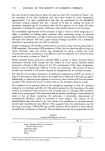
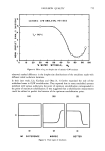
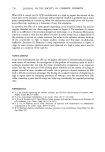
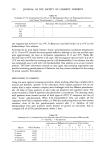
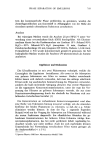
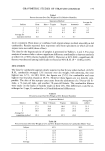
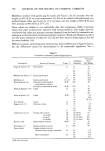
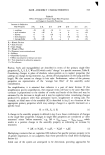
HAIR ASSEMBLY CHARACTERISTICS 787 ACombing ease = -- NiAF k -- N2AFs -- N3AE + nlAS -[- n2AD -- N4AC (4) Thus A combing ease describes the most recent treatment effects on the hair and may be defined in terms of changes in the primary single fiber properties. For most shampoos and creme rinses, in which the active ingredients do not affect the fiber curvature, diameter, or stiffness and the styling is not changed as a part of the treatment, A combing ease is defined by (eq 5), illustrated in schematic form in Figure 1. ACombing ease = -- N•AF k -- N•AF s -- N3AE (5) Equation 5 suggests that combing ease is influenced largely by changes in three primary properties Fk, F s and E. Furthermore, increases in either Fk, F, or E lead to poorer combing (note negative signs). More complex hair treatments such as permanent waves can produce changes in hair fiber curvature and stiffness, while polymer depositions or graftings can produce changes in hair fiber mass and/or diameter. Equation 4 considers the effects of changes in these primary properties on combing ease, see the schematic in Figure 2a. An increase in fiber curvature will increase the number of possible entanglements in the hair and have a relatively large effect on combing ease. On the other hand, increases in stiffness and diameter make hair easier to comb. The frictional forces produced by combing an assembly of hair should be independent of fiber diameter yet proportional to CHANGES PRODUCED BY OTHER HAIR PRODUCTS • .AC d l^ MANAGE-I STYLE RETENTIONJ ,Ac ,AC =n = SMALL MULTIPLYING FACTOR OR OF LESSER IMPORTANCE TO SUBJECTIVE PROPERTY. :N" LARGE MULTIPLYING FACTOR. WHERE PRIMARY PROPERTIES ARE DRAWN ABOVE SUBJECTIVE PROPERTIES, AN INCREASE IN THE PRIMARY PROPERTY INCREASES THAT SUBJECTIVE PROPERTY, WHILE THE REVERSE IS TRUE FOR THOSE PRIMARY PROPERTIES DRAWN BELOW THE SUBJECTIVE PROPERTIES. EFFECT IS NOT STRAIGHTFORWARD (SEE TEXT}. Figure 2.
Purchased for the exclusive use of nofirst nolast (unknown)
From: SCC Media Library & Resource Center (library.scconline.org)