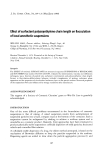
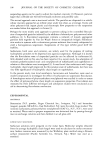
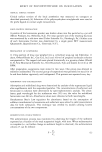
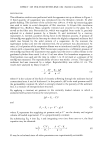
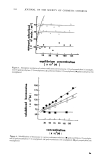
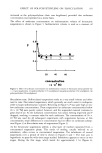
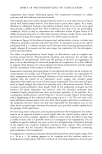
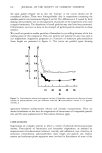
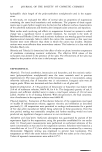
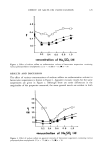
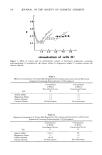
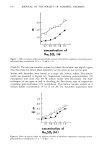
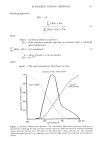
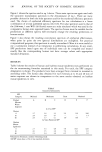
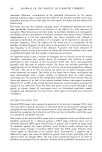
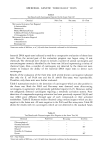
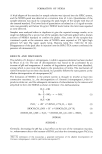
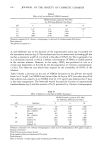
EFFECT OF SALTS ON FLOCCULATION 125 ø.81 0.6 0.2 , i i, I I i • 0.2 0.4 0.6 0.8 1.0 concentration of Na2$O Figure 1. Effect of sodium sulfate on sedimentation volume of benzocaine suspensions containing various polyoxyethylene nonylphenols. (El) n = 7.5 (&) n -- 15 (I) n = 50. RESULTS AND DISCUSSION The effect of various concentrations of sodium sulfate on sedimentation volume in' benzocaine suspensions is shown in Figure 1. Apparent viscosity results for the same suspensions are given in Figure 2. Although there are some differences in the magnitudes of the properties measured, the same general trends are evident in both 60 50 40 30 20 lO I ! I I I = 0.:2 0.4 0.6 0.8 1 .o concentration o! Na2SO 4 (M) Figure 2. Effect of sodium sulfate on apparent viscosity of benzocaine suspensions containing various polyoxyethylene nonylphenols. (El) n = 7.5 (A) n = 15 (I) n = 50.

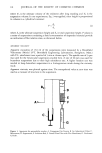
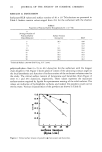
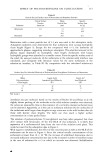
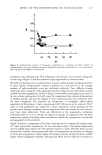
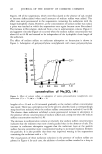
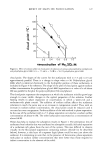
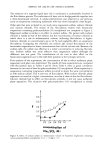
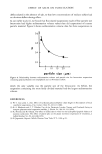
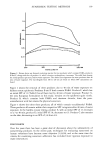
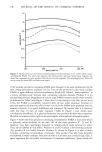
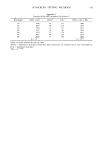
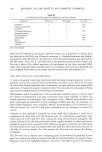
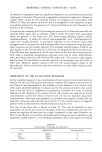
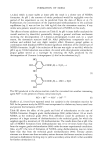
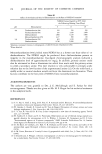
126 JOURNAL OF THE SOCIETY OF COSMETIC CHEMISTS Figures. All of the suspensions, which were flocculated in the absence of salt, tended to become defiocculated when small amounts of sodium sulfate were added. This effect was most pronounced in the suspensions containing the surfactants with the longer hydrophilic chains. However, as the concentration of sodium sulfate was raised, a point was reached at which the suspensions once again became more flocculated. The increase in flocculation, deduced from a rise in sedimentation volume (Figure 1) and apparent viscosity (Figure 2) occurred when the sodium sulfate concentration was about 0.5 to 0.6 M and seemed to be independent of the hydrophilic chain length of the surfactant. The effect of sodium sulfate on surfactant adsorption on benzocaine is shown in Figure 3. Adsorption of polyoxyethylene nonylphenols with mean polyoxyethylene lOO 8o 40 2O 0.2 0.4 0.6 0.8 1.0 concentration of Na2SO 4 (iv i) Figure 3. Effect of sodium sulfate on adsorption of various polyoxyethylene nonylphenols onto benzocaine. ([]) n = 7.5 (A) n = 15 (I) n = 50. lengths of n=15 and n=50 increased gradually as the sodium sulfate concentration was raised. There was a precipitous rise in the percent adsorbed (and a correspondingly steep loss from solution) when the sodium sulfate concentration reached 0.5 to 0.6 M. The shorter chain surfactant exhibited a more pronounced increase in adsorption in the presence of low concentrations of sodium sulfate and a ste. ep rise when the sodium sulfate concentration reached 0.2 M. The decrease in sedimentation volume at relatively low sodium sulfate concentrations indicates that the sediment was more closely packed than in the absence of salt. The increase in surfactant adsorption suggests that the surfactant layer at the particle surface became somewhat more concentrated, leading to increased repulsion between the particles. It is also possible that there was improved wetting in the suspensions containing the surfactant with n = 50. The cloud points of these surfactant solutions in the presence of sodium sulfate are plotted in Figure 4. In each case, the addition of sodium sulfate resulted in a drop in
Purchased for the exclusive use of nofirst nolast (unknown)
From: SCC Media Library & Resource Center (library.scconline.org)