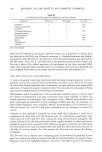
134 JOURNAL OF THE SOCIETY OF COSMETIC CHEMISTS scattering is particularly useful when dealing with either tissue samples or with physical sunscreens, because it collects all the light transmitted regardless of how it may have been scattered. During the past year, this laboratory has published several papers comparing the predicted effectiveness of sunscreening products with comparable human Sun Protec- tion Factor (SPF) tests on identical amounts of product (1,2,3). The results of these studies showed that solution tests of sunscreening effectiveness always indicated that sunscreening products should be many times more effective than they were in actual human use. These studies also showed that the solution tests could not correctly predict even the relative ordering of the effectiveness of a set of products. Based on these studies, extreme caution should be used in making any prediction of sunscreen effectiveness based on data from solution spectral analysis of sunscreening products. The other major type of in vitro test used has been examination of the transmission or absorption spectral characteristics of thin films of sunscreening products. Groves and Robertson have long been advocates of this type of testing (4-6). Recently in collaboration with Dr. Gordon A. Groves (University of Queensland, Australia), this laboratory examined a set of products to determine how well the thin film spectral technique compared with human tests. The results indicated that in vitro thin film tests in which skin is not included failed similarly to solution tests. At this time, only one in vitro test of sunscreen eflScacy remains which appears to produce results consistent with human tests. That test utilizes separated epidermis as a matrix on which sunscreen products can be spread and their forward scattering spectra analyzed. Published results for over twenty products indicate good agreement with actual human tests for a variety of different sunscreening ingredients and product vehicle types (1,2). We have also applied the forward scattering technique to other in vitro analyses, including examining the transmission properties of melanins of skin. The photoprotec- tive and photoreactive behavior of phaeomelanin impregnated skin has been reported from this laboratory in collaboration with Chedekel et al. (7). In that study phaeome- lanin-impregnated skin was shown to have a forward scattering spectrum similar to skin containing naturally occuring melanin. Our procedure was also used in a comparative UV transmission study of black and Caucasian epidermis and stratum corneum with Kaidbey and Kligman (8). The predictive techniques used for sunscreens were utilized in that study to demonstrate that the in vitro estimates of the transmission of skin were reliable in both the UVB and UVA portions of the spectrum. A third application of this method tested the possibility that butylated hydroxytoluene (BHT) could act as an oral sunscreen. This was investigated in collaboration with Black and colleagues (9,10). The epidermis of BHT-fed mice transmits less radiation than those of normal-diet mice. Subsequent chemical investiga- tions showed that only minute levels of BHT could be found in the epidermis of these animals. Our modified predictive test for sunscreening effectiveness provided an estimate that a greater amount of UV radiation would be required to produce erythema in BHT-fed animals. The DRF (dose reduction factors) calculated were consistent with those previously reported by DeRios and colleagues (11). Apparently a slight increase in skin thickness caused by the BHT results in less radiation being transmitted through the epidermis more energy is therefore required to produce erythema. This protective effect was easily detected using our in vitro technique.

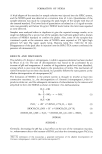
SUNSCREEN TESTING METHODS 135 The results presented in this paper are significant extensions of our previous efforts which further indicate the versatility of using skin as a matrix for studying sunscreen product behavior. In this paper, we report the results of studies testing the resistance of sunscreening products to removal by water exposure by comparable in vivo and in vitro techniques. MATERIALS AND METHODS Solar simulator light source. The solar simulator used in this study consisted of a 2500 W xenon arc filtered by a dichroic mirror to remove visible and infra-red radiation and by a secondary cut-off filter (1.0mm WG-320) to shape the short wavelength portion of the spectrum similar to that of natural sunlight. Five independent, electronically timed, 1 cm 2 exposures can be administered with this instrument simultaneously. All exposures in this study were based on a geometric progression, each 25% greater than the previous one, i.e., T• = 1.25 T O T n = 1.25 T n_• The advantages of such incremental exposures are described by Hoppe et al. (12) and by Van der leun (13). Products tested in the study: A. Eversun 2, Roche Products, Ltd.--2.4% octyl methoxy cinnamate .02% guanine B. Irma Shorell Protective Sun Creme, Irma Shorell, Inc.--3.5% PABA titanium dioxide C. Sundown Moderate Protection, Johnson & Johnson--3.3% octyldimethy PABA D. Sundown Extra Protection, Johnson & Johnson--3% benzophenone-3 4% octyldimethyl PABA E. Shade Plus Lotion, Schering-Plough, Inc.--7% octyldimethyl PABA, 3% benzo- phenone-3 F. Creamy PreSun, Westwood Pharmaceuticals--5% para-aminobenzoic acid In vivo human sunscreen testing. For each product tested, 10 to 20 healthy volunteers were selected who were free of any conditions that might abnormally affect test results. Informed consent was obtained from each volunteer before beginning the sunscreen test. The methods used in this study follow those previously described (1). Two test sites which were uniform in pigmentation and free of any observable defects were selected on the arms of each volunteer. On the first site, a series of five graded exposures measuring 1 X 1 cm each was administered with the xenon arc solar simulator. This graduated series of exposures given on untreated, unprotected skin was used to determine the subject's minimal erythemal dose (MED). The results of these exposures were evaluated the next day to determine the lowest exposure which produced a minimally perceptible redness.
Purchased for the exclusive use of nofirst nolast (unknown)
From: SCC Media Library & Resource Center (library.scconline.org)