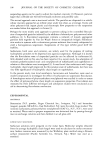
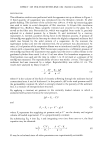
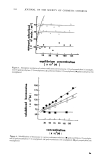
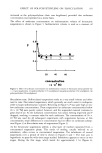
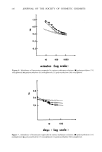
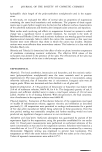
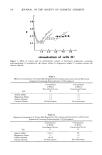
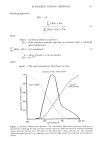
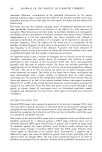
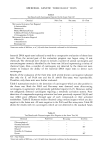
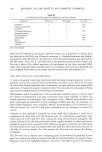
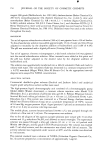
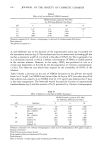
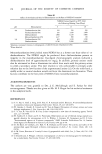
138 JOURNAL OF THE SOCIETY OF COSMETIC CHEMISTS Figure 1 shows the spectra used in eq 2 above. These same spectra are again used with the sunscreen transmission spectrum in the denominator of eq 1. There are many possible choices for both the solar spectrum and for the erythemal efficiency spectrum used. The choice of erythemal efficiency spectrum for our calculations is a linear combination of several published spectra (16,17,18). The solar spectrum used is that of the 2500 watt, 1 mm WG-320 filtered xenon arc solar simulator which was used in the comparative human tests reported herein. The spectra chosen must be suitable for the predictions as different spectra will necessarily change the resulting predictions or human results. Figure I also shows the resulting convolution spectrum of erythemal effectiveness, when point by point the two spectral distributions are multiplied. For practical computational purposes, this spectrum is usually normalized. Often it is more useful to use a summation instead of an integration in performing calculations. In any event, SPF predictions based upon sets of individual tests can be compiled and treated exactly like the corresponding human test data: average values with appropriate standard deviations. RESULTS Table I shows the results of human and hairless mouse epidermis tests performed on the six sunscreening formulas examined in this study. For each, the SPF category designation is shown. The products have been arranged from minimal to maximal in ascending order. The human data obtained for each formula at O, 10 and 40 min of water exposure are shown in comparison to the same results obtained on hairless mouse epidermis in vitro. Table I Sunscreen Substantivity SPF Category Minimal Moderate Extra Maximal Product Minutes Water Exposure Human 0 10 40 Hairless Mouse Epidermis 0 10 40 A B C D E F In Vivo SPF + 2.7 5.6 5.3 5.9 13.9 2.8 3.8 4.7 -- -- 2.8 3.7 5.1 5.8 • 8.0 • In Vitro Predicted SPF 2 14.0 1.4 -- 2.7 5.3 4.8 7.8 13.0 12.0 2.6 2.5 3.6 7.4 6.4 1.0 2.5 2.4 3.6 6.5 7.0 1.0 •Obtained in 40-minute, outdoor swimming study. •All SPF values have a 25% or less standard deviation.

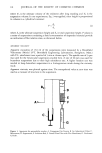
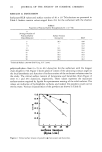
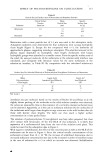
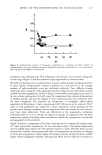
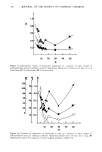
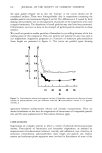
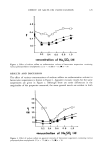
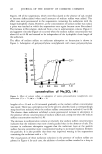
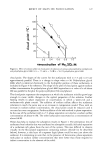
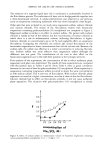
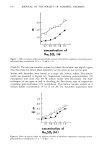
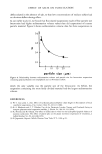
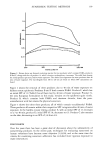
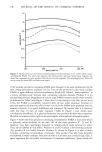
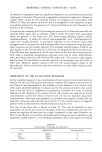
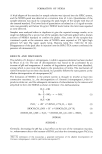
SUNSCREEN TESTING METHODS 139 1.0- 0.8 0.4 w 0.2 m 290 360 3•0 3:•0 NM WAVE LENGTH Figure 2. Shown above are forward scattering spectra for two products which contain PABA, products B and F, along with that of product A, which contains octylmethoxy cinnamate. The solid lines denote the initial product spectrum, before water exposure. The dotted lines represent the same products after 40 min of water exposure. The wavelengths from 290 to 320 nm are those on which SPF calculations are based. Figure 2 shows the removal of three products due to 40 min of water exposure on hairless mouse epidermis. Products B and F both contain PABA. Product F, which has an initial SPF of 12 (Table I) has all been lost by 40 min of water exposure. Product A, the only European formulation in this study, remains on the epidermis quite nicely. Product B, which contains both PABA and titanium dioxide, loses the para- aminobenzoic acid but retains the physical sunscreen. Figure 3 shows the other three products, all of which contain octyldimethyl PABA. These products all remain within their respective SPF categories after 40 min of water exposure. In the hairless mouse testing, product E, with an initial SPF of 13 decreases to a 7 at 40 min product D, initial SPF of 7.8, decreases to 6.5. Product C also remains on the skin, decreasing to an SPF of 3.6 from 4.8. DISCUSSION Over the years there has been a great deal of discussion about the substantivity of sunscreening products. In the recent past, techniques for evaluating sunscreens on human volunteers have become more objective (1,19,20), and at the same time the criteria for examining sunscreen adherence has included more rigorous exposure to water (14,19,20,21).
Purchased for the exclusive use of nofirst nolast (unknown)
From: SCC Media Library & Resource Center (library.scconline.org)