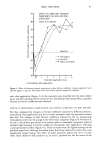
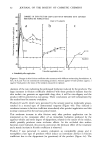
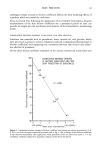
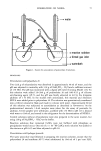
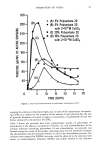
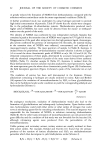
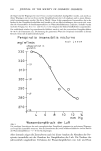
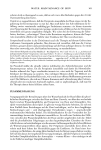
56 JOURNAL OF THE SOCIETY OF COSMETIC CHEMISTS properties of the petrolatum, while later on the coefficient increases over baseline as a consequence of the increased skin moisturization induced by the occlusion. Consumers usually rate "greasiness" as a negative attribute in emollient or cosmetic products. The perception of greasiness traditionally has been measured by sensory evaluation techniques. In this paper we describe the use of a portable friction meter to assess, quantitatively and in vivo, the changes in the friction coefficient of the skin following product use. We further demonstrate that these changes are inversely proportional to the subjective after-feel of. greasiness, as determined in sensory panel studies. Finally, we confirm that the skin coefficient of friction changes with the state of hydration of the skin therefore, these measurements can be used to determine the duration of skin hydration following product application. Because of its simplicity, objectivity, and time-saving features, this methodology is especially suited to the screening of large numbers of prototype formulations when the important after-feel perception of greasiness is of primary concern. EXPERIMENTAL METHODS AND MATERIALS The coefficient of skin surface friction was measured with the Newcastle Friction Meter (Figure 1). This is a portable, hand-held instrument designed by Comaish, et al. (2) and consists of a spring-loaded Teflon © wheel driven by a battery-powered precision motor which develops high torque at low speed. The frictional resistance to rotation induced by the surface against which the wheel is pressed is registered on a meter directly calibrated to measure the friction coefficient. [Full specifications for this instrument have been published by the designers (2).] The friction meter is so designed that the pressure against the skin (skin head loading) and the speed of the wheel rotating against the skin surface remain constant under all conditions of use. Hence, measurements of skin friction made at each test site on the subject's skin are reproducible. The effects of different raw materials and products on the skin friction coefficient were compared by measuring the changes in treated vs. non-treated (control) sites as a function of time after treatment. Baseline measurements of the treated sites on the subjects' volar forearms were made before product application. Then the subjects applied ad lib small amounts of the test material (about 2 mg/cm 2 of skin) to each designated test site and spread it uniformly over the skin. . The distribution of treatments and treated sites was randomized for all subjects to avoid potential bias due to site variation. Water and a no treatment site were always used as controls. The skin friction coefficient was measured in triplicate at each site, immediately and then at various times after product application. The temperature in the room in which the tests were made was kept between 65-79øF and the relative humidity was recorded with a HUMI-CHEK © (Beckman Instruments, Cedar Grove, NJ 07009) electronic humidity indicator. No tests were performed if the humidity was below 15% or above 40%.

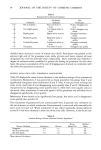
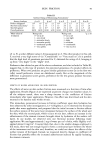
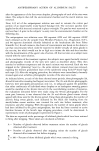
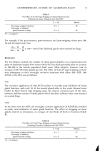
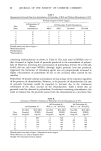
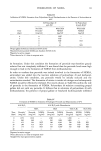
SKIN FRICTION 57 Figure 1. Newcastle friction meter being applied to the volar forearm. SENSORY EVALUATION All samples were evaluated on a blind basis by a group of trained judges (sensory panel) who routinely grade attributes of various topical products several times weekly. Perceived greasiness associated with the application of each product or sample was measured on a 6-point interval scale, from "not at all greasy" to "very greasy," after randomized applications of samples to the inside of the left or right volar forearm. The associated attributes of stickiness/tackiness and skin penetration (absorption) were also graded (Table I). Additionally, overall preference was elicited. Applications were randomized to eliminate test bias and standardized in the following manner: Equal amounts (0.2 cm 3) of each product were applied. Subjects applied products using the middle and index fingers of the appropriate hand to rub in a circular motion twenty (20) times. After cleansing their fingertips with facial tissue, subjects evaluated their tactile perceptions monadically (one sample at a time) by gently tapping and stroking the treated surface with their fingertips. RESULTS AND DISCUSSION SENSORY EVALUATION WITH LUBRICANT COSMETIC INGREDIENTS Table II shows the mean scores obtained in blinded evaluation of petrolatum, heavy mineral oil, and glycerin (water served as a positive control). All of these commonly utilized cosmetic raw materials generated high greasiness scores. In comparison,
Purchased for the exclusive use of nofirst nolast (unknown)
From: SCC Media Library & Resource Center (library.scconline.org)