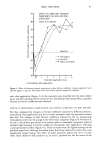
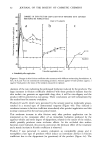
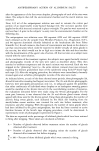
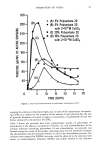
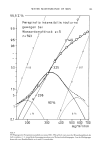
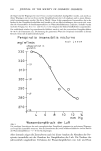
62 JOURNAL OF THE SOCIETY OF COSMETIC CHEMISTS •I CHANGES IN SKIN FRICTION COEFFICIENT AFTER TREATMENT WITH DIFFEREN 120]l • MOIS'rURIZING FORMULATIONS Jl (mean of 5 subjects) c õ oo •, 40 • zoJJ- Ill20 J-.•"'•b J- I-Y ] I I • I I I • I I I I O* 2 4 6 O* 2 4 6 O* 2 4 6 Time after application (hrs) . Immediately after application Figure 4. Changes in skin friction coefficient after treatment with different moisturizing formulations. A, B, C, D, E, and F are six commercial moisturizing products. Amount applied of each product: approx. 2 mg/cm 2. Each point is the mean of five subjects measured in triplicate. duration of the test, indicating the prolonged hydration induced by the products. The large increases in friction coefficient observed with these products indicate that the skin surface can generate an appreciable drag thus, it will be non-slippery and the product will be perceived as non-greasy. These conclusions are well substantiated by the results from the sensory evaluation. Products D and E, which were perceived by the sensory panel as moderately greasy, resulted in a second type of instrumental response (Figure 4-b). They induced a moderate increase in friction coefficient immediately after product application and this increase continued for the six hour period tested. This moderate increase in skin friction early after product application can be interpreted as the composite effect of an immediate hydration produced by the aqueous vehicle and some degree of slipperiness, related to the nature of the residue, which possibly produces some occlusive effects. As the occluded skin surface becomes more hydrated, this process overcomes the lubricant effect of the treatment and a steady increase in friction coefficient is observed. Product F was perceived in sensory evaluation as considerably greasy and it exemplifies a last type of products which induce an immediate decrease in friction coefficient due to the slipperiness (or greasiness) of the product (Figure 4-c). The

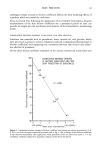
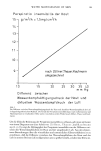
SKIN FRICTION 63 subsequent steady increase in friction coefficient reflects the slow hydrating effects of a product which acts mainly by occlusion. Thus, we found that, following the application of an emollient formulation, frequent measurements of the skin friction coefficient for a protracted period of time can provide an insight into the mechanism and duration of the formulation's moisturizing action. CORRELATION BETWEEN SENSORY EVALUATION AND SKIN FRICTION Lubricant raw materials such as petrolatum, heavy mineral oil, and glycerin, which were perceived as greasy in sensory evaluation, induced a substantial initial decrease in friction coefficient, thus supporting the correlation between skin friction and subjec- tive afterfeel of greasiness. On the three sensory attributes evaluated on the various commercial moisturizers and lOO .A CORRELATION BETWEEN CHANGES IN FRICTION COEFFICIENT AND SEN- SORY PERCEPTION OF GREASINESS ,C r 2= -0.995 E D, -2O -40 0 1 2 3 4 5 (not greasy) Mean score of greasiness (very greasy) Figure 5. Correlation between changes in friction coefficient and sensory perception of greasiness. A, B, C, D, E, and F are the same commercial products used in Fig. 4. The % change in skin friction coefficient is that observed immediately after application, while greasiness scores are taken from Table 3. r 2 is the correlation coefficient obtained by regression analysis and the line is the best fit.
Purchased for the exclusive use of nofirst nolast (unknown)
From: SCC Media Library & Resource Center (library.scconline.org)