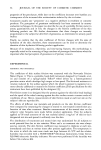
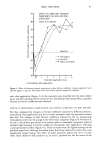
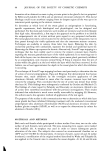
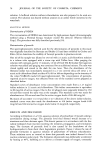
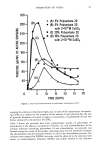
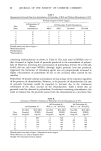
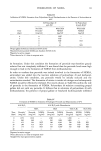
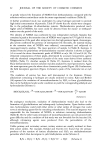
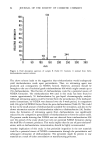
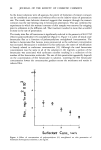
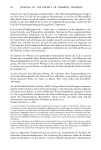
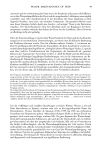
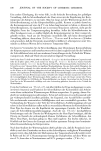
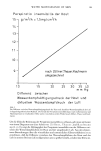
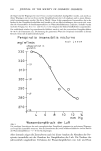
60 JOURNAL OF THE SOCIETY OF COSMETIC CHEMISTS 150 0 5 10 1 2 3 4 min hrs Ti me after application -x-Immediately after application CHANGES IN SKIN FRICTION COEFFICIENT INDUCED BY WATER APPLICATION (mean +SE of 5 subjects) 5 6 Figure 2. Changes in skin friction coefficient induced by water. Amount applied: approx. 2 mg/cm 2. Each point is the Mean + SE of five subjects measured in triplicate. This surface phenomenon can also be explained by other changes in the physical- chemical state of the stratum corneum. The water absorbed by the stratum corneum can increase the size and surface characteristics of its cells. This could bring about an increase in the contact area between the probe and the skin cells and lead to an increase in friction coefficient. As water is lost through evaporation, the stratum corneum returns to its original state and this is associated with a return of the friction coefficient to baseline value. EFFECT OF VISCOUS LUBRICANTS ON SKIN SURFACE FRICTION Viscous lubricants such as petrolatum, heavy mineral oil, and glycerin may hydrate the skin surface by reducing the rate of transepidermal moisture loss this brings about a subsequent increase in friction coefficient induced by the slow and prolonged hydrating effect. However, the initial lubricating effects of the materials would be expected to result in a reduction in friction. Accordingly, when petrolatum, heavy mineral oil, and glycerin were tested, they decreased the friction coefficient immedi-

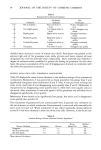
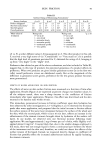
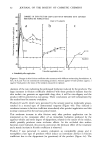
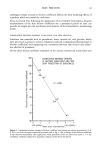
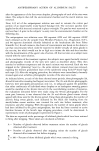
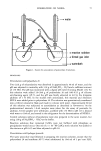
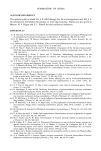
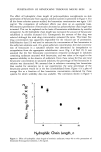
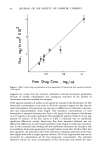
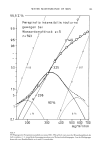
SKIN FRICTION 61 50 40 30 2O 10 O-- -10 EFFECT OF LUBRICANT COSMETIC INGREDIENTS ON SKIN FRICTION COEFFICIENT (mean of 5 subjects) I I I I I Baseline '• Petrolatu m ---• Glycerin ß Heavy mineral oil -20 -30 0 • 1 2 3 4 5 Time after application (hrs) Immediately after application Figure 3. Effect of lubricant cosmetic ingredients on skin friction coefficient. Amount applied of each material: approx. 2 mg/cm 2. Each point is the mean of five subjects measured in triplicate. ately after application (Figure 3). As the materials were absorbed into the skin surface layers and the hydrating effects overcame the diminishing lubricating effect, a gradual increase in friction coefficient was observed. EFFECTS OF MOISTURIZING FORMULATIONS AND SURFACE LUBRICANTS ON SKIN FRICTION We then compared the changes in friction coefficient induced by different products, immediately after application and for six hours thereafter, with the perceived sensory skin feel. The changes in skin friction coefficient induced by the six moisturizing formulations tested can be grouped into three main categories (Figure 4). Products A, B, and C, which were perceived by the sensory panel as essentially nongreasy, induced similarly high increases in friction coefficient immediately after application, reflecting a prompt hydration effect (Figure 4-a). These increases were the highest among the six products tested and, although somewhat lower than those induced by water, they were significantly longer lasting. The effect of water treatment lasted only 10 to 15 min, while those observed with products A, B, and C persisted for the six hours of the
Purchased for the exclusive use of nofirst nolast (unknown)
From: SCC Media Library & Resource Center (library.scconline.org)