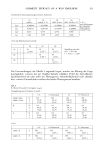
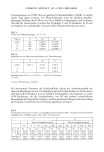
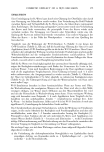
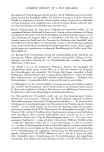
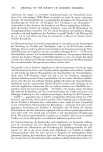
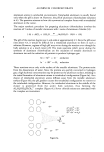
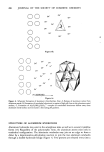
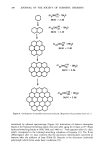
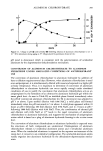
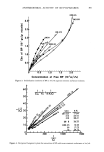
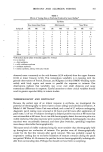
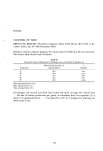
ALUMINUM CHLOROHYDRATE 293 • 1.6 • 1.2 • ph • 0.8 • 0.4 o 12 24 :56 DAYS Figure 11. Change in pH (•) and turbidity (I) following dilution of aluminum chlorohydrate to 2.5 x 10 -2 M in aluminum during aging at 25 ø. (Reproduced by permission from ref. 18.) pH trend is downward, which is consistent with the polymerization of octahedral aluminum by the deprotonation-dehydroxylation mechanism. CONVERSION OF ALUMINUM CHLOROHYDRATE TO ALUMINUM HYDROXIDE UNDER SIMULATED CONDITIONS OF ANTIPERSPIRANT USE The conversion of aluminum chlorohydrate to aluminum hydroxide by addition of base or dilution requires several days. However, when aluminum chlorohydrate is used as an antiperspirant, it is simultaneously diluted with sweat and exposed to a higher pH at body temperature. Thus, it is important to determine if conversion of aluminum chlorohydrate to aluminum hydroxide can occur rapidly enough under simulated conditions of use to justify the conclusion that aluminum chlorohydrate acts as an antiperspirant by the formation of an obstructive aluminum hydroxide gel within the sweat gland duct. As seen in Table III, an insoluble phase formed immediately when the pH of commercial aluminum chlorohydrate (6.2 M in aluminum) was adjusted to pH 5 or above. Upon tenfold dilution with 0.9% NaC1, a solid phase still formed immediately when the pH was raised to 5 or above. A solid phase appeared within 24 hours at pH 6 following 100 fold dilution with 0.9% NaC1, and in 2 hours at pH 7 following 1000 fold dilution with 0.9% NaC1. Thus, the combination of elevated pH and dilution with 0.9% NaC1 at 37 ø leads to the rapid conversion of aluminum chlorohydrate to aluminum hydroxide, and supports the mechanism of antiperspirant action which is based on a plug of aluminum hydroxide forming in the eccrine sweat duct. The conversion of aluminum chlorohydrate to aluminum hydroxide is expected once the structures of both compounds are understood. Disintegration of aluminum chlorohydrate releases 12 octahedral aluminum atoms and 1 tetrahedral aluminum atom. When the tetrahedral aluminum is exposed to the aqueous environment of the sweat duct, it converts to an octahedral configuration. The octahedral aluminum atoms readily organize into aluminum hydroxide by the dehydration-deprotonation mecha- nism.

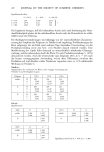
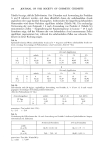
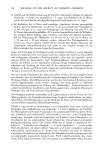
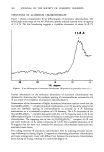
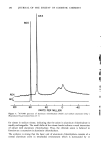
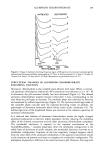
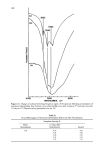
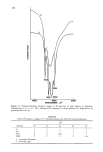
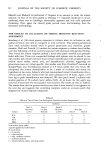
294 I 3612 I 3520 L •450 = I I I 39O0 3400 2900 W•VENUI•IBER, • Figure 12. Hydroxyl-stretching frequency region of IR spectrum of solid dilution of aluminum chlorohydrate to 2.5 x 10 2 M in aluminum (P) compared to natural gibbsite (G). (Reproduced by permission from ref. 18). Table III Time for Precipitate to Appear at 37 ø Following Dilution with 0.9% NaC1 arid pH Adjustment pH ACH, M 5.0 5.5 6.0 6.5 7.0 6.2 I 0.62 I 0.062 C 0.0062 C I = Immediate Precipitate C = Clear for 3 days I I I I I I I I C 24 hr I I C C C 2 hr
Purchased for the exclusive use of nofirst nolast (unknown)
From: SCC Media Library & Resource Center (library.scconline.org)