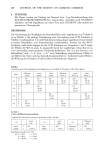
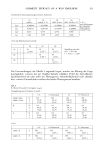
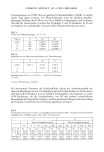
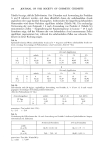
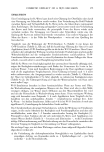
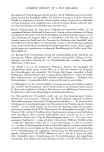
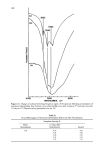
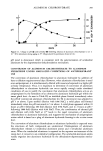
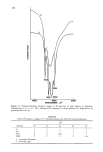
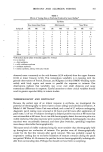
IRRITANT AND ALLERGEN TESTING 311 Table I Effects of Testing Sites on Erythema Produced by Lauryl Sulfate* Erythema Near Antecubital Fossa Mid-forearm Near Wrist Subject# 24h 48h 72h 24h 48h 72h 24h 48h 72h 1 1 1 _+ 1 0 0 0 0 0 2 3 3 2 + 1 0 1 1 0 3 1 1 1 l+ 1 1 1 1 1+ 4 3 3 2 + 2 1 0 2 _+ 5 0 0 0 0 0 0 0 0 0 6 2 2 1 0 0 0 0 0 0 7 __ 0 0 0 0 0 + 0 0 8 0 0 0 0 0 0 0 0 0 9 0 2 + 0 2 1 3 3 3 10 _ 1 0 _+ 1 0 0 0 0 Mean 1.1 1.3 0.7 0.4 0.7 0.3 0.6 0.7 0.5 *5.0% sodium lauryl sulfate 20 lambda applied for 24 hours 0 = no reaction _+ = faint erythema 1 = mild, confluent erythema 2 = moderate erythema 3 = intense erythema, edema, with early vesicles observed more commonly at the mid-forearm (4/10 subjects) than the upper forearm (2/10) or lower forearm (1/10). This tremendous variability is in keeping with the general observations of Frosch, Duncan, and Kligman (13) that DMSO whealing varies widely with body region and seems to parallel the response to irritants. Our observations indicate that variability may occur over small distances and cause tremendous differences in response. Careful attention to these critical variables should result in greater reproducibility in irritant studies. THERMOGRAPHY AND HISTOLOGY Because the earliest sign of an irritant response is erythema, we investigated the potential of thermography to detect latent contact allergy and subclinical irritation. A Model A 200 Thermal Vision Unit was utilized, and a total of 37 subjects undergoing diagnostic patch testing were screened at 48 hours and 96 hours after application of patch tests. 12 of our 37 subjects developed a delayed positive reaction at 96 hours that was not manifest at 48 hours. In no case did thermography detect the reaction prior to a visible erythema. One plus reactions were routinely invisible on thermography two plus reactions were occasionally detected and three plus (vesicular, spreading) responses were always detectable thermographically. This same trend of visible erythema being far more sensitive than thermography held up throughout our evaluation of irritants. The patches were all thermographically cooler for the first few minutes after patch removal. This was probably caused by evaporative cooling due to occlusive hydration of stratum corneum during the patch test period. Within 10-20 minutes the patches became thermographically indistinguish- able from surrounding skin. Perhaps this should not have been so surprising.

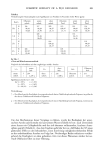
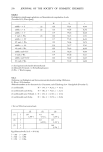
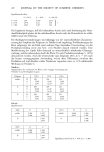
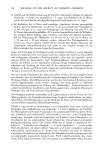
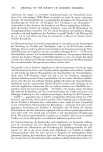
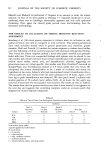
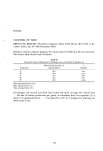
312 JOURNAL OF THE SOCIETY OF COSMETIC CHEMISTS Marzulli and Maibach (8) performed 27 biopsies in an attempt to study the irritant response. In four of six sites graded as showing q-3 responses (moderate to severe erythema), there was no histologic abnormality apparent and only mild epidermal thickening. Once again the clinical grade proved more discriminating than the alternative methodology. THE EFFECTS OF OCCLUSION ON TIMING IRRITANT REACTION ASSESSMENT Steinberg et al. (10) noted greater responses to irritants when no occlusion or only partial occlusion was used as compared to total occlusion. This seemed paradoxical since total occlusion should result in greater penetration and, therefore, greater irritation. Dahl and Trancik (11) studied the irritant response to sodium lauryl sulfate over time following a 24-hour occlusive exposure with aluminum strip patches (AI test). They found the irritant response peaked 2 hours after patch removal and gradually faded with time. These two unexpected findings with irritants may be related. In our own studies with irritants we have found irritant intensification with propylene glycol, sodium lauryl sulfate, maleic acid, and benzalkonium chloride, suggesting the phenomena were not irritant-specific. Our studies used Finn Chambers © mounted on Scanpor©tape, and intensification peaked at 6-8 hours rather than two hours. We interpreted this irritant intensification to be a result of occlusion and tested the hypothesis in two ways. Subjects who had demonstrated irritant intensification after a 24-hour patch test were retested with the same substances for 48 hours. Again, a 6-8 hour lag to peak intensification was observed. We then patch tested 3 subjects with tandem patches of 5% sodium lauryl sulfate (SLS). At 24 hours the first patch was removed. 6 hours later the second patch was removed. The results are seen in Table II. The results show that the greater reactivity seen after 6-hour interval is not apparent by the next day and suggests that something transpires under an occlusive patch that dampens the irritant response temporarily. Table II Effects of Time of Patch Test Reading and Removal on Irritant Interpretation* Erythema Patch I Patch I Patch II Removed 6 h After Removed Next Day Subject at 24 h Removal at 30 h Patch I Patch II R.D. 0 2+ + 2+ 2+ L.M. _+ _+ _+ _+ _+ M.O. _+ 2+ _+ 1+ 2+ Mean 0.3 1.5 0.5 1.3 1.7 *5.0% sodium lauryl sulfate 2 patches applied mid volar forearm 24 and 30 hours 0 = no reaction _+ = faint erythema 1 = mild, confluent erythema 2 = moderate erythema 3 = intense erythema, edema, with early vesicles
Purchased for the exclusive use of nofirst nolast (unknown)
From: SCC Media Library & Resource Center (library.scconline.org)