j. Soc. Cosmet. Chem., 33, 309-313 (September/October 1982) Advances and pitfalls in irritant and allergen testing ROBERT L. RIETSCHELL, M.D., Department of Dermatology, Emory University School of Medicine, 215 [Voodruff Memorial Building, Atlanta, GA 30322. Received December 28, 1981. Synopsis Patch testing with allergens such as benzoyl peroxide whether for diagnostic or predictive purposes, poses problems of clinical correlation and interpretation for industry. The hallmark of meaningful scientific investigation is reproducibility. While animal and human methodology for allergen investigation generally gives reproducible results, clinical correlation is occasionally absent. Irritants are more problematic. At times, irritant testing varies widely and appears to defy scientific method. Several reasons for this variability will be explored in this study. ALLERGY TESTING AND BENZOYL PEROXIDE The purpose of animal and human screening of products is to identify potentially hazardous materials. Occasionally the test methodology appears to overstate the hazard. Such would appear to be the case with benzoyl peroxide, which in Buehler and Griffith's hands sensitized 8/19 guinea pigs and 28/69 humans (1). A 40% sensitization rate seems excessive on the basis of clinical experience and published reports (2,3). Variables that require close attention in modified Draize Testing and Maximization Testing are route of allergen exposure dose interval between exposures vehicle surfactants chemical and physical insults occlusion adjuvant effects site of challenge interval between induction and challenge and interval between challenge and reading. These variables have been aptly reviewed elsewhere (4). These variables were adequately controlled in the case of benzoyl peroxide (1), but the product does not appear as hazardous when applied to the skin of ache patients. This may be due to 1) inappropriately high patch test concentrations causing false positive reactions, 2) altered cutaneous metabolism in the presence of ache resulting in no overt clinical reaction, 3) diminished cutaneous reactivity in the presence of pre-existing inflamma- tion (a kind of competition for the skin's inflammatory response), and 4) subclinical allergy. The proper patch test concentration for products is established through trial and error and is extremely difficult to determine for irritating chemicals. Recommended patch test concentrations for this substance vary from 0.5% to 10% (3,4). In my own work with benzoyl peroxide patch testing of humans, 11 of 44 acne subjects showed positive 309

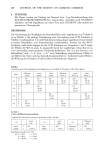
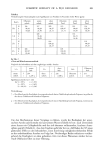
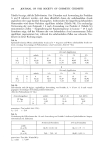
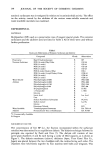
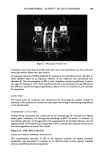
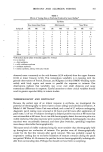
310 JOURNAL OF THE SOCIETY OF COSMETIC CHEMISTS reactions to either 0.1% or 1.0% concentrations. Clinical use suggested allergy in only two of these individuals. Some of the most sensitive subjects on patch testing had negative use tests, while others had positive use tests and were not as sensitive by traditional patch tests. Use tests for clinical correlation are mandatory if we are to successfully evaluate such patch test results. Another possible explanation for the lack of clinical benzoyl peroxide reactions is that the acne-bearing skin may handle the benzoyl peroxide differently from the back where patch tests are commonly applied. This could occur through "hardening," or the pilosebaceous units of the face may provide a different metabolic fate and different intermediate products. The actual allergen might be a metabolite seldom formed on facial skin or perhaps degraded more rapidly. The intended use of the product, the type of skin to which it will be applied, and the fact that skin is not a homogeneous organ are variables that influence the meaning of predictive testing. Could pre-existing inflammation play a role in blocking development of allergy in clinical use? The work of Uehara and Ofuji (5) showed that when guinea pigs have either an irritant or allergic dermatitis present on one side of the body, previously established delayed hypersentitivity to different allergens could not be elicited on the contralateral side of the body. On the other hand, it is the presence of pre-existing inflammation in sites such as stasis dermatitis where allergy to substances such as the parabens most commonly develops (6). This apparent paradox is no more unique than the experimental and clinical rates of sensitization to benzoyl peroxide. The example of benzoyl peroxide was chosen as a case in which a useful product would have been dropped from further study on the basis of sound animal and human pre-clinical work. Undoubtedly there are other substances in this category, and since benzoyl peroxide is commonly used on the face, the lessons to be learned from further study of the benzoyl peroxide paradox would have widespread applicability throughout the cosmetic industry. IRRITANT TESTING It is generally conceded that animal Draize-type testing will distinguish severe human irritants and non-irritants (8), but that mild and moderate irritants require human evaluation, generally with cumulative insult patch tests for 21 days (9). Attempts to eliminate variables and accelerate the testing process have included scarification methods, use of multiple animal species, altered durations of exposure for 4-72 hours, occlusion, and varying sequences of repetitive application (10). REPRODUCIBILITY Recent work by Frosch and Kligman (12) suggests that a carefully selected panel of Celtic extraction will show subtle distinctions among irritants. They recommend a forearm patch test with 5% SLS for 24 hours to establish the subject's state of irritability. We investigated the forearm response of 10 volunteers to 5% SLS with Finn Chambers © and found tremendous variability (Table I). In some cases the upper portion of the forearm near the elbow was most reactive, while in others it was the mid-forearm or near the wrist. In some cases a negative reaction was occurring 4-5 cm away from a positive reaction, even though both tests were identical. Irritant intensification was
Purchased for the exclusive use of nofirst nolast (unknown)
From: SCC Media Library & Resource Center (library.scconline.org)