326 JOURNAL OF THE SOCIETY OF COSMETIC CHEMISTS (8) K. V. Curry and S. Golding, Hair lipids I. The extraction of fatty materials from hair clippings,J. Soc. Cosmet. Chem., 22, 681 (1971). (9) A. W. Weitkamp, A.M. Smiljanic, and S. Rothman, The free fatty acids of human hair fat, J. Am. Oil Chem. Soc., 69, 1936 (1947). (10) B. Krotoszynski, L. L. Gershbein, and S. B. Needleman, Properties of hair fat from adult males according to race and hair condition,J. Invest. DermatoL, 26, 311 (1956). (11) N. Nicolaides and S. Rothman, Studies on the chemical composition of human hair fat I. The squalene-cholesterol relationship in children and adults,J. Invest. DermatoL, 19, 389 (1952). (12) M. Gloor, J. RietkiStter, and H. C. Friederich, Entfettung und Nachfetten der Kopfhaut und der Haare nach Kopfwiische mit verschiedenen Tensiden, ..Fette, Seifen, Anstrichm., 75, 200 (1973). (13) M. Gloor, C. Fichtler, and H. C. Friederich, Uber den Einfiufi alkoholischer Haarwiisser auf das Nachfetten der Haare nach der Kopfwiische, Kosmetologie, 1973, 2. (14) D. A. Shaw, The extraction, quantification and nature of hair lipid,J. Cosmet. Sci., 1,291 (1979). (15) J. Koch, K. Aitzetmiiller, G. Bittorf, andJ. Waibel, Hair lipids and their contribution to the perception of hair oiliness, Part II: Correlation between subjective assessment of hair oiliness and quantity and composition of hair surface lipids,J. Soc. Cosmet. Chem., 33 (1982). (16) N. Nicolaides, Skin lipids: their biochemical uniqueness, Science, 19, 186 (1974). (17) O. Sakamoto, Y. Fujinuma, and T. Ozawa, Studies on the chemical composition of internal human hair lipid,J. Am. Oil Chem. Soc., 54, 143 A (1977). (18) N. Nicolaides, Skin lipids IV. Biochemistry and function,J. Am. Oil Chem. Soc., 42, 708 (1965). (19) R. E. Kellum, Human sebaceous gland lipids, Arch. DermatoL, 95, 218 (1967). (20) G. Peter, F. Schr Spl, R. Lippross, and G. Weiss, Gaschromatographische Untersuchung der Talgdrilsenlipide I. Bestimmung der Gesamtlipide, Arch. K/in. Exp. Derm.a. toL, 239, 12 (1970). (21) J. Koch and K. Figge, Anderung der Zusammensetzung von Fetten beim Ubertritt in Kunststoffe und ihr Einfiufi auf die Genauigkeit von Gesamtmigrat-Bestimmungsmethoden, Dtsch. Lebensm. Rundsch., 71,170 (1975). PART II: CORRELATION BETWEEN SUBJECTIVE ASSESSMENT OF HAIR OILINESS AND QUANTITY AND COMPOSITION OF HAIR SURFACE LIPIDS Synopsis Hair samples of 20 dry and oily-haired subjects have been assessed with respect to their degree of oiliness 3 days after shampooing. Subsequently they have been analysed for composition and quantity of surface lipids. The results have been evaluated statistically for possible correlations. The computer analysis of collected data suggests that increasing oiliness is correlated with: -- an increasing percentage of wax esters in the lipid, -- a decreasing ratio of saturated/unsaturated fatty acids, -- an increasing amount of monoglyceride on the hair, -- a decreasing percentage of cholesterol ester in the lipid. Neither the quantity of total lipids nor the proportion of free fatty acids/unhydrolysed triglycerides were among the main causes for hair oiliness. INTRODUCTION The composition of human skin surface lipids and possible correlations with various pathological and cosmetic phenomena have been reported extensively in literature. In comparison to this, only a few reports on analytical investigations of hair lipids have been published. They are mainly concerned with correlations between the quantity of

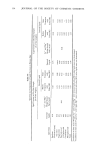
HAIR OILINESS 327 different sebum components and dermatological symptoms (fungal infection (1), dandruff (2), loss of hair (2-5)), physiological differences (due to, e.g., age, sex, race (3-8)), cleansing frequencies (9), or with purely analytical problems (10-15). The goal of this investigation was to analyse individual hair lipid samples with regard to their quantity and composition and to correlate the results with a simultaneously performed sensory expert asessment of hair oiliness with the aid of statistical methods. In view of the complexity of sebum composition, one has to consider that the dry or oily appearance of hair is caused by several parameters and that these can intensify or compensate each other, thus obscuring a direct correlation. In order to elucidate these correlations, an analytical technique is required that permits an accurate analysis of such complex mixtures. Although various methods have been used for skin and hair lipid analysis, a number of them suffer from serious disadvantages. Thus, thin layer chromatography with subsequent charring is destructive and does not allow further investigation of the separated fractions. Moreover, it is not sensitive enough for the reliable determination of minor components (16) such as mono- and diglycerides, which by most authors are simply omitted from the total lipid balance (e.g., references 17-20) although they might greatly influence the spreading characteris- tics of sebum. In addition, densitometry of the charred spots is unreliable because the lipid classes may vary in their degree of unsaturation from person to person or even with the site of the head (unpublished results). The gravimetric determination of hair oil (21) does not only include the lipids but also co-extracted detergents, sweat components, and other non-lipid substances. A direct lipid group determination of the original or methylated hair lipids by gas liquid chromatography (GLC) is not possible because the retention time ranges of the different lipid classes are partly overlapping. Yet further separation of single isolated fractions of skin or hair lipids by GLC has been described in several cases (8,10,22-32). The conventional column chromatography with subsequent gravimetric determination of the lipid classes of sebum requires large pooled samples from several persons so that differences in composition of individual samples cannot be registered. It appears that a most useful technique for this type of work is HPLC (34), which is sufficiently sensitive for the simultaneous determination of the quantity and composi- tion of the neutral lipids in sebum and allows the preparative isolation of single lipid fractions for further separation and characterization. METHODS AND RESULTS SELECTION OF TEST PANEL In order to elucidate the influence of sebum quantity and chemical composition as clearly as possible, the selection of the test panel was carried out by keeping other potential parameters constant. Therefore, a group of test persons was selected, which was as uniform as available with regard to sex, hair type and hair length (Table I): -- Males were preferred to females in order to exclude a possible influence by changes of the physiological status (menstrual cycle (35,36), pregnancy (37), etc.) and because women are usually not ready to renounce, during the time of testing, the use of hair
Purchased for the exclusive use of nofirst nolast (unknown)
From: SCC Media Library & Resource Center (library.scconline.org)