328 JOURNAL OF THE SOCIETY OF COSMETIC CHEMISTS

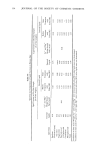
HAIR OILINESS 329 care products other than shampoo or the use of headwear to which they are habituated. -- Persons with straight or slightly wavy hair of fine or medium texture were preferred, since curliness and coarseness can influence both the subjective impression of hair greasiness and the physical distribution of sebum on hair by preventing the alignment of several hair fibres with subsequent wicking of sebum and "ratstail" formation. Due to an insufficient number of suitable test persons 2 subjects with curly hair had to be included. -- Persons with hair of short or medium length were preferred because long hair, even if rated as very oily, is not covered with lipids down to the end of the fibres after 3 days (38). Thus, a smaller or larger part (depending on the length) of the hair, which is not covered with grease, lowers the average lipid content--leading consequently to wrong conclusions. Eight of the test persons assessed their hair as being oily, one as medium, the other eleven as dry or very dry (Table II). None of them was habitually using any hair care products except shampoos. ASSESSMENT OF OILINESS In order to exclude a possible influence of the climate, all assessments were made and all hair samples were taken on the same day. All members of the test panel were instructed to wash their hair with a shampoo consisting only of 28% C•2a4-alkyl- 3-EO-sulphate and 2% coconut fatty acid diethanolamide, and containing no color additives, perfume, or any other component which could possibly interfere with the HPLC-peaks of the lipid groups present in sebum. 3 days after the hair wash* the hair was examined visually and tactually by 2 trained operators according to a 1-10 scale (1-2: very dry 3-4: dry 5-6: mediuim 7-8: oily 9-10: very oily). In addition to this, "prints" of the hair were taken with a polished** glass plate pressed on different sites of the head. These *'prints" were also assessed by the experts. The results of all these assess•nents and their combination to an overall assessment are compiled in Table II. In the overall assessment the visual appearance of the hair was given the greatest weight, since, unlike the tactile impression, the visual impression of oiliness can be judged at any time by third persons, and therefore constitutes the main cause for a hair wash. Second in importance is the tactile assessment, the results of which were running fairly parallel (Table II). The glass test also showed a reasonable correlation with the sensory assessment, but in *Main reasons for the choice of this period were a) the increasing equalization of lipid levels of oily and dry types of hair in case of prolonged intervals between hair washes, which makes a differentiation more difficult and b) the fact that none of the test persons having oily hair was ready to wait longer than 3 days for a hair wash, while all persons having dry hair were used to washing their hair at intervals not shorter than 3 days. **The same procedure with ground glass plates (47) proved to be not sensitive enough.
Purchased for the exclusive use of nofirst nolast (unknown)
From: SCC Media Library & Resource Center (library.scconline.org)