334 JOURNAL OF THE SOCIETY OF COSMETIC CHEMISTS ou

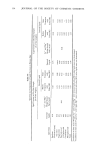
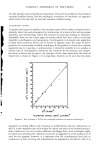
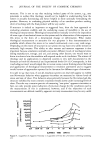
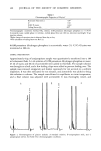
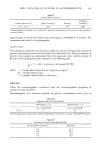
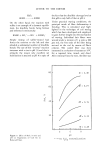
HAIR OILINESS 335 calculate various sums and proportions of single lipid classes which were suspect of being responsible for hair oiliness. The results are collected in Tables IV-VI. Since calcium and magnesium soaps on the hair (41, 42) might also modify the surface properties of the hair and thereby the spreading velocity of the hair lipids (and thus their quantity), they were also isolated from the ether-extracted hair with ethereal HCI (extract "B", Figure 1) and determined by atomic absorption spectroscopy (AAS) (41) and HPLC (34). The results are compiled in Table VII. The fact that only in 1 out of 20 samples the FFA content is significantly higher than it is to be expected according to the "bridge theory" of Curry and Golding (42), provides further evidence for its validity. Parallel to the analysis of the ether extracts, it was our aim to determine the quantity of lipids removed from the hair samples by a simulated washing procedure. Experimental results obtained earlier by Orr and Dobinson (43) had indicated that the quantity of sebum removed from hair in a similar manner yields a better correlation with the visual impression of hair oiliness than the amount of ether-extractable material. Therefore, another aliquot of the hair samples was washed under controlled conditions with Na-lauryl sulphate solution (yielding the washing solution "F", Figure 1) and subsequently extracted with water-saturated ether (extract "H", Figure 1). From the difference between A and H we calculated the quantity of the lipids removed by shampooing (contained in solution F). In order to verify these results, we tried to recover the lipids from F and determine their quantity in extract "G" (Figure 1) by HPLC. The results obtained by calculation and analytical determination can be gathered from Table VIII. ISOLATION AND DETERMINATION OF HAIR SURFACE LIPIDS (EXTRACT A) 500 mg of each sample were subjected to the ether extraction procedure described previously (41). The ether soluble material (ESM) thus collected was dried to weight constancy. It was dissolved in a defined quantity of CHCI 3. Aliquots of these solutions, containing 3-10 mg of ESM were evaporated to dryness and mixed with an excess of CH2N 2 in order to methylate the free fatty acids. Then 20% by weight of an internal standard ("I.S." = monoglyceride diacetate*) was added as a 2% solution in CHCI 3. Quantitative HPLC determination of total lipid content and lipid group composition was carried out according to reference 34. The CE/WE and FFA-methylester fractions were isolated from the effluent and furthet separated by GLC with mass spectrometric identification. GLC-conditions for CE/WE separation: column: 3% SE-30 on Chromosorb G-AW-DMCS length: 90 cm •: 2 mm temperature: column: 240-340øC 4ø/min, 16 min hold injector: 350øC detector: (FID): 350øC gas flow: 23 ml N2/min *Diacetate fraction isolated from Myvazet 9-40 ex Eastman Kodak, purified by preparative column chromatography (purity 99%).
Purchased for the exclusive use of nofirst nolast (unknown)
From: SCC Media Library & Resource Center (library.scconline.org)