STABILITY ASSESSMENT OF EMULSIONS 351 emulsion subjected to higher temperatures undergoes a dramatic decrease in apparent viscosity, presumably when the melting point of some of the waxes present is reached. The partitioning of surfactants between phases, likewise, can change with changing temperature in such a way as to create a situation unrelated to that at room temperature. This is not to say that stability testing should not be carried out at higher temperatures. Indeed, if these temperatures are or could be actually encountered such tests must be carried out. What I am saying, however, is that prediction of long-term stability from such high temperature studies is highly unlikely, particularly for emulsions containing waxes, polymers, and colloidal solids. Again, as in the case of centrifugation, survivors may be taken to be stable systems, but we still may reject good systems in the process and not really have a good handle on actual expected shelf-life. Freezing of emulsions is also a widely used form of stress, particularly in the form of a freeze-thaw cycling test. In addition to the effects due to temperature change discussed above, in this test we also have the freezing of water to form ice crystals. In general there are 3 factors which are important to recognize in interpreting the meaning of such tests (8,9). These are concentration and solidification of free liquid water concentration and precipitation of dissolved substances and thinning and disruption of the emulsifier film by ice crystals. The critical part of the test comes as one thaws the sample since thawing permits the release of water and its rapid movement throughout the emulsion. If the emulsifier film can "heal" itself upon release of the stresses induced by ice crystals before coalescence occurs, the system will survive the test. However, if the rate of redissolution of ingredients is too slow, for example, instability may occur in a manner not related to normal usage at higher temperatures, so use of this technique for predictive purposes still suffers from the uncertainties already discussed. In summary, with regard to predictive testing of emulsions, I would conclude that there really is no clear cut basis for expecting that accelerated studies allow extrapolation to normal storage conditions and quantitative expiration dating. Careful analysis of how increasing or decreasing temperatures might mechanistically effect various processes of importance in stabilizing emulsions could help one to choose procedures which best reflect anticipated effects. If, for example, we know waxes are present, and that their degree of crystallinity is important, we should build that into the type of stress test we develop. This obviously calls for much more research on the thermal properties of emulsions and their isolated parts. RHEOLOGICAL EVALUATION OF EMULSIONS Since the properties of cosmetic emulsions, be they pourable liquids or semi-solid creams, depend primarily on the extent of structure developed through particle-particle interactions, any change in this structure can be considered a form of instability or an indication of some type of instability. Changes in this structure may be brought about, for example, by such processes as creaming sedimentation, coalescence fiocculation crystallization or melting of waxes hydradon changes in colloidal solids like clays or changes in the solution state (aggregation) and concentration of surfactants and polymers in the two bulk phases. In view of the importance of structure in emulsion system, it follows that any technique used to monitor instability should be carried out on the finished product rather than on isolated parts of the system or after the system has been diluted so as to change the real

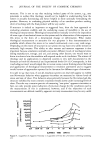
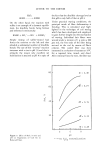
352 JOURNAL OF THE SOCIETY OF COSMETIC CHEMISTS structure. This is not to say that studying isolated parts of the system, e.g., zeta potentials or surface film rheology, would not be helpful in understanding how the system is actually functioning and hence helpful in more rationally formulating the product. However, in evaluating physical stability of an emulsion product nothing short of working with the final product will be very useful. If structure is indeed as important as suggested here, then the best approach to evaluating emulsion stability and the underlying causes of instability is the use of rheological measurement. Rheological measurement basically involves the imposition of some type of mechanical stress on the system and the observation of the response to this stress in the form of a dimensional change or deformation. What makes rheological measurement so attractive for our purposes is that instrumentation is available which allows this stress to be varied continuously over a very wide range. Depending on the extent of structure in our system we may want very subtle stresses or extremely high stresses. This ability to alter stresses and measure responses is also important because emulsions normally encounter different levels of mechanical stress during manufacture, storage, and use, and among other factors, one would want to know in advance how the emulsion will respond under such conditions. The science of rheology and its applications to dispersed systems is very well documented in the literature at both the theoretical and experimental levels (10-13). Consequently, in this concluding section I would simply like to review some current thinking about the basis and application of rheological measurement to emulsion assessment and to suggest careful review of approaches reported in the literature for different types of situations. It is safe to say that most, if not all, emulsion systems we deal with appear to exhibit non-Newtonian behavior when apparent viscosities are measured at various levels of stress and rate of shear. This behavior arises primarily because the flocculated gel-like structure exhibited by most cosmetic emulsions breaks down under increasing levels of shear. Thus the very common practice of measuring "one-point" apparent viscosities, at best, can only provide some indication of structure change for the conditions used in the measurement. If this is understood, however, and if the objectives of such measurements are defined carefully, apparent viscosity measurement may be very useful T o •OO, OO½ o• 60,0OO]- o• 40•000 r '-' 20,OOO r '-* - ,ooo 1_ ø2 6ool- t t ,,oool_ • 6oop , o.m 0.04 o• 0.4 • 4 •o 40 •oo 400 ELAPSED TIME (DAYS) Figure 4. Logarithm of Apparent Viscosity vs. Logarithm of Time for o/w lotions exhibiting hardening (22).
Purchased for the exclusive use of nofirst nolast (unknown)
From: SCC Media Library & Resource Center (library.scconline.org)