ttAIR OILINESS 319 DETERMINATION OF SURFACE-BOUND CA- AND MG-CARBOXYLATES 400 mg of hair were conditioned and extracted with water-saturated ether according to the standard conditions described above. The ether solution containing the external lipids was analysed according to reference 6. In order to prevent contaminations by Ca and Mg from the glassware, all following operations leading to the determination of Ca 2+ and Mg 2+ by atomic absorption spectroscopy (AAS) were carried out in polyethylene-, Teflon-, or methylpentene polymer-vessels. Furthermore, blank determinations were carried out. The extracted hair was immersed in the 50-fold quantity of a 1% solution of gaseous HC1 in dry ether and stirred slightly for 20 rain at room temperature. After decanting the solvent the hair was washed 3 times with 10 ml of H20-saturated ether at room temperature and 2 times with doubly-distilled H20. All aqueous and ethereal solutions were combined in a separating funnel and agitated for 5 min. The organic phase was washed with 5 ml of water, the water phase with 10 ml of ether. The combined aqueous solutions were freed from ether by short evacuation and made up to 25 ml with doubly-distilled H20 for determination of Ca 2+ and Mg •+ by AAS. The ether solutions were also combined, dried with Na2SO 4 sicc. and filtered through a funnel with a fritted disc. After evaporation of the solvent, methylation of the free fatty acids with CH2N2 and addition of internal standard the quantity of the fatty acid methylesters was determined by HPLC according to reference 6. ENZYMATIC DIGESTION OF HAIR AND DETERMINATION OF INTERNAL LIPIDS 100 mg of the extracted hair was treated 6 h at 55øC with papain and Clelands reagent in a phosphate buffer according to reference 7. The reaction mixture was extracted once with 50 ml and once with 15 ml of CHC13. Undissolved membranes present in the aqueous layer were filtered-off and extracted with boiling CH2C12 for 30 min. The CHC1 c and CH2C12-solutions were combined, the solvent evaporated, and the residue dried over CaC12. Addition of CH2N 2 and internal standard with subsequent HPLC analysis were performed according to reference 7. RESULTS AND DISCUSSION EXTRACTION CONDITIONS FOR EXTERNAL LIQUIDS Solvent considerations: The aim of the following investigations was to find a solvent which desorbs quickly and completely all sebum components from the hair surface without extracting lipids from the inside of the hair fiber. The results of Curry et al. (8) indicate that organic solvents at moderate temperatures are not effective in extracting "internal" lipids. Apart from this, only little additional information has been published about the influence of extraction conditions on the quantity and quality of hair lipids. Most authors (e.g., 9-11) concerned with hair sebum investigations aimed at a more or less exhaustive extraction with petroleum ether or ether for hours and days, regardless of their relevance to oiliness. Only Gloor et al. (12,13) used milder conditions. Hair samples were extracted with petroleum ether at room temperature for only 2 min.

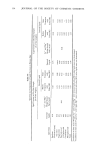
320 JOURNAL OF THE SOCIETY OF COSMETIC CHEMISTS Under these conditions, surface extraction of the more polar components (mono- and diglycerides and cholesterol) is incomplete, but one can argue that a small portion of the total quantity does not play a noticeable role for the rough estimation of total lipids. For an analysis of the composition, however, this is an important deficiency, especially because monoglycerides and cholesterol are suspected of having a prominent influence on the physical properties of sebum. In our preliminary experiments we compared the extraction efficiency of ether, petroleum ether, and a 2:1 mixture of CHC13 and methanol (MeOH), which was expected to remove all surface lipids instantaneously and possibly some internal lipids. Subsequently, the samples were submitted to two additional extractions with the other solvents under the same conditions. The results, compiled in Table I, clearly indicate Table I Successive Extractions of Lipids from Hair Samples (batch A) with 3 Solvents (room temperature, each solvent 10 min) Quantity Quantity of Total of Extract Lipids Solvents (mg) (mg)* Remarks 1 a) Ether 16.5 14.0 normal sebum composition b) Petroleum ether 0.2 mainly nonpolar lipids (squalene, wax esters/ cholesterol esters) c) CHCyMeOH = 2:1 3.6 mainly polar lipids (mono- glycerides, diglycerides/ cholesterol, free fatty acids) 2 a) Petroleum ether 14.5 13.6 less polar lipids than 1 a), 3 a) b) Ether 3.8 mainly polar lipids c) CHCIs:MeOH = 2:1 3.5 mainly polar lipids 3 a) CHCIs:MeOH = 2:1 19.3 14.2 similar composition as 1 a) b) Petroleum ether 0.3 c) Ether 0.3 *Calculated from peak area of the internal standard added to the samples before HPLC. that, after extraction with ether, only an insignificant additional amount of sebum (containing mostly unpopular compounds) can further be extracted with petroleum ether, but a considerable quantity, consisting mainly of polar constituents, with CHCI•/MeOH. If the same quantity of hair is first extracted with petroleum ether, rather large additional amounts are still extractable with ether, and these contain the polar compounds missing in the petroleum ether extract. Finally, with CHC13/ methanol, again a considerable amount of lipids is extractable. After these initial experiments we rejected petroleum ether as extractant, because for our purpose it was essential that all sebum constituents were extracted to the same extent and replaced it by CHCI3 in the following experiments. Effect of water on lipid extraction: In a second series of extractions we studied the effect of the water contents of the hair and of the solvents on the amount of extracted lipids. The results of this investigation have already been mentioned in reference 14.
Purchased for the exclusive use of nofirst nolast (unknown)
From: SCC Media Library & Resource Center (library.scconline.org)