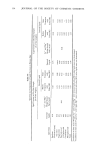
HPLC ANAI,YSIS OF GLYCINE IN ANTIPERSPIRANTS 361 Table II Linearity Data of Glycine 1 Correlation Amount Injected (ug) Slope (Counts/ug) Intercept Coefficient 5.46 -- 18.19 3092 1750 .9999 tChromatographic conditions: As in Table I. For regression analysis, area under the curve was obtained in electronic counts. approximately 10 ml of this solution was centrifuged at 2500 RPM for 5 minutes. The supernatant was used for chromatography. QUANTITATION The calibration standards were injected in duplicate, and a linear regression analysis of glycine concentration versus area under the curve was carried out. The concentration of glycine in the sample was interpolated from this regression curve, and the amount of glycine in the antiperspirant was calculated in the following way: c sw -- x V x 100 = % glycine in the sample (W/W) where c = interpolated concentration of glycine in mg/ml sw = sample weight in mg v = sample volume (100 ml in this case) RESULTS Under the chromatographic conditions used, the chromatographic properties of glycine are listed in Table I. Chromatograms of a standard solution of glycine, antiperspirant stick, and an Table III Reproducibility of Glycine Analysis • Within-Run (n = 9) Between-Run (n = 3) 3.59 -+ 0.04% (W/W) 3.60 _+ 0.02% (W/W) % CV 1.1 0.6 •Glycine analysis of an experimental sample of antiperspirant stick known to contain 3.64% (W/W) of glycine. Table IV Recoveries of Glycine From Spiked Placebo Amount Added (rag/100 ml) % Recovery 26.5 101.4 22.0 101.7 17.1 99.9 11.7 96.3

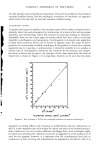
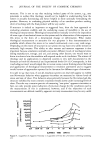
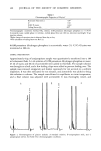
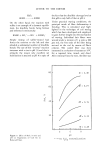
362 JOURNAL OF THE SOCIETY OF COSMETIC CHEMISTS antiperspirant roll-on both containing glycine are shown in Figure 1 (A, B, and C). The linear detection range of glycine was tested at various times using the same chromatographic conditions. Data presented in Table II show that glycine response is linear over the experimental working range. The precision and accuracy of this procedure were determined. The within-run and between-run assays of an antiperspirant stick are shown in Table III. The recovery data for various amounts of glycine added to an experimentally prepared antiperspirant stick placebo are provided in Table IV. Data shown in Tables III and IV indicate that the precision and accuracy of this procedure for the analysis of glycine are excellent. Several commercially available antiperspirants were analyzed for glycine. These results are summarized in Table V. Table V Assay of Glycine In Antiperspirant Samples • Brand % Glycine (W/W) A 3.53 B 2.57 C 3.62 D 2.56 E 2.07 •AII samples were common brand names obtained from local supermarkets. SUMMARY AND CONCLUSION The procedure described here is precise, accurate, and simple. No interferences or special difficulties have been encountered in the assay, and the procedure is used in our laboratory routinely. The procedure worked very well for all the frequently used stick and roll-on antiperspirants we tested. Although we have not carried out any accelerated degradation studies to ensure the specificity of the procedure, it was found suitable to assay aged samples kept at room temperature. The choice of the amino column and a hydroorganic mobile phase containing ammonium dihydrogen phosphate was found suitable for separation of glycine. The retention mechanism is not clearly understood, but it seems that there is some ion-exchange or an ion-pairing mechanism involved. Addition of ammonium dihydrogen phosphate has been proven necessary in sample preparation. This prevents precipitation of aluminum chloride as phosphate in the column head preventing high pressure build-up in the system. REFERENCES (1) S. Plechner, "Antiperspirants and Deodorants" in Cosmetics Science and Technology, 2nd ed., M. S. Balsam et al., Eds. (Wiley-Interscience, New York, 1972), Vol. 2, pp 373-416. (2) H. Rosen, A modified ninhydrin colorimetric analysis for amino acids, Arch. Biochem. Biophys., 67, 10 (1957). (3) T. R. Koziol,J. T.Jacob, and R. G. Achari, Ion-pair liquid chromatographic assay of decongestants and antihistamines,J. Pharm. Sci., 68, 1135 (1979).
Purchased for the exclusive use of nofirst nolast (unknown)
From: SCC Media Library & Resource Center (library.scconline.org)