j. Soc. Cosmet. Chem., 33, 345-358 (November 1982) Physical stability assessment of emulsions and related disperse systems: a critical review GEORGE ZOGRAFI, Professor, School of Pharmacy, University of lVisconsin-Madison, Madison, IV153706. Received April 21, 1982. Presented at the Annual Scientific Meeting of the SCC, New York City, December, 1981. Synopsis A critical review of emulsion stability assesssment is presented. Consideration is given to the need for understanding what basic mechanisms are responsible for the desired stability of an emulsion. Emphasis is placed on the role played by flocculation in providing the mechanical structure required for optimal stability. It is suggested that stability assessment is best carried out only on the final product, as undisturbed as possible. It is further suggested that rheological measurement, particularly low shear viscoelasticity, provides the best approach because of its sensitivity to the flocculated structure of the emulsion and any subtle changes in structure which may occur. The use of accelerated conditions, such as elevated temperatures, is shown to be misleading if the basic mechanisms responsible for instability are not understood or if such mechanisms change under conditions accelerated relative to those expected during the shelf-life period. INTRODUCTION Because of their thermodynamic instability, emulsions have always represented a significant challenge to the formulator and manufacturer of cosmetic products. Through years of experience and with the availability of many emulsifying agents and other types of excipients, the formulator generally has had little difficulty in coming up with a formulation which provides the physical and chemical characteristics required of any cosmetic product. However, because of the often complex nature of these cosmetic formulations and the relatively uncertain conditions to which they may be exposed during manufacture and storage, the assessment of any changes which may take place over an extended period of storage and use is not as readily carried out, particularly the prediction of long-term stability. In this presentation I would like to critically examine the processes which are responsible for the physical instability of emulsions and related disperse systems and the various options open to us for both short- and long-term stability assessment. In particular, I would like to address the following questions. Do our tests measure what we want to measure or should be measuring? How predictive of future events are the tests we use? Is it possible to be 345

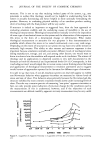
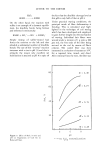
346 JOURNAL OF THE SOCIETY OF COSMETIC CHEMISTS quantitatively predictive about emulsion instability? Before we look at the problems of instability, however, let us first develop a better picture of what we want in the way of a stable emulsion. PHYSICAL CHEMICAL STATE OF AN EMULSION The classical picture of an emulsion, whether it is oil-in-water or water-in-oil, is that of a liquid system with discreet droplets of one phase dispersed throughout another, showing little or no tendency to cream/sediment or coalesce. Using classical colloidal science principles we know that the state of free energy for two phases dispersed together leads eventually to coalescence of the droplets and a corresponding reduction in the interfacial area of contact between the phases. Such coalescence arises through I Distance Figure 1. Typical potential energy diagram for emulsion drops: A) Primary Minimum B) Repulsive Barrier C) Secondary Minimum.
Purchased for the exclusive use of nofirst nolast (unknown)
From: SCC Media Library & Resource Center (library.scconline.org)