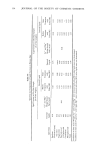
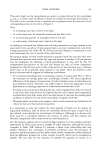
HAIR OILINESS 323 typical for surface lipids (squalene, wax esters (16)). Further evidence for the existence of an internal lipid fraction from external origin was provided by Sakamoto et al. (17) who detected wax esters after homogenization of hair samples which had previously been Soxhlet-extracted with CH2C12 for 100 h. As the extraction of internal lipids is so slow and its completeness cannot be secured even after much longer periods of extraction, we decided to digest the keratin fibres by treatment with papain/dithiothreitol (7) in order to make the internal lipids more easily accessible for organic solvents and extract them from the residual membranes. The lipid content and composition determined in the CHC13-extract of a hair sample previously extracted with water-saturated ether for 20 min and with CH2CI• for additional 16 h, and subsequently digested, is given in Table V. The figures show that Table V Composition of Lipids Detected in Hair After Preceding Soxhlet Extractions with Boiling Ether/H20 for 20 min and CH2CI• for 16 h and Subsequent Digestion Lipid Class Content in Hair [%] Squalene/paraffin traces Cholesterol ester/wax ester traces Triglyceride -- Free fatty acids 1.5 1,3-Diglyceride -- Cholesterol/1,2-diglyceride traces Monoglyceride 0.2 Total 1.7 only monoglycerides and free fatty acids are present in concentrations worth mentioning, although most other sebum components could be detected in trace amounts. Certainly this is a proof of the existence of "internal" lipids, but it is evident that the definition of "internal" lipids is conceived too narrowly because the term "external" lipid cannot include all lipids removable by such an intense extraction. The average commercial shampoo removes only 40-60% of those lipids which are extractable with water-saturated ether after 20 min of reflux (15), and even after repeated shampooing of the hair this amount does not exceed 70-90%. Thus, it may be assumed that this ether extraction under the conditions mentioned above is equivalent to the maximum possible shampooing effect with the best shampoo available. Therefore, all residual lipids left in the hair subsequent to extraction should be considered as internal with one exception: Curry and Golding detected the presence of a thin layer of fatty acids on the hair surface, possibly bound to free carboxylic groups of the protein by Mg 2+ or Ca 2+ bridges (8).* Due to hydrolysis these fatty acids are slowly released during extraction, and they are probably one of the reasons for the seemingly retarded extraction of internal lipids and also for the rather high concentra- tion of free fatty acids in the hair sample after 16 h of extraction with CH2C12. The Ca- and Mg-bridge-bound fatty acids cannot be considered as internal lipids, because they *In contrary to these authors who identified these fatty acids as stearic acid, we detected by GLC of the methyl esters all fatty acid species which are present in natural sebum, although their composition was somewhat different from that in the corresponding external sebum.

324 JOURNAL OF THE SOCIETY OF COSMETIC CHEMISTS O • 4.-., ,to O •+ 0(3 O O 4.-., 4.-.,
Purchased for the exclusive use of nofirst nolast (unknown)
From: SCC Media Library & Resource Center (library.scconline.org)