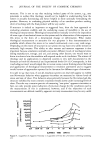
j. Soc. Cosmet. Chem., 33, 359-362 (November 1982) Analysis of glycine in antiperspirant products by HPLC DAVID CHIN and RAJA G. ACHARI, Bristol-Meyers Products, 1350 Liberty Avenue, Hillside, NJ 07207. Received May 19, 1982. Synopsis A liquid chromatographic method for the assay of glycine in antiperspirant products is described. The chromatographic separation of glycine is carried out using a Zorbax NH2 column and a mobile phase consisting of 0.01M potassium dihydrogen phosphate in 7:3 (V/V) acetonitrile: water. Glycine is monitored by U.V. at 200 nm. The method has been documented to be precise and accurate and has been successfully applied in assaying commercially available antiperspirant products. INTRODUCTION Mixed aluminum and zirconium salts are potent antiperspirants however, due to their gelling and skin irritating potential, glycine is used as a buffering agent. Glycine also plays a role in fabric protection (1). Glycine is currently analyzed in antiperspirant preparations by a reaction of glycine with cyanide-ninhydrin reagent, and the resulting mixture is assayed colorimetrically (2). The intensity of color is very susceptible to reaction temperature and the amount of reagent added, and even a slight variation in the procedure often leads to irreproducible results. We report here a simple HPLC procedure which requires no derivatization of glycine and can be applicable to most commercially available antiperspirant products. METHODS APPARATUS A modular liquid chromatographic unit consisting of a constant flow solvent delivery pump (Model 6000A, Waters Assoc., Milford, Mass.), a continuously variable Wavelength UV-VIS Spectroflow monitor (Spectro Monitor - III, Laboratory Data Control, Riviera Beach, Fla.), a strip chart recorder (Model 56, Perkin-Elmer Corp., Norwalk Ct.), and a device (Model Vista 401, Varian Associates, Santa Clara, Ca.) to integrate the area under the curves of the eluates, were used for chromatography. A carbohydrate column (Zorbax NH2, 25 cm x 4.6 mm I.D., bp 5-6/• DuPont Co., Wilmington Del.) was used for separation of glycine with a mobile phase consisting of 359

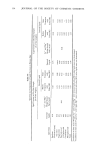
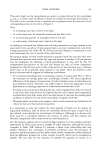
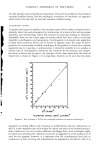
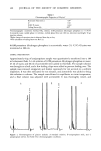
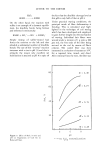
360 JOURNAL OF THE SOCIETY OF COSMETIC CHEMISTS Table I Chromatographic Properties of Glycine • Retention Time (min.): 9.8* k': 8.16 H.E.T.P. (mm): 0.022 Tailing Factor (%): 85** •Chromatographic conditions: Zorbax NH2, column .01M potassium dihydrogen phosphate in 7:3 (V/V) Acetonitrile water, mobile phase 2.0 ml/min., mobile phase flow rate 200 nm, detection wavelength 50/•1, injection volume. *Slight change of retention time is observed from day to day. **For calculation of tailing factor see Ref. (3). O.01M potassium dihydrogen phosphate in acetonitrile: water (7:3 V/V). Glycine was monitored at 200 nm. SAMPLE PREPARATION Approximately 0.5g of antiperspirant sample was quantitatively transferred into a 100 ml volumetric flask. A 3 ml solution of O.SM potassium dihydrogen phosphate in water, 45 ml of water, and 40 ml of acetonitrile were added to this flask. The sample solution was brought to a boil, and a few boiling chips were added to prevent boiling over. The sample was removed, stoppered, and shaken vigorously for ten seconds to a uniform dispersion. It was then sonicated for ten minutes, and acetonitrile was added to bring this solution to volume. The sample was allowed to equilibrate to room temperature, and a final volume was adjusted with acetonitrile. It was thoroughly mixed, and gr. Figure 1. Chromatograms of glycine analysis. A standard solution, B antiperspirant stick, and C antiperspirant roll-on. See Table I for chromatographic conditions.
Purchased for the exclusive use of nofirst nolast (unknown)
From: SCC Media Library & Resource Center (library.scconline.org)