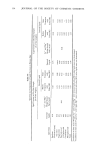
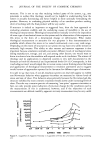
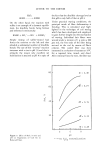
LETTER TO THE EDITOR 367 TABLE I Effect of Oxidative Neutralization on Coil Setting in Sulfite Setting Condition Set % Rinse Only Rinse & Oxidant pH 7 50 63 pH 8 35 57 pH 10 21 38 the dynamic equilibrium nature of the reaction. Although the cleavage efficacy of sulfite is optimal under acidic conditions (Figure I), it is difficult to fully exploit this feature because: (a) the reversal reaction leading to disulfide bond reformation is much faster at pH 7, and (b) the downward pH shift is counter-productive to hair pliability (Figure 3). Rebuilding of disulfide cross-links via oxidation of combined cysteine residues is a critical and necessary step in thiogly- colate waving. In sulfite systems, the oxi- dative neutralization complements the "reversal" reaction and at the same time destroys potentially harmful sulfite moiety that is a byproduct of such rever- sal. Both of these result in improved setting efficacy (Table I). REFERENCES 1. L. j. Wolfram and D. L. Underwood, The Equilibrium Between the Disulfide Linkage in Hair Keratin and Sulfite or Mercaptan, Textile Res. J. 36, 947 (1966). 2. j. B. Speakman, J. L. Stoves and H. Bradbury, The Reactivity of the Sulfur Linkage in Animal Fibers, J. Soc. Dyers O CoL 57, 73 (1941). 3. L.J. Wolfram, Reactivity of Disulfide Bonds in Strained Keratin, Nature 206, 304 (1965). Linda Albrecht LeszekJ. Wolfram Clairol Incorporated

j. $oc. Cosmet. Chem., 33,369-374 (November 1982) Abstracts The Annual Scientific Meetings and Seminars of the Society of Cosmetic Chemists are important venues for informing the participants about the state of the art and recent technical advances in the field of Cosmetic Science. To provide broader dissemination of that information, the Publication Committee has decided to publish in the Journal abstracts of the technical presentations made at these Meetings and Seminars.--The Editor. Society of Cosmetic Chemists Annual Scientific Meeting New York, NY, December 2-3, 1982. ODOR Skin microorganisms and body odors John L. Labows, Ph.D., Monell Chemical Senses Center, 3500 Market Street, Philadelphia, PA 19104. The skin contains three glandular structures having unique secretions which play important roles in cutaneous ecology, particularly in determining the number and kinds of bacteria found in different body regions. Eccrine sweat glands play a central role in regulation of body heat and produce a hypotonic solution of water, Na +, K +, C1-- and urea. Cutaneous regions rich in eccrine sweat glands have high numbers of bacteria. Sebaceous glands provide a film of lipid which may play a role in the cohesiveness of the outer layer of stratum corneum. Areas rich in this gland are characterized by high numbers of Propionibacteria and Pityros- porum. In response to emotional stress, apocrine glands produce a cholesterol enriched substrate which in the presence of axillary bacteria (particu- larly aerobic diphtheroids) results in unique body odors. These various odors have been reproduced in vitro by allowing the appropriate microorganism to act on natural secretions and on selected culture media. The establishment of a normal skin odor profile of an individual will provide a baseline with which body odor changes due to variation in physiological states or bacterial populations can be compared. Human oral odors James G. Kostelc, Ph.D., Monell Chemical Senses Center, 3500 Market Street, Philadelphia, PA 19104. The major source of odors emanating from the mouth is the oral cavity. Mouth air and saliva contain various amounts of low molecular weight volatile compounds. Many of these volatiles arise through putrefactive action of microflora on pro- teinaceous substrate in saliva. The most intense odor is manifested in all individuals after prolonged periods of reduced salivary flow, abstinence from food and liquid, and cessation of oral cleansing procedures. The principal malodorous constituents of mouth air are hydrogen sulfide and methyl mercaptan. The early morning concentrations of either or both odorants exceeds the objectional threshold in over 50% of the adult population these levels can be reduced to acceptable levels by appropriate oral hygiene. Hydrogen sulfide, methyl mercaptan, as well as other volatile oral chemicals have been used as diagnostic indicators of meta- 369
Purchased for the exclusive use of nofirst nolast (unknown)
From: SCC Media Library & Resource Center (library.scconline.org)