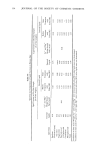
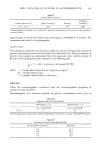
338 JOURNAL OF THE SOCIETY OF COSMETIC CHEMISTS Table VII Determination of Ca/Mg-bound Fatty Acids on Hair Variable No. a 42 43 Ca 2+ Fatty Acid Sample Ca 2+ Mg 2+ No. (ppm) (ppm) Mg 2+ (%) % of Theory 45/2 709 25 28 0.231 51 229/1 77 5 16 0.049 83 58/1 555 23 24 0.175 49 114/2 44 9 5 0.034 94 37/1 191 10 18 0.046 35 264/1 131 12 11 0.058 107 110/1 162 10 16 0.071 65 163/1 91 10 9 0.035 53 149/1 231 30 8 0.055 32 148/1 503 14 36 0.123 38 62/1 277 21 13 0.062 33 171/2 294 9 32 0.110 58 189/1 627 10 60 0.338 87 14/1 78 6 13 0.056 103 127/1 164 10 16 0.028 25 183/2 119 7 17 0.108 135 155/2 300 19 16 0.054 27 257/3 107 7 15 0.037 51 120/2 255 129 2 0.023 8 239/2 97 8 12 0.037 56 acf. footnote, bTable I 1 g of each hair sample was shaken for 10 min in a 100 ml flask with 40 ml of the detergent solution at 36øC. After filtration it was re-agitated for 30 seconds with 10 ml detergent solution and finally rinsed with dist. H20 until foaming ceased (--•40 ml). The combined washing and rinsing solutions (F) were evaporated to dryness in a crystallization plate under a stream of nitrogen. The residue was twice extracted by refluxing it with 20 ml CHC13 for 15 min. After evaporation of the solvent in a rotary evaporator and addition of an excess of CH2N2 and of internal standard, residual Na-lauryl sulphate was removed by chromatography on a column of 0.8 cm •J containing 2 g silica gel with 30 ml CHC13:MeOH = 9:1 as eluant (extract G). Under these conditions monoglycerides are eluted while Na-lauryl sulphate is retained. The quantity of lipids in these solutions was determined by HPLC as described above. The shampooed hair samples (E) were dried in open air, then kept for 2 hours in a water-saturated atmosphere and extracted with water-saturated ether according to reference 41. Internal standard and CH2N2 were added to the extracts (H), and these were also analysed by HPLC. EVALUATION OF RESULTS AND DISCUSSION The analytical measurements finally yielded data on 45 physical and chemical parameters characterizing each hair sample. Although some of these parameters show a similar tendency as the visible oiliness, there are too many crass exceptions in each

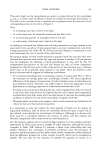
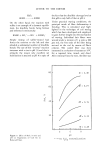
HAIR OILINESS 339 Table VIII Total Lipid Quantity in Ether Extracts A of Unwashed Hair CHClcExtracts G of Washing Solutions Ether Extracts H of Shampooed Hair Washing Solutions F (Calculated From A) and G)) Variable No. a 44 45 Total Lipids [% of Hair] in Extract Sample No. A G H F 45/2 229/1 58/1 114/2 37/1 264 / 1 110/1 163/1 149/1 148/1 62/1 171/2 189/1 14/1 127/1 183/2 155/2 257/3 120/2 239/2 2.80 3.33 1.52 1.28 7.02 3.19 1.41 5.61 3.40 1.79 2.56 0.88 2.62 1.90 1.27 1.35 3.32 1.81 1.56 1.76 2.66 2.53 0.97 1.69 3.41 1.81 1.40 2.01 2.56 0.62 0.56 2.00 2.20 1.04 0.53 1.67 1.21 1.15 0.37 0.84 2.33 1.49 1.71 0.62 1.40 0.73 1.04 0.36 1.94 0.47 1.44 0.50 1.23 0.60 0.77 0.46 0.47 0.30 0.01 0.46 1.45 0.65 0.43 1.02 2.26 0.83 0.80 1.46 0.95 0.84 0.18 0.77 1.31 0.56 0.68 0.63 1.51 0.70 0.75 0.76 aCf. footnote, bTable I. series of data to infer a strict correlation. The identification of some real among such a large number of potential factors of influence on hair greasiness can, therefore, only be achieved by means of statistical methods. A statistical method for solving such a problem is the factor analysis, which is done by computer. Such an analysis can be described in mathematical terms as follows: A number of objects (20 hair samples) is given, each of which is characterized by a vector consisting of 45 variables. The objects are, by subjective assessment, separated into classes of different oiliness (very dry, dry, medium, oily, very oily). The question then is, which of the components of the vector (which analytical data) are necessary for correctly classifying as many objects as possible, that is, which chemical components of the sebum have the strongest influence on the oily appearance of the hair. After a preliminary analysis a number of variables were omitted which -- had obviously no influence on the classification (e.g., No. 8, 17), -- had been influenced by the selection of the test panel (e.g., No. 2, 3), -- seemed to correlate with hair oiliness but cannot be influenced by cosmetic means (e.g., the age of the test persons) or -- were linear combinations of other variables and thus could not yield additional information (e.g., "% lipid in ESM" can be calculated from "% lipid in hair"). Thus 28 variables were left for the statistical treatment. With only 4 of these remaining
Purchased for the exclusive use of nofirst nolast (unknown)
From: SCC Media Library & Resource Center (library.scconline.org)