330 JOURNAL OF THE SOCIETY OF COSMETIC CHEMISTS 00000••0•00•••

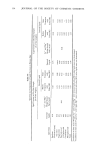
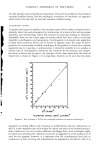
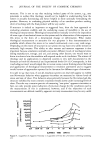
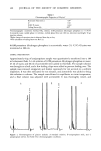
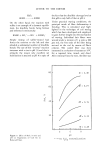
HAIR OILINESS 331 subsequent trials coincidence proved to be rather poor. Therefore, the results listed in Table II were given only a minor weight in the overall assessment. According to the overall assessment resulting from these 3 clues the 20 subjects were divided into the 5 groups: very dry, dry, medium, oily, very oily (Table II), and these judgements were correlated with the analytical data later obtained from the isolated sebum samples. SAMPLING OF HAIR Great care was taken with the sampling technique, since in view of the objective of this work, only representative samples of those fractions of the scalp lipids were to be investigated which are actually present on the hair surface and contribute towards the oily appearance. Local differences in spreading velocity as a consequence of differing curliness or temperature and humidity (e.g., when wearing a hat) were already largely excluded by the selection of the candidates. However, considerable differences in quantity and/or composition along single fibres (39) and on different sites of the head (40) may still occur due to the variations in productivity of the sebaceous glands, as well as local losses caused by combing, brushing, and wiping at the pillow while sleeping. For these reasons, representative hair samples of ca. 1 g from all sites of the head were cut approximately 0.5-1 cm above the scalp, leaving the scalp lipids untouched. After cutting the hair to lengths of ca. 3 cm and thoroughly mixing, aliquots of these samples were used for the various extractions described below. If not extracted immediately, the samples were stored at -15øC under N2 in order to prevent oxidation of squalene and enzymatic hydrolysis of triglycerides. METHOD OF EXTRACTION AND SEPARATION OF HAIR LIPIDS The isolation procedures used in the course of our investigations are indicated in reference 41. In order to be able to correlate visible greasiness and quantity of hair surface lipids, it is essential to avoid the extraction of internal sebum from the hair and to make sure that all lipid components are removed to the same extent from the hair surface and are not adsorbed selectively. The problems and potential sources of error connected herewith are discussed in reference 41. The extraction method described there was applied to aliquots of our hair samples and yielded the extracts "A" (Figure 1). Their quantity in relation to the extracted hair was determined gravimetrically and listed as "% ESM" (ether soluble material) in Table II. The lipids contained in the ESM were separated, after preceding esterification of the free fatty acids (FFA) with diazomethane, by HPLC, into 7 fractions of different polarity as indicated in Figure 1. Each lipid group was determined by comparison of the corresponding peak with that of an internal standard. Integration over all peaks yielded the total amount of lipids (34). The total quantity of lipids, expressed as % of ESM and % of hair as well as the results of the HPLC-determination of the individual lipid fractions, expressed as % of ESM, % of lipids and % of hair, are compiled in Tables II and III. For the characterization of dry and oily sebum the cholesterol esters and wax esters and also the FFA methyl esters were further separated by GLC in order to be able to
Purchased for the exclusive use of nofirst nolast (unknown)
From: SCC Media Library & Resource Center (library.scconline.org)