348 JOURNAL OF THE SOCIETY OF COSMETIC CHEMISTS WHAT CAUSES PHYSICAL INSTABILITY OF EMULSIONS? Physical instability of disperse systems in general, and that of emulsions in particular, is caused by a physical phase separation of some type which leads to changes in appearance consistency redispersability and performance. Of most critical signifi- cance in cosmetic emulsion systems are the changes in appearance and consistency, which affect product acceptance and performance. Phase separation of emulsions occurs basically by one of two mechanisms, coalescence and creaming/sedimentation. It is important to stress the difference between these phenomena, because the methodology we use to detect instability often does not differentiate between them and misinterpretation often follows. Creaming and sedimentation in liquid products depend primarily on such factors as bulk phase density differences bulk phase viscosity particle size the state of particle aggregation and the phase volume ratio. Coalescence, on the other hand, in addition to depending on particle size, viscosity and phase volume ratio, uniquely depends on the nature of the emulsifier barrier and the physical chemical nature of the external phase situated between the droplets which are most often in a flocculated state. Consequently, in evaluating creaming or sedimenta- tion we should be looking at factors which relate most to particle movement and to the floc structure. For coalescence these are also important, but we must also concern ourselves with those factors which influence the emulsifier film and its ability to resist the mechanical stresses which lead to exposure of bare surface and subsequent coalescence (2). APPROACHES TO PHYSICAL STABILITY ASSESSMENT Before dealing more specifically with emulsion stability assessment, it is important to ask one more general question. What are we trying to accomplish with such assessment? I see three different goals which require somewhat different strategies. First, we can use physical stability assessment to diagnose problems which may occur during preliminary formulation evaluation. In such cases the changes we are looking for have to be very significant over a relatively short time period and/or the techniques used must be extremely sensitive to small changes. Second, we seek to monitor potential long-term problems which might arise during the desired shelf-life, under the environmental conditions normally expected to be encountered. Thus, for example, one may subject the product to a range of temperatures to which the product might be expected to be exposed and test the product periodically over a period of weeks, months, and even years. This is obviously the safest approach toward establishing long term stability, but it is also the costliest and most time-consuming approach. In the third strategy we can use stability assessment under accelerated conditions to shorten the time over which tests are conducted. We would hope that the stresses applied to accelerate instability would allow us to then extrapolate our results to normal storage and use conditions for the purpose of predicting long-term stability. In all of these cases the importance of knowing what stability mechanisms we are testing is critical, and in the predictive test we have the additional concern of being sure that the accelerated conditions have not introduced new and unanticipated mechanisms of instability, bearing little relationship to the long-term situation. Much has been written on the various approaches which can be used to assess physical instability of emulsions (3,4,5), so I will limit my comments to a more critical evaluation

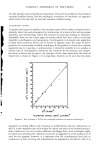
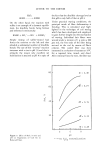
STABILITY ASSESSMENT OF EMULSIONS 349 of a few specific issues of significant importance. These are the problems of accelerated emulsion stability testing, and the rheological evaluation of emulsions, an approach which I feel is the best way to deal with emulsion stability testing. ACCELERATED TESTING To predict the long-term stability of an emulsion system from studies conducted over a relatively short time period requires the introduction of a stress which will accelerate instability, and methodology which will measure the processes leading to instability. Essentially, there are two major types of stresses which have been used to accelerate instability, centrifugation and temperature. Centrifugation is obviously only applicable to fairly fluid emulsions which can be forced to separate under the range of forces produced in commercially available centrifuges. If the problem is clearly one of phase separation due to creaming or sedimentation, it should be possible to run samples at various rates of centrifugation, determine rate constants for the process, and extrapo- late these to forces due to gravity. An example of such data, taken from the work of Garrett (6), is shown in Figure 2. It is important, however, to be sure that the phase 2o o} 18 ,,, 16 '"' 14 • I0 " 6 • 4 0 2 4 6 8 I0 12 14 I6 FLOTATION RATES (SE• '1) vs.(R.P.M.) 2 Figure 2. Rate Constant rs. R.P.M. for centrifugal evaluation of emulsion creaming (6). separation occurring reflects only creaming or sedimentation and not coalescence, as well. It is also important that such studies be carried out only on the finished product. Since coalescence can occur under sufficient centrifugal force, such techniques might be useful in accelerating the coalescence process, as suggested in a few studies (6,7). If used for this purpose, however, it is important that the centrifugation lead only to coalescence or that creaming and sedimentation be separated out as factors. Also, it is
Purchased for the exclusive use of nofirst nolast (unknown)
From: SCC Media Library & Resource Center (library.scconline.org)