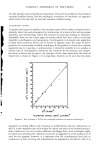
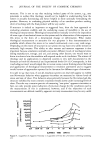
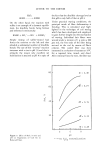
356 JOURNAL OF THE SOCIETY OF COSMETIC CHEMISTS 280 x 240 m,m (.• 7 160 120 80 4O I I I I I I I 0 2 4 6 8 I0 12 14 TIME (min.) Figure 7. Compliance vs. Time for a viscoelastic emulsion system: A) Elasticity B) Viscoelasticity C) Visous Flow D) Recovery. studying disperse systems ranging from high to low in the degree of overall consistency and structure. We may now ask, what is the next step? It seems to me that the most pressing problem facing cosmetic formulatots is their inability to predict whether a disperse system will or will not hold up over its expected shelf life. Observing viscoelastic properties of a given formulation under storage conditions over a period of time, and/or under minimal stress conditions, should be carried out. The least that will happen is that one will have fundamental theological parameters which describe a stable emulsion system. Even better is the possibility that this technique will pick up change in theological behavior which can then be extrapolated to shelf-life conditions. It remains for such studies to be carried out before the potential value described can be realistically

STABILITY ASSESSMENT OF EMULSIONS 357 assessed, and it is my hope that this review will stimulate further inquiry into this topic. SUMMARY AND CONCLUSIONS 1. Most references to emulsion stability deal with relatively simple liquid emulsions which bear little relationship to typical cosmetic lotions and semisolids. 2. Since most cosmetic emulsions are aggregated gel structures, any test must only minimally disturb this system relative to the environmental situation to be encountered during shelf-life and use. 3. Most stresses used to accelerate instability cause it by unrelated mechanisms. Thermal stress is useful only if related to the temperature range to be encountered. There is the danger of over-killing acceptable emulsions. 4. Low shear theological studies which measure viscoelasticity, coupled with continu- ous shear rheometry, are the best methods for monitoring physical stability of emulsions. REFERENCES (1) S. Friberg, Food Emulsions (Marcel Dekker, Inc., New York, 1976). (2) J. A. Kitchener and P. R. Mussellwhite, "The Theory of Stability of Emulsions," Ch. 2 in Emulsion Science, ed. P. Sherman (Academic Press, London, 1%8). (3) K.J. Lissant, Emulsions and Emulsion Technology Parts I and II, (Marcel Dekker, Inc., 1974). (4) G. Zografi, "Emulsions," Ch. 16 in The Theory and Practice of Industrial Pharmacy, 1st edition, ed. L. Lachman, H. A. Lieberman, and J. L. Kanig, (Lea and Febiger, Philadelphia, 1970). (5) P. Sherman, "Accelerated Testing of Emulsion Stability," Soap, Perfumery and Cosmetics, 44, 693-699 (1971). (6) E. R. Garrett, "Prediction and Evaluation of Emulsion Stability with Ultracentrifugal Stress,"J. Soc. Cosm. Chem., 21,393-415 (1970). (7) R. C. Vold and R. C. Grott, "Parameters of Emulsion Stability,"J. Soc. Cosm. Chem., 14, 233 (1%3). (8) T. G. Rochow and C. W. Mason, "Breaking Emulsions By Freezing," Ind. Eng. Chem., 28, 12%-1300 (1936). (9) J.P. Cordiez, G. Grange, and B. Mutaftschiev, "Droplet Freezing Experiments in Stearic Acid-Water Emulsions, Role of Droplet-Medium Interface,"J. Coll. Interf Sci., 85, 451-441 (1982). (10) H. R. Kruyt, Colloid Science, Vols. I and II (Elsevier Publ. Co., New York, 1949). (11) J. D. Ferry, Viscoelastic Propetites of Polymers, 3rd edition (John Wiley and Sons, New York, 1980). (12) H. Schott, "Rheology," Ch. 22 in Remingtons Pharmaceutical Sciences, ed. A. Osol (Mack PuN. Co., Easton, PA, 1980), 323-339. (13) P. Sherman, "Rheology of Emulsions," Ch. 4 in Emulsion Science, ed. P. Sherman (Academic Press, London, 1968). (14) E. N. Hiestand, "Physical Properties of Coarse Suspensions,"J. Pharm. Sci., 61,268-272 (1972). (15) B. W. Barry and E. Shotton, "Structure and Rheology and Sodium Dodecyl Sulfate-Cetyl Alcohol- Water: Continuous Shear Experiments,"J. Pharm. Pharmac., 19, 1105-1205 (1%7). (16) B. W. Barry and E. Shotton, "Rheology of Sodium Dodecyl Sulfate-Cetyl Alcohol-Water: Small Strain Experiments,"J. Pharm. Pharmac., 19, 1215-1295 (1%7). (17) B. W. Barry and B. Warburton, "Some Rheological Aspects of Cosmetics,"J. Soc. Cosm. Chem., I9, 725-744 (1968). (18) B. W. Barry, "Evaluation of Rheological States of Semisolids," J. Soc. Costa. Chem., 22, 487-503 (1971). (19) B. W. Barry, "The Self Bodying Action of the Mixed Emulsifier Sodium Dodecyl Sulfate/Cetyl Alcohol,"J. Coll. and lnterf Sci., 28, 82-91 (1%8).
Purchased for the exclusive use of nofirst nolast (unknown)
From: SCC Media Library & Resource Center (library.scconline.org)