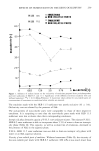
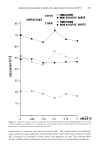
256 JOURNAL OF THE SOCIETY OF COSMETIC CHEMISTS of their water content within 15 minutes of application. What remains is the residual non-volatile parts consisting of lipophile phase, surfactant, and a small amount of water. These have the ability to form an isotropic oily phase. This mainly depends on the HLB value of the surfactant. Thus, occlusive properties of emulsions have already been shown to be related to the capacity of their non-volatile parts to form an isotropic oily phase. The occlusivity of emulsions also depends on the initial occlusivity of the oily phase. Occlusivity increases with the amount of oil phase and decreases with the amount of surfactant. In a previous study of a large number of emulsions (8), especially O/W types, the occlusivity was found greatest at the HLB value which allowed the formation of the largest surface area of isotropic oily phase in a ternary diagram: water-surfactant-oil. A relationship between the occlusivity of emulsions and the formation of an isotropic oily phase was thus established. The above relationship was complicated in the presence of humectants used at 2.5 and 5% (t0). Their influence on the occlusivity of emulsions was surprisingly variable depending on the nature of the oil, surfactant, humectant and the HLB value. The change in occlusivity did not correspond to the variations of the surface area in the phase diagram of the isotropic oily phase. As a matter of fact, the concentrations of humectants in the residual films of emulsions after application are greater (10 to 20%) than in the isotropic oily phase determined in our experiments and consisting of oil, surfactant, and a 2.5 or 5% aqueous solutions of humectants. The objective of this work is to clarify the relationship between the occlusivities of emulsions containing humectants, the isotropic oily phase (being more accurately mea- sured), and other physical factors. The approach is to study a selected number of emulsions prepared from perhydro- squalene or mineral oil using ester or ether type surfactants in the presence of various humectants and to analyze the following physicochemical parameters: ß occlusivities of emulsions and of their non-volatile parts. ß capacities of emulsions to form an isotropic oily phase. ß viscosities of non-volatile parts of emulsions. ß conductivities of emulsions and of their non-volatile parts. ß occlusivities of isotropic ternary mixtures corresponding to the non-volatile parts of emulsions. ß microscopy of residual "films" of emulsions after application in usual conditions. The choice of emulsions and humectants was made considering the facts (t0) that in some cases the occlusivity decreases or remains unchanged at certain HLB values of surfactants, and increases or decreases depending on the nature of oil and surfactant. EXPERIMENTAL PROCEDURE MATERIALS Lipophile phases: Perhydrosqualene (P.H.S.) • and mineral oil 2 were as described in Pharmacop6e Frangaise IX. • Laserson et Sabetay, 14 rue Jean Bonal, F. 92250 La Garenne. 2 Mayoline 238 Cra Esso, 6 avenue Gambetta, 92420 Courbevoie.

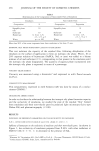
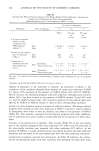
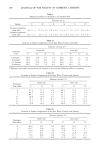
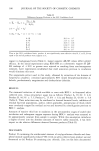
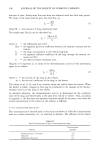
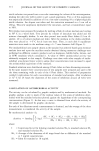
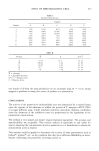
EFFECTS OF HUMECTANTS ON EMULSION OCCLUSIVITY 257 Surfactants: Two couples of non-ionic surfactants were used. One had an ester linkage. It was a sorbitan monooleate ester (Montane 803: HLB 4.3) and a sorbitan monooleate ester with an average of 20 ethylene oxide residues (Montanox 803: HLB 15). The other had an ether linkage. It was an oleyl alcohol derivative with an average of two ethylene oxide residues (Simulsol 923: HLB 4.9) and with an average of 10 ethylene oxide residues (Simulsol 963: HLB 12.4). Humectants: The humectants incorporated into emulsions were: sodium 5-pyrrolidone- 2-carboxylate 4 (NaPCA-50% aqueous solution), sodium lactate 5 (NaL-50% aqueous solution) and urea. 6 They were used at six concentrations, viz: 0, 0.62, 1.25, 2.5, 3.75, and 5%. PREPARATION OF EMULSIONS AND THEIR NON-VOLATILE PARTS On the basis of our previous observations (10) three groups of emulsions were chosen: a) Perhydrosqualene--ester surfactants at HLBs of 8.5 and 11.5, sodium lactate. b) Perhydrosqualene--ester or ether surfactants at an HLB of 9.25--urea. c) Mineral o/l-ester or ether surfactants at an HLB of 9.5, sodium pyrrolidone car- boxylate. The general formula of emulsions (% by weight) used was oil 10, surfactant 10, humectant 0, 0.62, 1.25, 2.5, 3.75, or 5--water q.s. to 100. Emulsions were prepared by phase inversion, emulsifying the oil phase in demineralized water using the couple of surfactants (11). The compositions of the non-volatile parts of emulsions were calculated assuming their evaporative water loss to be more than 90% (8,10) as indicated in Table I. MEASUREMENT OF OCCLUSIVITY The occlusivity was measured by applying emulsions or their non-volatile parts at a dose of 3 mg/cm 2 on the surface of a hydrated gelatin cell (11) which permits water diffusion similar to human skin. Experimental conditions were described in our previous publication (8). The occlusivity (Oc) of products is a measure of resistance to water loss compared to a control measurement and defined by the following equation: Occlusivity (Oc)% = WLB - WLA WLB x lOO WLB: water loss of gelatin cell in mgß cm-2 -2 WLA: water loss of gelatin cell in mgß cm ration. ß rain-• before application. ß rain -• after application of the prepa- Statistical significances were only calculated for emulsions containing 0, 2.5, and 5% humectant using the Mann and Whitney test (12), for which 8 replicates were used. Three replicates were used for other concentrations. 3 SEPPIC, 70 avenue des Champs Elys6es, F. 75008, Paris. 4 U.C.I.B., Ivry la Bataille, France. 5 E. Merk Darmstadt, F.R.G. 6 Rh6ne Poulenc, Paris.
Purchased for the exclusive use of nofirst nolast (unknown)
From: SCC Media Library & Resource Center (library.scconline.org)