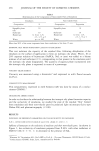
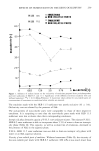
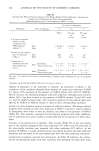
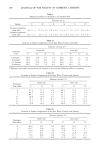
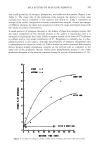
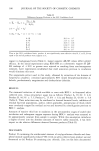
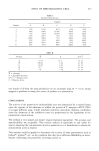
EVALUATION OF SHAMPOO DETERGENCY 279 Table II Precision of the Finger, Bulk and Sponge Washing Techniques Method Replicate Finger* Bulk* Sponge* 1 25 42 37 2 42 37 50 3 23 34 56 4 41 33 54 5 38 34 49 Average 34 36 50 % R.S.D. 27 10 15 * These figures represent the % residue of a specific paraffin fraction across five individual replicates. The numbers for the finger and bulk data were derived through the analysis of finished-product-treated samples, while the sponge data comes from samples treated with single-surfactant-model system. procedure. The bulk process method produced the most uniform results but also is the most removed from real life or actual use-type conditions and resulted in higher overall sebum levels. This is thought to be due to the fact that the samples experienced significantly less agitation in this technique compared with the other two methods. The method of choice became the sponge method procedure. It provides the highest 80 70- ß -r 60- (.,-3 .. 5o- z , • 4.0 o -- o PWl '?%',,, PW2 PW$ PW4. PW5 PW6 PW7 PARAFFIN FRACTION • 10 % SEBUM L"•T'• 2 % SEBUM Figure 2. Paraffinic compounds remaining after shampooing with 10% ALS of hair soiled with 2% or 10% sebum solutions.

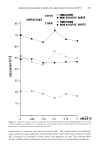
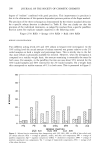
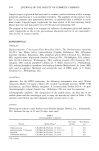
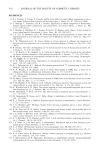
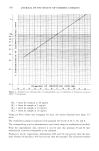
280 JOURNAL OF THE SOCIETY OF COSMETIC CHEMISTS degree of "realism" combined with good precision. This improvement in precision is due to the elimination of the operator-dependent pressure portion of the finger method. The precision of the three techniques as demonstrated by the relative standard deviation for a specific sebum fraction is tabulated in Table II. One can clearly see that the precision of the individual treatments, as judged by residues from a specific paraffinic fraction across five replicate samples improves in the following order: Finger (27% RSD) Sponge (15% RSD) Bulk (10% RSD) SOILING CONCENTRATION Two different soiling levels (2% and 10% sebum in hexane) were investigated. At the 10% soiling level the actual amount of sebum removed was greater relative to the 2% soiled samples on both a weight and percentage basis. This is strictly due to the fact that more sebum is physically available for removal. However, when the detergency is compared on a residue weight basis, the amount remaining is essentially the same for both cases. For example, in the paraffinic fraction one sees about 95% removal for the 10% loaded samples and 60% removal for the 2% loaded samples. On a weight basis this corresponds to residue amount of 0.5 in both cases. This is presented in Figure 2. 6O 50- 40- 50- 20- 10- FFA I I I I I SQ CHOL SPW TG AVG RESIDUE FRACTION • ALS • AES •'.• AOS Figure 3. Sebum fraction remaining after shampooing with 10% ALS, AES, or AOS of hair soiled with 2% sebum solution. FFA = average of palmitic, stearic, and oleic acid components PW = average of paraffin components SQ = squalene component CHOL = cholesterol component SPW = average of synthetic spermaceti wax components TG = average of triglyceride components AVG = average of all of the above fractions.
Purchased for the exclusive use of nofirst nolast (unknown)
From: SCC Media Library & Resource Center (library.scconline.org)