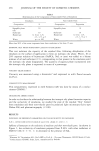
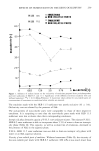
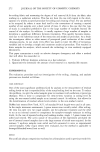
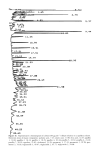
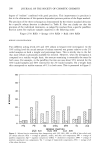
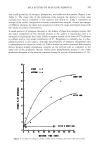
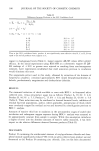
ESCA STUDIES OF SKIN LIPID REMOVAL 291 very small quantities of nitrogen, phosphorus, and sulfur are also present (Figure 1 and Table I). The inner side of the epidermis (side towards the dermis) in most cases contains less silicon compared to the exterior side (Table I). Table I represents an average of the surface composition of twelve untreated skin samples. Atomic percentages of different elements for these skin samples lie within the range mentioned along with the values of atomic concentration. A small quantity of nitrogen observed at the surface of these skin samples implies that the major component of the material present at the surface is non-protein and it is assumed to be primarily skin lipid. Sulfur is present mainly in the form of S TM (sulfonate or sulfate) with a very small contribution of S u. Phosphorus is probably due to phos- pholipid present at the surface, although the possibility of inorganic phosphorus salts or phosphoprotein cannot be ruled out. ESCA studies on twelve untreated skin samples always showed smaller phosphorus contents on the exterior side as compared to the inner side of the epidermis. Recent studies show phospholipids present in the viable epidermis disappear in the stratum corneum during the process of keratinization (2, 14). 16 14 ACETONE o,e 12 o OUTER SiDE 2 ß rl OUTER S INNER SIDE ß 0 5 I0 15 20 25 30 :35 40 45 50 WASHING TIME (MIN.) Figure 2. Increase in nitrogen content of skin versus washing time with ether and acetone.

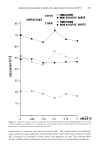
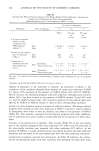
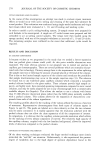
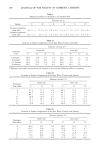
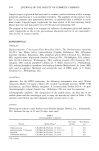
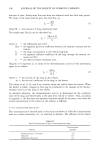
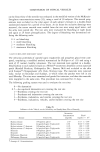
292 JOURNAL OF THE SOCIETY OF COSMETIC CHEMISTS TREATMENT WITH SOLVENTS Untreated samples of epidermis were washed with ether, acetone, or ethanol for different periods of time and after treatment rinsed with distilled water for 10 minutes. After every wash and rinse cycle, skin samples were analyzed by ESCA for surface composition (see Tables II to IV). With ether washing, there is no increase in nitrogen content (Table II and Figure 2), which means ether treatment does not extract lipid from the surface of the skin. These results are different from the studies of Kirk (15), where ethyl ether was used to collect residual skin lipids from the surface of the whole hand. However, our present results are consistent with the findings of Buettner (16). Buettner observed that the application of ether to the arms of four volunteers for four hours did not decrease the barrier properties of the skin. It seems that Kirk's studies deal mainly with surface lipids and sebum, while the results of Buettner depend mainly on the removal of structural lipids from the membrane. 16 14 o I•ER SlOE 12 OUTER SIDE o o 5 IO I$ 20 25 10 $$ 40 45 54) WASHING TIME (MIN.) Figure 3. Increase in nitrogen content of skin versus washing time with ethanol.
Purchased for the exclusive use of nofirst nolast (unknown)
From: SCC Media Library & Resource Center (library.scconline.org)