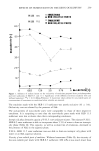
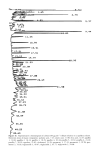
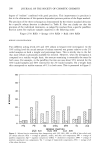
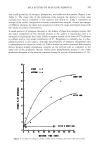
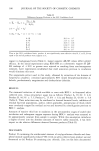
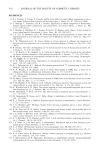
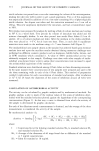
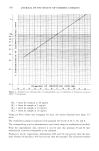
316 JOURNAL OF THE SOCIETY OF COSMETIC CHEMISTS 2 1 0.4- 0.3 0.2- 0.1 10 11 12 13 14 15 16 17 18 19 20 21 2•2 I F ' , I I '1 • t I • I I I • •' I I I I Figure 2. Standard curve showing effect of imidazolidinyl urea on inhibition of PJe//a'omo.ds ATCC 15442 growth. SS4 = Idem for standard at 20 mg/ml. SC• = Idem for sample at 5 mg/ml. SC2 = Idem for sample at 10 mg/ml. SC4 = Idem for sample at 20 mg/ml. Using six Petri dishes and averaging the data, the results obtained have about 5% error. The commercial products examined were assigned the letters A, B, C, D, and E. The corresponding activity measurements were found using the mathematical method. From the experimental data collected it can be seen that products B and D have antibacterial activities comparable to the standard. Products C and E, respectively, demonstrate 20% and 5% less activity than the stan- dard. Product A has about 30% less activity than the standard. The variations between

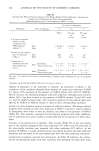
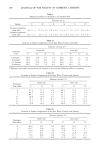
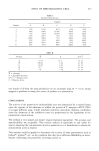
ASSAY OF IMIDAZOLIDINYL UREA 317 Table I Antimicrobial Activity Supplier Sample A B C D E 1 75% 110% 81% 95% 95% 2 60% 100% 83.8% 100% 95% 3 75% 95% 83.8% 105% 100% 4 70% 105% 75% 95% 90% 5 100% 100% 75% 100% 95% 6 55% 95% 90% 90% 100% 7 90% 105% 80% 95% 90% 8 65% 95% 80% 100% 95% Table II Product • o' o'/X•n A 73.75 15.5 I 5.33 B 100.62 5.62 I 1.99 C 81.07 4.93 I 1.74 D 97.7 4.63 I 1.64 E 95 3.78 I 1.34 Average. Standard deviation. tr/•nn = Standard error. Dilution factor. two drums of A from the same production lot are extremely high (o- = 15.5), which suggests a problem in using this source of product as a preservative. CONCLUSIONS The activity of the preservative imidazolidinyl urea was determined by a method based upon the capacity of the substance to inhibit the growth of P. aeruginosa ATCC15442 in an agar diffusion assay. Under standard conditions (inoculum, medium, incubation time) the diameters of the inhibition zones are proportional to the logarithms of the preservative concentration. The method is very simple and doesn't require expensive equipment. The accuracy and reproducibility are acceptable. This routine analysis is applicable to and useful for exactly adjusting the concentration of active preservative in a formulation to obtain the antimicrobial activity desired. This method could be applied to determine the activity of other preservatives such as kathon ©, glydant ©, etc. on the condition that they have sufficient diffusibility in water. Studies concerning this possibility are being carried on.
Purchased for the exclusive use of nofirst nolast (unknown)
From: SCC Media Library & Resource Center (library.scconline.org)