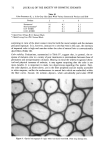
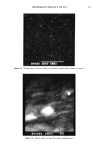
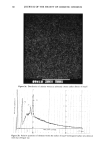
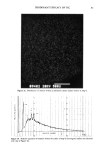
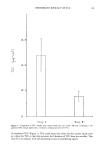
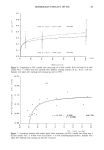
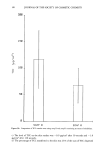
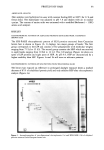
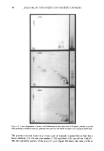
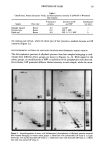
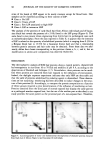
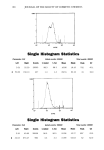
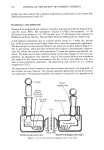
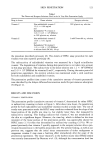
76 JOURNAL OF THE SOCIETY OF COSMETIC CHEMISTS A. Containing 1.3% regular TCC (standard version, commercially available) with no sandy texture. B. Containing 1.3% regular TCC (standard version, commercially available), gritty surface when being used. C. Containing 0.13% solubilized TCC. D. Containing 0.26% solubilized TCC. E. Containing 0.5% solubilized TCC. F. Containing 1.3% solubilized TCC. G. Containing 0.26% solubilized TCC + 0.06% wool wax alcohols. H. Containing neither TCC nor wool wax alcohols. I. Soap G + 0.5 % dimethylpolyglycol ether. K. Soap D + 5.26% nonylphenolpolyglycol ether additionally. Soaps A and B were prepared on a big scale in the factory soaps C-K were prepared on a small scale in the laboratory. EDXA-- INVESTIGATION The surfaces of pieces of soaps (B, C, F) were freshly cut with a knife. The surfaces-- covered with carbon--were investigated by a combined SEM (scanning electron micro- scope, Hitachi S-500) and EDXA (X-ray-fluorescence, Kevex • X System 7000) tech- nique. The distribution of chlorine was determined to visualize the content and the tendency of TCC to form aggregates. Sodium was determined to show the homogeneity of the distribution of Na-stearate/palmitate. QUANTITATIVE DETERMINATION OF TCC TCC, dissolved in ethanol, was determined by HPLC (Hewlett-Packard 1084 B, column Lichrosorb RP8 (10 •), solvent H20:ethanol = 23:77, injection volume 10 •1, wavelength 266 nm). SAMPLING PROCEDURE FOR DETERMINATION OF THE DENSITY OF TCC AT THE SKIN SURFACE The quantity of TCC/area unit of skin surface was determined in the following manner: The skin area (the inner side of the lower forearm), previously washed with soap, was covered with a funnel (0 60 mm) 5 ml of ethanol were poured into the funnel the skin site, funnel, and solvent were shaken continuously for two minutes then the solvent was transferred to a glass bottle, which was sealed afterwards by means of a septum. DETERMINATION OF TCC BIOAVAILABILITY OF SOAPS A AND B The comparison of "sandy" soap (B) with soap (A) of good quality was done as follows: ten female volunteers used running tap water of 37øC to wash one lower forearm with one of the two soaps. Analyses of TCC were performed as described above. SKIN SURFACE CONTENT OF TCC IMMEDIATELY AND 12 HOURS AFTER USE OF SOAPS To find the equivalence level between powdered and solubilized TCC, the quantitites of

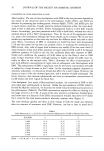
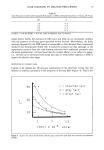
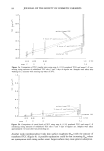
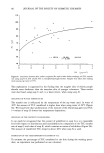
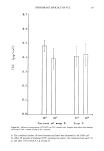
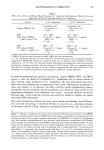
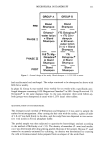
DEODORANT EFFICACY OF TCC 77 transferred TCC were determined after use of the soaps A, C, D, E, and F. Twenty-four female volunteers always received random pieces of the above-mentioned soaps on Fridays. They were obliged to use these soap bars as they usually use a soap for --1 week on Monday and Wednesday morning, samples were taken from the lower forearms to determine the casual level of TCC. Subsequently both arms were washed by rubbing the forearm directly under running tap water of --30øC with the assigned soap bar for two minutes, and another series of samples was prepared to determine the content of TCC at the skin surface. The following week the soap pieces were substituted by one of the other soaps. INFLUENCE OF THE DURATION OF WASHING AND OF REFATTENING AGENTS Soap D was compared with soap G (containing wool wax alcohols) as described above, except that seven volunteers used the soaps for ten seconds, seven volunteers used them for 40 seconds, and nine volunteers for 120 seconds. INTERRELATION BETWEEN THE LEVEL OF SKIN SURFACE LIPIDS, SKIN SURFACE ROUGHNESS, AND TCC TRANSFER The skin surface lipids on the inside of one forearm of nine volunteers were determined by solvent extraction (2). The skin surface roughness of contralateral sites was deter- mined by profilometry (3). Afterwards both forearms were washed for two minutes under running tap water of 35øC using soaps I and K respectively. The content of TCC was determined as described above. INFLUENCE OF THE CONTENT OF SOLUBILIZER ON TCC TRANSFER Twenty volunteers washed their forearms for two minutes under running tap water of 35øC using soap G and soap K (containing an excess of 5.26% nonylphenolpolyglycol ether). The level of TCC on the skin surface was determined as described above. SNIFF TEST COMPARING SOAPS A AND D A panel of 50 volunteers of both sexes was given a control soap to use to wash the axillae in the evening and morning for three days. The axillary odor of the volunteers was then assessed by two independent assessors using a numerical scoring system for odor intensity. On the basis of this assessment, the 30 volunteers with the highest axillary odor were selected and split into two test groups having approximately the same mean and range of odor levels. For the next three days one group used soap A to wash the left axilla and soap B to wash the right axilla, and the other group washed according to the reverse pattern. After three days the odor levels were reassessed and both groups went back to using the control soap for two days before returning for a third assessment. In the final stage there was a product crossover, i.e., each group reversed its washing pattern for three more days, with a fourth assessment at the end of this period. The results were expressed as the ratios of odor intensity between axillae for each volunteer at each assessment. This test was performed by Toxicol Laboratories, Ledbury, En- gland.
Purchased for the exclusive use of nofirst nolast (unknown)
From: SCC Media Library & Resource Center (library.scconline.org)