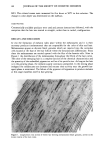
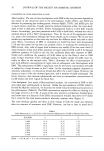
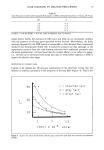
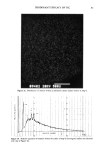
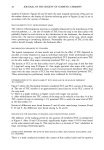
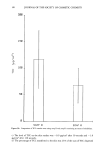
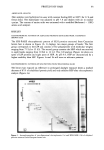
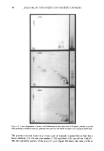
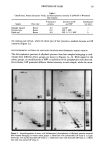
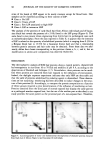
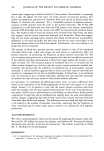
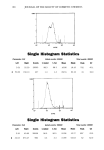
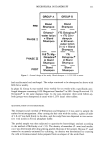
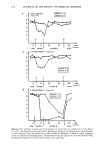
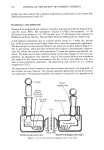
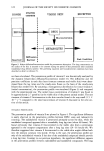
96 JOURNAL OF THE SOCIETY OF COSMETIC CHEMISTS sities of the bands of HSP appear to be nearly constant except for blond hairs. Hair samples can be classified accoMing to their content of LSP: ß Class a: No LSP ß Class b: Traces of LSP ß Class c: Few LSP associated to high HSP ß Class d: LSP as intense as HSP The analysis of the proteins of curly black hair from African individuals and of Cauca- sian black hair reveals the presence of a 35-Kd band in the LSP group (Figure 4). This same band is also present when originating from brittle hair (in pathological cases such as trichothiodystrophy). From the data reported in Table II, it appears that the intensity of LSP is related to the quantity of solubilized proteins (which is ranging from 0.3% for a Belgian blond hair to 19.5% for a Caucasian brown hair) and that a relationship between protein amounts and hair color may be obtained. From these data we arbi- trarily define four classes corresponding to the previous classes a, b, c, and d, but no modification in amino-acid composition was observed (Table III). DISCUSSION The electrophoretic analysis of SCM hair proteins shows a typical pattern, characterized by heterogeneity in size (from 10 to 70 Kd) and mobility at pH 8.9, accoMing to the observations of Marshall and Gillespie (1,7). Nevertheless, these patterns can be modi- fied when proteins are extracted from hair exposed to the influences of environment. Indeed, the daylight exposure experiment indicates that only HSP are detectable and that the yield of proteins solubilized by reducing agents is diminished. These observa- tions are not surprising: weathering has been described to induce changes in the struc- ture of hair proteins (8). Accordingly, to compare the protein composition as a function of ethnic groups required a prior determination of the influence of weathering on hair. Proteins extracted from the distal part of normal exposed hair display the same pattern as a prolonged weather-exposed hair, but the use of the median part as described in our study provides the same pattern as the proximal part of a non-exposed hair. Therefore, Figure 4. Autoradiographies of mono- and bidimensional electrophoresis of alkylated proteins extracted from black hair of African Negro (a) and Caucasian (b) individuals.

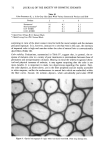
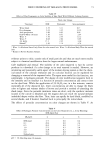
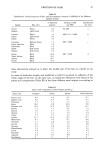
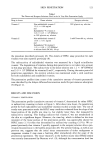
PROTEINS OF HAIR 97 Table II Classification, Protein Extraction Yields, and Electrophoretic Intensity of LSP/HSP of the Different Samples Studied % Extracted Intensity of LSP Classification Sample Hair color proteins and HSP (see text) French Blond 0.6 Belgian Light blond 0.3 German Blond 1.2 Italian Light blond 0.9 Indian Brown 3.0 No LSP a LSP HSP b Caucasian Medium brown 7.2 LSP HSP c South American Black 3.6 Indonesian Black 3.9 Polish Dark brown 6.6 Belgian Dark brown 5.9 Indian Black 18.6 LSP ) HSP d North African Black 19.3 African Black 18.7 French Black 19.5 these observations allowed us to select the middle part of the hair as a model in our study. In terms of molecular weights and mobilities at pH 8.9 we found no influence of the ethnic origin of the hair. In the same way, no significant differences were found in the amino acid compositions (Table III) of hair from different racial origins or according to Table III Amino Acid Composition of Hair Samples (g/100 g) Amino acid European Asiatic African South American Cysteic acid 0.9 1.0 0.5 0.7 Aspattic acid 6.0 6.5 6.7 6.1 Threonine 7.2 7.1 7.2 7.2 Serine 10.0 9.8 10.4 9.8 Glutamic acid 14.9 ! 5.0 15.0 14.7 Proline 7.5 7. ! 6.2 7.5 Glycine 3.6 3.7 3.3 3.9 Alanine 3.1 3.1 3.4 3.4 Valine 5.1 5.2 5.2 5.2 Cystine 13.7 12.6 13.5 12.7 Methionine 0.7 0.5 0.7 0.6 Isoleucine 2.7 2.8 2.6 2.8 Leucine 6.7 6.7 7.1 6.8 Tyrosine 2.4 2.6 2.6 2.7 Phenylalanine 2.3 2.7 2.3 2.6 Lysine 2.8 3.1 3.1 2.9 Histidine 1.2 1.1 1.2 1.1 Arginine 9.2 9.3 8.9 9.1 Lanthionine 0 0 0 0
Purchased for the exclusive use of nofirst nolast (unknown)
From: SCC Media Library & Resource Center (library.scconline.org)