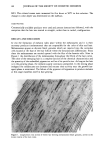
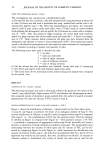
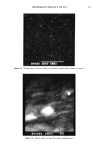
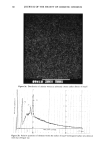
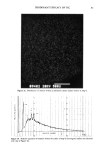
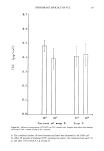
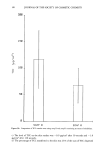
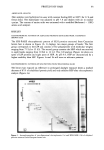
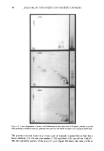
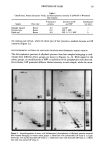
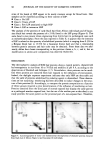
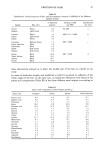
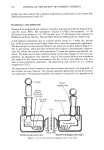
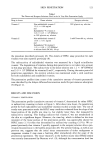
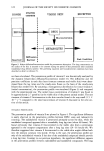
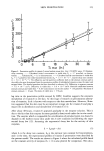
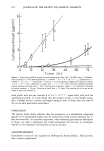
98 JOURNAL OF THE SOCIETY OF COSMETIC CHEMISTS donors' ages, suggesting a chemical identity of the proteins. Nevertheless, a surprising fact is that the lighter the hair color, the lesser amount of extracted proteins. The similar electrophoretic patterns of a Caucasian black hair and of an African black hair (Figure 4) illustrate this statement. For a comparable amount of analyzed proteins, intensity of LSP increases with the yield in the protein extraction. The 35-Kd LSP polypeptide is yield-detectable only when this LSP group is very intense. Intermediate patterns (LSP-detectable but less intense that HSP) are obtained with medium brown hair. The highest yields of extracted proteins were obtained from dark brown and black hair samples, and the lowest yields were obtained with blond hair. These data suggest that the low-sulfur and high-sulfur proteins from black and blond hair would behave differently in the reducing buffer and that these proteins are more cross-linked in the blond hair sample than in the black hair sample. Furthermore, this cross-linking is via bonds that are not reducible. The analysis of blond hair proteins provides results similar to that of the weathered Caucasian brown hair. Light and oxygen are well known to significantly affect the protein structure, by promoting the formation of photo-induced cross-links (8). The role of melanin photoprotection is well recognized and thus the less efficient protectiofi of the complex eumelanin-pheomelanin in blond hair might explain the increase in new types of bonds (15). The chemical analysis of weathered hair (16,17) revealed that the sulfur content changed very little but that the cystine content presented a marked loss. Crewther (18) showed that the solubility of weathered hair in urea-bisulfite medium decreased. It can be therefore suggested that in such a case other types of cross-links are initiated to compensate for the loss in disulfide bridges. In blond hair, as in weathered hair, the proteins are non- or hardly extractible, showing that non-reducible cross-links are present but that the exact nature of these bonds remains unknown. In conclusion, we summarize the following results: First, no major differences were found in the expression of the SCM polypeptides of the hair with regard to its racial origin. Second, it is of interest to note that the lowest protein recoveries were from those hair samples with the least pigment (pheomelanin). In the case of weathered hair, this result could be due to photochemical cross-linking or other factors. Sulfur protein composition in light hair and in weathered hair samples show the same electrophoretic pattern changes, suggesting that both of these types of hair contain more non-reducible cross-links than darker hair samples. The differences between dark and light hair seem to be related to the number of reducible cross-links, indicating that the formation of these cross-links may be either under genetic control or in conjunction with pigment production. ACKNOWLEDGMENTS We wish to acknowledge Dr. Bauer and his group for supplying the human tresses, Dr. Bore and Dr. De Labbey for amino acid analysis, and Professor M. Prunieras for helpful discussions and critically reviewing the manuscript. The authors would like to thank Mr. A. Reinhard for the photography. REFERENCES (1) R. C. Marshall and J. M. Gillespie, Comparison of samples of human hair by two dimensional elec- rrophoresis,J. Forensic. Sci. Soc., 22, 377-388 (1982).

PROTEINS OF HAIR 99 (2) (3) (4) (5) (6) (7) (8) (9) (10) (11) (12) (13) (14) (15) (16) (17) (18) R. C. Marshall, Changes in wool low sulfur and high sulfur protein components following chemical defleecing, Text. ResearchJ., 51, 384-388 (1981). R. D. B. Fraser, T. P. MacRae, and G. E. Rogers, Keratins, Their Composition, Structure and Biosyn- thesis (Thomas, Springfield MA, 1972), pp. 30-55. P.M. Steinert and G. E. Rogers, Characterization of the proteins of guinea pig hair and hair follicle tissue. Biochem. J., 135, 759-771 (1973). R. C. Marshall, Genetic variation in the proteins of human nail, J. Invest. Dermatol,, 75, 264-269 (1980). R. D. B. Fraser and T. P. MacRae, Current Views on the Keratin Complex From the Skin of Vertebrates, R. I. C. Spearman and P. A. Riley, Eds. (Acad. Press, 1980), pp. 67-86. J. M. Gillespie, The dietary regulated biosynthesis of high sulfur wool proteins, Biochemo J., 98, 669-677 (1966). L.J. Wolfram, "The Reactivity of Human Hair. A Review," in Hair Research, Status and Future Aspects, C. E. Orfanos, W. Montagna, and G. Stiittgen, Eds., 1979, pp. 479-500. J. M. Gillespie and R. C. Marshall, A comparison of the proteins of normal and trichothiodystrophic human hair, J. Invest. Dermatol., 80, 195-202 (.1983). H. P. Baden, L. D. Lee, and J. Kubilus, A genetic electrophoretic variant of human hair--polypep- tides, Am. J. Hum. Genet., 27, 472-477 (1975). U. K. Laemmli, Cleavage of structural proteins during the assembly of the head of bacteriophage T4, Nature, 227, 680-685 (1970). B. J. Davis, Disc electrophoresis II. Method and application to human serum proteins, Ann. N.Y. Acad. Sci., 121, 404-427 (1964). R. A. Laskey and A.D. Mills, Quantitative film detection of 3H and •4C in polyacrylamide gels by fluorography, Eur. J. of Biochem,, 56, 335-341 (1975). M. M. Bradford, A rapid and sensitive method for the quantification of microgram quantities of protein utilizing the principle of protein-dye binding, Anal. Biochem., 72, 248-254 (1976). J. P. Ortonne and J. Thivolet, "Hair Melanin and Hair Color," in Hair Research, C. F. Orfanos, W. Montagna, and G. St/ittgen, Eds. (Springer-Verlag, Berlin, Heidelberg, 1981), pp. 146-162. A. Rook, The clinical importance of "weathering" in human hair, Br. J. Derm., 95, 111 (1976). C. R. Robbins and M. K. Bahl, Analysis of hair by electron spectroscopy for chemical analysis. J. Soc. Cosmet, Chem., 35, 379-390 (1984). W. G. Crewther, R. D. B. Fraser, F. G. Lennox, and H. Lindley, The chemistry of keratins, Advan, Protein Chem., 20, 191 (1965).
Purchased for the exclusive use of nofirst nolast (unknown)
From: SCC Media Library & Resource Center (library.scconline.org)